Every product is independently reviewed and selected by our editors. If you buy something through our links, we may earn an affiliate commission at no extra cost to you.
A well-chosen outdoor tree planter can transform a patio, frame an entryway, or bring privacy to a balcony. But growing trees in containers is not the same as planting them in the ground. Root restriction, drainage management, soil composition, and winter protection all become critical.
If you choose the wrong planter, trees decline slowly stunted growth, leaf drop, root rot, or winter dieback. Choose correctly, and you can grow ornamental trees, dwarf fruit trees, and even privacy screens in containers for years.
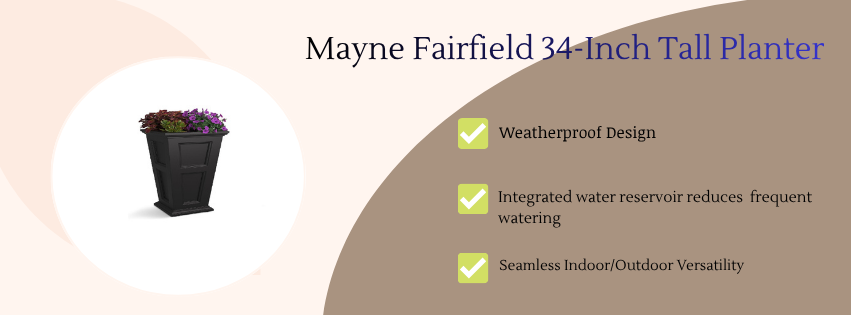
This guide explains exactly how to select planters for trees outdoor, including size, materials, soil structure, drainage systems, climate considerations, and long-term maintenance.
Many homeowners underestimate how demanding trees are in containers. A pot that looks large in a garden center often becomes restrictive within two seasons. Poor drainage suffocates roots. Thin plastic cracks in winter. Lightweight containers tip in wind.
Outdoor tree planters must function as mini planting environments. That means:
- Adequate root depth
- Excellent drainage
- Structural stability
- Climate resilience
- Proper soil structure
In this guide, you’ll learn how to choose planters that support tree health long-term not just look good the first year.
Quick Summary
- Minimum depth for most trees: 18–24 inches
- Choose containers at least 2–3 times wider than the root ball
- Ensure multiple large drainage holes
- Use well-draining structural soil (not garden soil)
- Avoid thin plastic in cold USDA zones
- Expect watering 2–4 times weekly in summer
- Repot or root prune every 2–3 years
This guide addresses both purchase decisions and horticultural best practices.
Why Planter Size Matters More Than You Think
Trees develop extensive root systems. In the ground, roots expand outward and downward freely. In containers, they are restricted.
If the planter is too small:
- Roots circle and become root-bound
- Water dries too quickly
- Nutrient depletion accelerates
- Growth slows significantly
Minimum Size Guidelines
For most outdoor trees:
- Small ornamental trees (Japanese maple, dwarf citrus):
- 18–22 inches deep
- 20–24 inches diameter
- Dwarf fruit trees:
- 20–24 inches deep
- 24–30 inches diameter
- Privacy trees (arborvitae, olive, bay laurel):
- 22–30 inches deep
- 24–36 inches diameter
Rule of thumb: Choose a container at least 2–3 times the width of the nursery root ball.
Why Depth Is Critical
Trees develop structural roots that stabilize the trunk. Shallow containers increase tipping risk and restrict anchoring roots.
Best Materials for Outdoor Tree Planters
Material choice affects:
- Drainage
- Temperature regulation
- Durability
- Winter survival
- Cost
1. Fiberglass (Best Overall Performance)
Pros:
- Lightweight but strong
- Frost-resistant
- Modern aesthetic
- UV-resistant
Cons:
- Higher cost ($200–$800 for large sizes)
Why it works: Fiberglass insulates roots better than metal and doesn’t crack in freeze-thaw cycles.
Maintenance impact: Low. Long lifespan (10+ years).
2. Concrete or Stone (Maximum Stability)
Pros:
- Extremely stable
- Excellent for windy areas
- Long-lasting
Cons:
- Heavy (difficult to move)
- Expensive shipping
- Poor drainage if not properly drilled
Best for: Permanent installations in USDA zones 7–11.
3. High-Quality Resin (Budget-Friendly Option)
Pros:
- Lightweight
- Affordable ($100–$300)
- Often frost-resistant
Cons:
- Can fade over time
- Less breathable than terracotta
Avoid thin, brittle plastic in zones 4–6 where freezing causes cracking.
4. Terracotta (Classic but Risky in Cold Zones)
Pros:
- Breathable
- Natural look
Cons:
- Prone to cracking in freeze
- Heavy
- Dries out quickly
Best suited for USDA zones 8–11 unless moved indoors during winter.
Drainage Requirements for Outdoor Tree Planters
Proper drainage prevents:
- Root rot
- Fungal disease
- Oxygen deprivation
- Winter freeze damage
What to Look For
- At least 2–4 large drainage holes (1/2 inch diameter minimum)
- Elevated base or pot feet
- Deep saucers only if protected from standing water
Never rely on a single small hole.
Common Mistake: Adding Gravel at the Bottom
This does NOT improve drainage. It creates a perched water table.
Instead:
- Use a well-structured soil mix
- Ensure clear drainage holes
- Slightly elevate the planter
The Right Soil Mix for Trees in Containers
Never use native garden soil. It compacts and suffocates roots.
Ideal Container Tree Soil Recipe
- 40% high-quality potting mix
- 30% pine bark fines
- 20% coarse compost
- 10% perlite or pumice
Why this works:
- Bark improves structure
- Compost provides nutrients
- Perlite enhances drainage
- Mix resists compaction over time
Cost impact: Filling a 24-inch planter may require 3–5 bags of soil ($60–$120 total).
Maintenance impact: Replace or refresh top 25% every year.
Light Requirements for Outdoor Potted Trees
Most ornamental and fruiting trees require:
- 6–8 hours of direct sunlight daily
- South or west exposure ideal
Exceptions:
- Japanese maple prefers partial shade in hot climates
- Bay laurel tolerates bright partial sun
Inadequate light reduces:
- Fruit production
- Leaf density
- Overall vigor
Watering Outdoor Trees in Planters
Container trees dry out faster than in-ground trees.
Summer Watering Frequency
- Hot climates: 3–4 times per week
- Moderate climates: 2–3 times per week
- Spring/Fall: 1–2 times per week
Always water deeply until water exits drainage holes.
Why deep watering works: Encourages roots to grow downward rather than staying near the surface.
Winter: Reduce watering significantly but never allow complete soil dryness.
USDA Hardiness Zones and Winter Protection
Container-grown trees are effectively 1–2 zones less hardy than in-ground trees.
Example: A tree rated for USDA zone 6 may only survive zone 7 in a container.
Cold Climate Protection (Zones 4–6)
- Wrap containers with burlap
- Use insulating foam panels
- Elevate pots off frozen ground
- Move to sheltered locations
Root systems freeze faster in containers.
Best Trees for Outdoor Planters
Ornamental Trees
- Japanese Maple (Zones 5–8)
- Olive Tree (Zones 8–11)
- Crape Myrtle (Zones 7–10)
- Dwarf Magnolia (Zones 6–9)
Fruit Trees (Dwarf Varieties Only)
- Dwarf Lemon (Zones 9–11)
- Dwarf Apple (Zones 4–8)
- Fig Tree (Zones 7–10)
- Peach (Zones 5–9)
Evergreen Privacy Trees
- Arborvitae (Zones 3–8)
- Boxwood (Zones 5–9)
- Bay Laurel (Zones 8–11)
Choose compact or dwarf cultivars whenever possible.
Repotting and Root Pruning
Trees in containers require intervention every 2–3 years.
Signs it’s time:
- Roots circling heavily
- Water runs straight through soil
- Slowed growth
- Leaf size reduction
Root Pruning Process
- Remove tree from container.
- Trim outer 1–2 inches of root mass.
- Refresh soil.
- Replant in same or slightly larger container.
Maintenance impact: Prevents long-term root binding.
Budget vs Premium Outdoor Tree Planter Setup
Budget Setup ($200–$400)
- Large resin planter
- DIY soil blend
- Basic drip irrigation kit
- Organic slow-release fertilizer
Pros: Affordable entry point.
Cons: May require replacement in 5 years.
Premium Setup ($800–$1,500+)
- Fiberglass or concrete planter
- Custom soil mix
- Integrated drip irrigation
- Moisture meter
- Premium fertilizer program
Pros: Long-term durability Lower plant stress Professional aesthetic
Cons: High initial cost
Long-term benefit: Less repotting, reduced failure rate.
Irrigation Options for Outdoor Tree Planters
Manual watering works, but automation improves consistency.
Drip Irrigation Kits
Best for:
- Multiple planters
- Hot climates
- Busy homeowners
Choose:
- Adjustable emitters
- Pressure regulators
- Weather-resistant tubing
Cost: $50–$200 depending on scale.
Consistent watering reduces fruit drop and leaf scorch.
Common Beginner Mistakes
- Choosing pots too small
- Using garden soil
- Ignoring drainage
- Forgetting winter protection
- Underestimating water needs in summer
- Selecting full-size trees instead of dwarf cultivars
Tree failure in containers is usually preventable with proper planning.
FAQ
What size planter is best for outdoor trees?
At minimum, 18–24 inches deep and 20–30 inches wide. Larger is better for long-term health.
Can trees survive winter in pots?
Yes, but they lose 1–2 hardiness zones in containers. Provide insulation in colder climates.
How often should I water trees in outdoor planters?
2–4 times per week in summer. Adjust based on climate and container size.
Do outdoor tree planters need multiple drainage holes?
Yes. At least 2–4 large holes to prevent water buildup.
How long can a tree stay in a planter?
With root pruning and soil refresh, 10+ years is possible.
Is concrete better than plastic for tree planters?
Concrete offers stability and durability but is heavy. High-quality resin or fiberglass is often more practical.
Final Thoughts
Choosing the right planters for trees outdoor is about more than aesthetics. You are creating a controlled root environment that must support structural stability, drainage, nutrition, and climate resilience.
When you select adequate depth, proper materials, and a well-structured soil mix, trees in containers can thrive for years producing foliage, flowers, and even fruit in small spaces.
Invest in size. Prioritize drainage. Protect roots in winter. Commit to consistent watering and periodic root pruning.
Done correctly, outdoor tree planters turn patios, balconies, and entryways into long-lasting, living architecture.
Healthy roots create strong trees. And strong trees transform spaces.
