Every product is independently reviewed and selected by our editors. If you buy something through our links, we may earn an affiliate commission at no extra cost to you.
A wooden wheelbarrow planter adds instant charm to a garden but if planted incorrectly, it can rot, dry out, or collapse within a season.
Done properly, a wheelbarrow planter becomes a focal point that blends rustic character with intentional plant design. The key is treating it like a functional container garden not just a decorative prop filled with random flowers.
This guide covers practical wooden wheelbarrow planter ideas, including soil composition, drainage setup, container depth strategy, plant combinations by sun exposure, USDA zone considerations, watering frequency, and maintenance realities.
Introduction
Most people place a few flowers into a decorative wheelbarrow and hope for the best. Within weeks, they face:
- Poor drainage
- Wood rot from trapped moisture
- Plants that outgrow shallow soil
- Uneven watering
- Seasonal decline
Wooden wheelbarrows are typically shallow and vulnerable to water damage. To succeed, you must manage drainage, protect the wood, choose the right root depth plants, and plan for irrigation.
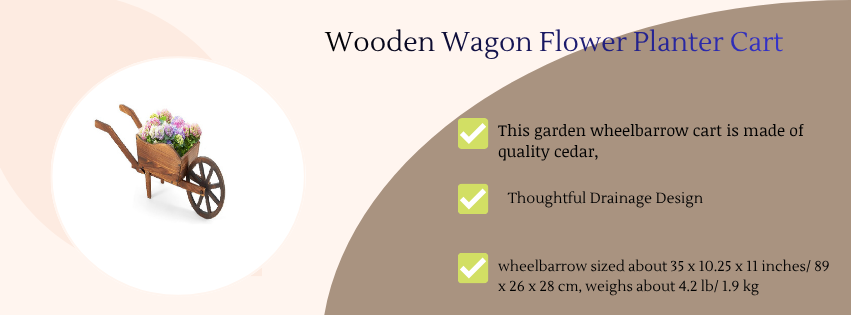
In this guide, you’ll learn how to turn a wooden wheelbarrow into a long-lasting, high-impact planter that thrives season after season.
Quick Summary Box
- Minimum soil depth needed: 8–12 inches (modify if shallower)
- Always drill multiple ½-inch drainage holes
- Line interior with landscape fabric, not plastic
- Best for annuals, shallow-rooted perennials, herbs, or succulents
- Watering frequency: Every 1–2 days in summer
- Best placements: Full sun (6–8 hrs) or partial sun depending on plant choice
- Protect wood annually with exterior-grade sealant
Is a Wooden Wheelbarrow a Good Planter
Yes wooden wheelbarrow is a good planter.
Most decorative wooden wheelbarrows are:
- 6–10 inches deep
- Made of softwood (pine or fir)
- Vulnerable to constant moisture
They are best treated as shallow raised beds on wheels rather than deep containers.
Preparing a Wooden Wheelbarrow for Planting
1. Protect the Wood
Why it matters: Constant wet soil accelerates rot.
How to do it:
- Apply exterior-grade, plant-safe wood sealant.
- Let cure completely before planting.
Cost: $15–$25 for sealant. Maintenance: Reapply annually.
2. Improve Drainage
Most decorative models lack sufficient holes.
Steps:
- Drill 3–6 holes (½ inch diameter) in the base.
- Slightly elevate front if needed to encourage drainage.
Avoid plastic liners they trap water and cause root rot.
Instead: Line with breathable landscape fabric.
3. Soil Composition
Never use garden soil.
Ideal mix for wooden wheelbarrow planters:
- 60% lightweight potting mix
- 20% compost
- 20% perlite or pine bark fines
Why: Shallow containers need aeration and moisture balance.
Cost: $10–$20 per fill depending on size.
Understanding Sun Exposure Before Choosing Plants
Wheelbarrows are often placed:
- Near fences (partial sun)
- On patios (full sun)
- Under trees (bright shade)
Sun Exposure Guide
- South/West facing: 6–8+ hours direct sun (higher heat stress)
- East facing: Gentle morning sun
- North facing: Shade or bright indirect
Match plant combinations to exposure or expect failure.
12 Wooden Wheelbarrow Planter Ideas
Each idea includes WHY it works, HOW to plant it, and maintenance considerations.
1. Rustic Cottage Flower Mix (Full Sun)
Thriller: Dwarf sunflower Filler: Zinnias Spiller: Trailing lobelia
Why it works: Bright colors complement rustic wood.
Depth needed: 10–12 inches.
Water: Daily in hot weather.
Maintenance: Deadhead weekly.
2. Cascading Petunia Display
Best for: Full sun front yard focal point.
Plant densely with wave petunias.
Why: They spill beautifully over sides.
Water: Daily in summer.
Fertilize: Every 2 weeks.
3. Succulent Wheelbarrow Garden (Low Water)
Best for: Zones 9–11 (or seasonal in cooler zones)
Plants:
- Echeveria
- Sedum
- Sempervivum
Soil: 50% cactus mix + 50% perlite.
Water: Every 7–10 days.
Very low maintenance and minimal wood rot risk.
4. Herb Garden Wheelbarrow
Best for: East or south-facing patios.
Plants:
- Basil
- Thyme
- Oregano
- Parsley
Depth: 8–10 inches minimum.
Water: Every 1–2 days.
Mistake to avoid: Overwatering Mediterranean herbs like rosemary.
5. Shade-Loving Fern & Coleus Combo
Best for: North-facing porch.
Thriller: Boston fern Filler: Coleus Spiller: Creeping Jenny
Water: Every 2–3 days.
Maintenance: Pinch coleus to prevent legginess.
6. Mini Vegetable Garden
Best for: Small-space edible gardening.
Plants:
- Lettuce
- Radishes
- Spinach
Root depth: 6–8 inches sufficient.
Harvest cycle: Every 30–45 days.
Budget-friendly option.
7. Seasonal Swap Planter
Keep soil base consistent.
Rotate:
- Spring bulbs
- Summer annuals
- Fall mums
- Winter greens
Why: Extends use year-round.
Higher maintenance but strong curb appeal.
8. Vintage White & Green Design
Plants:
- White begonias
- Dusty miller
- Ivy
Works well in partial sun.
Elegant and understated.
9. Pollinator-Friendly Mix
Plants:
- Salvia
- Verbena
- Alyssum
Attracts bees and butterflies.
Requires consistent watering in heat.
10. Ornamental Grass Accent
Plant:
- Dwarf fountain grass
- Trailing calibrachoa
Creates height and movement.
Requires at least 10–12 inches depth.
11. Fall Harvest Theme
Plants:
- Ornamental cabbage
- Pansies
- Mini pumpkins (decorative)
Thrives in cooler temperatures (Zones 3–8 fall season).
12. Tropical Summer Display
Plants:
- Caladium
- Sweet potato vine
- Impatiens (sun-tolerant varieties)
Higher water demand but dramatic foliage.
Watering Strategy for Wooden Wheelbarrow Planters
Shallow containers dry faster.
General rule:
- Full sun: Daily in summer
- Partial sun: Every 2 days
- Shade: 2–3 times per week
Check moisture 2 inches deep.
Consider small drip irrigation kits if near water source.
Self-watering inserts can help but must not trap moisture against wood.
Fertilizing
Nutrients leach quickly in shallow planters.
Use:
- Slow-release fertilizer at planting
- Liquid feed every 2–4 weeks
Cost: $10–$20 per season.
Without feeding, flowering plants decline by mid-season.
Pest Prevention
Common issues:
- Aphids
- Slugs (especially near ground)
- Spider mites in heat
Prevention:
- Elevate wheelbarrow slightly
- Inspect weekly
- Use neem oil or insecticidal soap as needed
Good airflow reduces fungal problems.
USDA Zone Considerations
In cold climates (Zones 3–6):
- Empty soil before winter to protect wood.
- Store under cover.
In warm climates (Zones 8–11):
- Monitor wood for sun cracking.
- Re-seal annually.
Budget vs Premium Setup
Budget ($50–$150)
- Decorative wooden wheelbarrow
- Annual flowers
- Manual watering
Shorter lifespan (2–4 years typical).
Premium ($200–$500)
- High-quality hardwood wheelbarrow
- Drip irrigation
- Seasonal planting rotations
Longer lifespan with proper sealing.
Common Beginner Mistakes
- No drainage holes
- Using plastic liner
- Overcrowding plants
- Choosing deep-root vegetables
- Ignoring wood maintenance
Wooden wheelbarrows require seasonal attention.
FAQ
How deep does soil need to be in a wheelbarrow planter?
At least 8–12 inches for most annuals and herbs. Root vegetables require deeper containers.
How do you keep a wooden wheelbarrow from rotting?
Seal annually, ensure drainage holes, and avoid water pooling.
Can you grow vegetables in a wooden wheelbarrow?
Yes, shallow-rooted crops like lettuce, spinach, and radishes perform well.
What flowers grow best in a wheelbarrow planter?
Petunias, zinnias, calibrachoa, alyssum, and coleus depending on sun exposure.
Should I line a wooden wheelbarrow planter?
Use breathable landscape fabric not plastic to protect wood while allowing drainage.
How often should you water?
Daily in hot full sun; every 2–3 days in shade.
Final Thoughts
A wooden wheelbarrow planter works best when treated as a functional container garden with structural limitations not simply rustic décor.
When you:
- Protect the wood
- Improve drainage
- Choose shallow-rooted plants
- Match combinations to sun exposure
- Maintain consistent watering and fertilizing
You extend the life of both the planter and the plants inside it.
Start with one well-designed planting plan suited to your climate and exposure. With proper maintenance, a wooden wheelbarrow can become a rotating seasonal centerpiece that enhances your garden’s character year after year.
