Every product is independently reviewed and selected by our editors. If you buy something through our links, we may earn an affiliate commission at no extra cost to you.
The “most efficient” garden layout isn’t one universal pattern it’s the layout that makes the best use of your specific microclimate, sunlight, soil, and daily habits. Still, there are proven design principles that consistently deliver high yields, low maintenance, and good soil health.
Key Principles Behind the Most Efficient Garden Layout
Here’s how I approach efficiency when I’m designing gardens for real U.S. homes from small suburban yards to rural kitchen gardens.
1. Start With Observation, Not Geometry
Before you draw a single line, spend a few days watching:
- Sunlight patterns: Note which areas get full sun (6+ hours), partial shade, or afternoon heat.
- Slope and drainage: Water naturally runs downhill efficient gardens use that to their advantage.
- Access and convenience: You’ll care for what you can easily reach. Place the garden near your kitchen or a water source.
An efficient layout begins with working with your site, not forcing a pattern onto it.
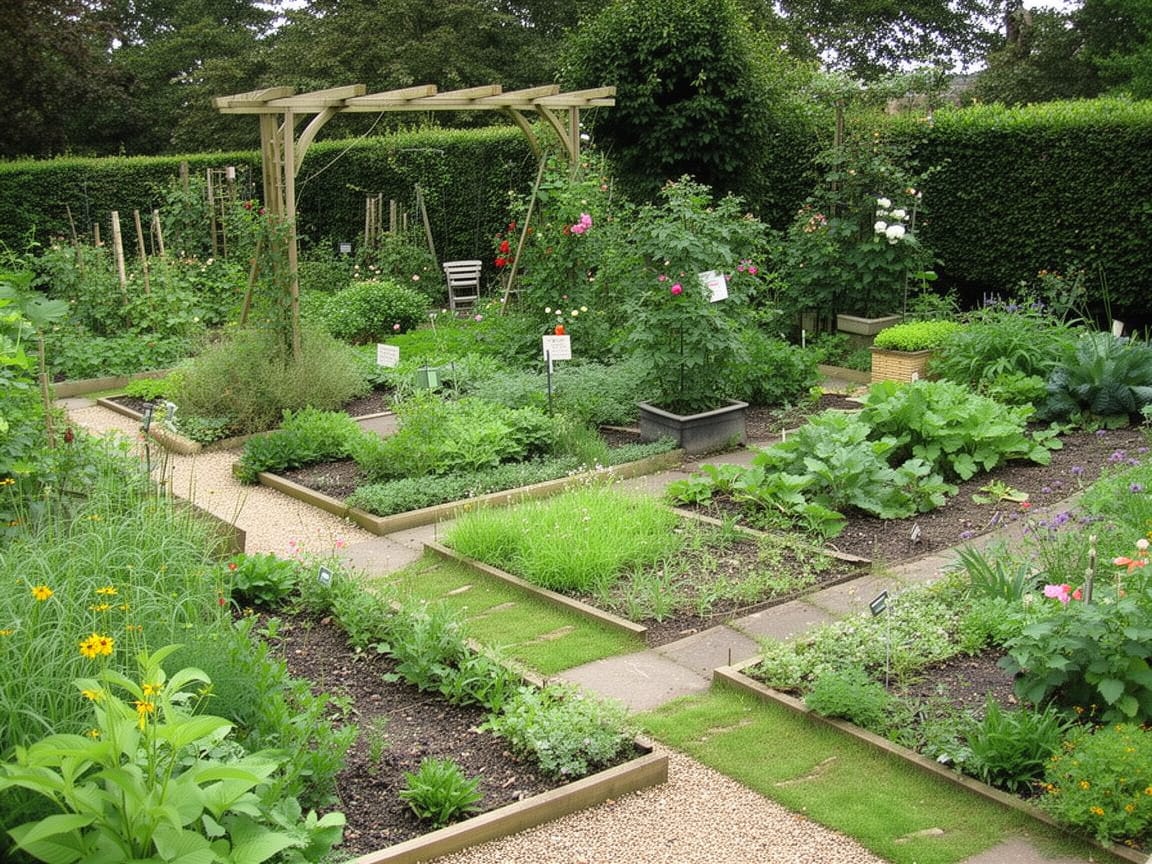
2. Use Raised or Defined Beds Never Random Rows
In almost every residential garden I’ve seen thrive, raised beds or defined in-ground beds outperform traditional long rows. They:
- Improve soil drainage
- Make watering more efficient
- Reduce soil compaction
- Keep compost and mulch concentrated where plants need them
Standard bed size:
- 3–4 feet wide so you can reach the center without stepping in
- Any convenient length (most homeowners use 6–10 feet)
- 1–12 inches deep depending on soil quality
Between beds: Leave 18–24 inches for pathways just enough for a wheelbarrow or kneeling access.
This setup increases planting density dramatically while reducing wasted path area.
3. Organize Beds by Sun, Height, and Water Needs
Efficient layouts group plants with similar requirements together.
| Zone | Conditions | Ideal Crops |
| Full sun & drier soil (south side) | 6–8 hrs+ sunlight | Tomatoes, peppers, squash, basil |
| Partial sun (east or west side) | 4–6 hrs sunlight | Lettuce, chard, herbs |
| Moist or shaded area (north edge) | Cooler & damp | Kale, spinach, parsley, mint |
Within each bed, tall crops (corn, trellised beans) go on the north side so they don’t shade shorter plants.
4. Choose an Efficient Layout Pattern
Option 1: Rectangular Raised-Bed Grid (Most Popular for Home Gardens)
- Neat, easy to irrigate, and perfect for succession planting.
- Works well for fenced gardens or limited suburban backyards.
- Drip irrigation systems fit neatly along rows.
Option 2: Keyhole or Circular Beds (Excellent for Small Spaces)
- Central access path with surrounding planting ring.
- Reduces walking space and increases reachable growing area.
- Great for compact courtyards or decorative edible gardens.
A single 6-foot-diameter keyhole bed yields nearly as much as two 4×4 beds but with easier access.
Option 3: Four‑Square Rotation Layout
- Divide the garden into four equal beds for crop rotation (legumes, leafy greens, roots, fruiting crops).
- Keeps soil nutrients balanced and breaks pest cycles.
- Ideal for long-term organic gardens.
5. Plan for Vertical Layers
Vertical gardening doubles usable area without expanding your footprint:
- Use trellises on north sides of beds for peas, beans, cucumbers, or tomatoes.
- Mount wall planters or hanging baskets on fences for herbs and greens.
- Add A-frame supports between beds for climbing crops.
In a 10×10 garden, vertical systems can increase yield by 30–50% without crowding.
6. Integrate Companion Planting
Efficient gardens grow plants that support each other in pest control and nutrient use. Examples from my own clients’ gardens:
- Tomatoes + basil + marigolds: repels hornworms and attracts pollinators.
- Carrots + onions: onions deter carrot flies.
- Lettuce + radishes + cucumbers: cucumbers provide partial shade as lettuce bolts in heat.
This reduces the need for chemical inputs and maximizes growth harmony.
7. Add a Central Path or Working Hub
A truly efficient garden keeps tools, compost, and water within arm’s reach.
- A small center hub (compost bin, rain barrel, or workbench) minimizes walking.
- Paths radiating from the hub reduce travel time and keep foot traffic consistent.
In my own teaching garden, a 2-foot gravel path loop around four beds saves hours of maintenance time each season.
8. Use Succession and Interplanting
Efficiency isn’t only about space it’s also about time.
- Succession planting: Replant crops immediately after harvest (e.g., follow spring lettuce with bush beans).
- Interplanting: Use fast growers like radishes between slower crops like cabbage or tomatoes.
This keeps every square foot productive nearly all season.
9. Match Irrigation to Layout
Nothing wastes more time or water than mismatched irrigation.
- Drip lines under mulch deliver moisture efficiently to raised beds.
- Soaker hoses can snake through circular or keyhole designs.
- Rain barrels near the garden reduce hose dragging and water bills.
If using gravity-fed irrigation, design beds to slope gently (about 1% grade) for even flow.
10. Include Perennial Edges
Border beds with perennials like blueberries, rosemary, or pollinator flowers. They define space, attract beneficial insects, and reduce mowing time around your garden. Perennial edges also stabilize microclimates and provide windbreaks for young seedlings.
11. Don’t Overcrowd It’s the Hidden Inefficiency
A dense garden looks productive but can waste resources if airflow and light decline.
- Keep 4–6 inches between small plants, 12–18 inches for medium crops (peppers, kale), and 24+ inches for large fruiting plants.
- Overcrowding often leads to fungal issues meaning you’ll spend more time fixing problems than harvesting.
12. Example: Highly Efficient 10×12 Organic Garden Layout
| Zone | Setup | Purpose |
| North edge | Trellis for tomatoes and cucumbers | Vertical growth, shade for greens below |
| Center beds (4×4 each) | Greens, herbs, root crops | Easy access, rotation ready |
| South border | Pollinator flowers and basil | Attracts bees, defines path |
| Corner spaces | Rain barrel, compost bin, tool hook | Reduces travel time between tasks |
This layout routinely yields enough produce for a family of four, with minimal weeding and efficient watering.
13. Seasonal Efficiency Adjustments
- Spring: Focus on quick crops (radish, spinach, peas) and seed starting.
- Summer: Transition to heat-lovers (tomato, pepper, squash) and interplant shade-tolerant greens beneath them.
- Fall: Plant cool-weather crops (broccoli, kale, carrots) in partial-shade zones.
- Winter (in mild zones or greenhouse): Use cold frames or row covers to extend harvest in existing beds.
Efficient layouts are flexible they evolve through the year.
14. Practical Organic Maintenance Habits
- Mulch deeply (2–3 inches) to retain moisture and suppress weeds.
- Compost in place: top-dress each bed annually with organic matter.
- Keep a short daily routine: 10 minutes of watering and observation often prevents hours of later troubleshooting.
Consistency is the true secret key of efficiency.
Final Thoughts
The most efficient garden layout is one that:
- Fits your site’s light and water naturally.
- Groups plants by similar needs.
- Balances access, airflow, and density.
- Evolves with the seasons instead of fighting them.
If you’re starting fresh, a rectangular raised-bed grid or compact keyhole layout is the most efficient for most U.S. backyards flexible, easy to irrigate, and perfect for organic management.
Would you like me to sketch (in text) a sample efficient layout for your available space for example, a 10×10 or 12×16 garden with year-round vegetables and herbs? That would make the design immediately actionable for your conditions.