Every product is independently reviewed and selected by our editors. If you buy something through our links, we may earn an affiliate commission at no extra cost to you.
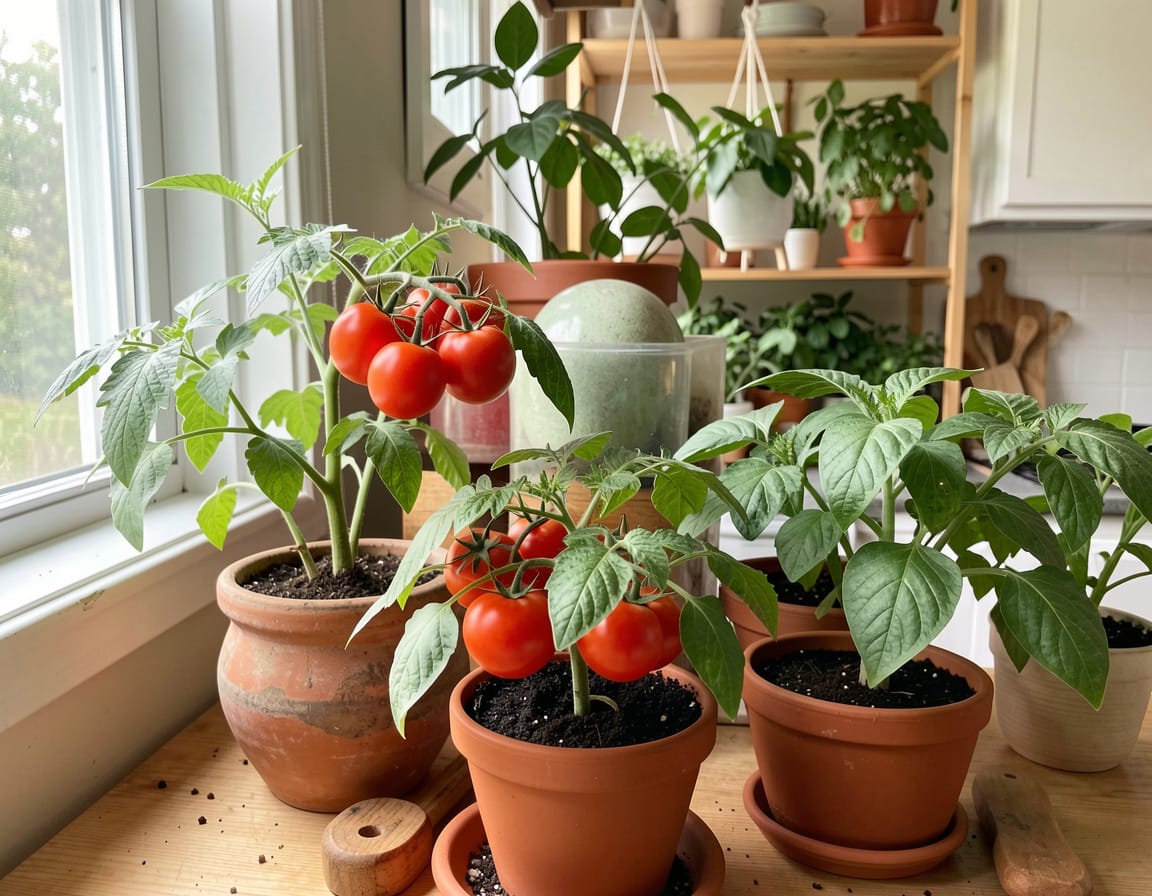
Growing tomatoes indoors can feel like chasing summer in a pot but once you get the hang of light, warmth, and pollination, it’s surprisingly rewarding. I’ve grown cherry and dwarf tomato varieties on my sunny balcony and under LED grow lights through winter, and the difference between success and struggle usually came down to setup not luck.
So, what’s the best way to grow tomatoes indoors? It’s all about choosing compact varieties, giving them consistent light and airflow, and managing watering carefully. Follow this guide and you’ll harvest sweet, sun-tasting fruit even when it’s snowing outside.
Why Tomatoes Can Thrive Indoors (If You Set It Up Right)
Tomatoes are naturally warm-season, full-sun plants. Indoors, they’re competing with the limitations of space and light but with controlled conditions, you can mimic their outdoor environment.
Here’s the horticultural logic behind what works:
- Light = energy for fruiting. Tomatoes need 14–16 hours of bright light daily. A south-facing window or full-spectrum grow light is essential.
- Warmth fuels metabolism. Ideal indoor temperatures are 21–27°C (70–80°F) by day and not below 16°C (60°F) at night.
- Airflow prevents disease. Indoors, still air encourages fungus and pollen failure; gentle circulation keeps leaves dry and pollination effective.
- Consistent moisture and nutrition keep the plant balanced. Uneven watering leads to blossom-end rot or cracked fruit.
Once you replicate these four outdoor factors light, temperature, airflow, and steady moisture tomatoes grow just as happily in a pot as they do in the ground.
What You’ll Need
All items are easy to source and beginner-friendly:
- Compact tomato variety – e.g., Tiny Tim, Micro Tom, Balcony Red, or Patio Princess
- Container with drainage – 12–14 inches wide and deep
- Potting mix – blend of 40% compost, 40% cocopeat or peat-free potting soil, and 20% perlite or coarse sand
- Full-spectrum LED grow light (if sunlight is limited)
- Tomato fertilizer – organic liquid feed or slow-release balanced fertilizer (e.g., 10-10-10 or 5-10-5)
- Watering can or drip tray
- Small fan or open window – improves airflow and pollination
- Pollination tool – a soft brush or gentle finger tapping
Eco note: Use peat-free mixes if available; they’re sustainable and perform just as well indoors.
Step-by-Step: The Best Way to Grow Tomatoes Indoors
1. Choose the Right Variety
For indoor growing, size matters. Choose determinate or dwarf tomato types that stay compact and produce early.
- Tiny Tim and Micro Tom reach only 12–18 inches tall perfect for windowsills.
- Cherry or grape varieties do better indoors than large beefsteak types because they need less light and energy to ripen.
2. Prepare the Pot and Soil
Tomatoes hate soggy roots but love deep, rich soil.
- Use a light, well-draining mix with compost for nutrients.
- Add a handful of crushed eggshells or dolomite lime to prevent calcium deficiency (common indoors).
- Ensure drainage holes at the bottom standing water quickly causes root rot.
3. Sow or Transplant Carefully
- From Seed: Start seeds indoors 6–8 weeks before you want to harvest. Sow ¼ inch deep, keep soil moist, and provide warmth (around 23°C / 73°F).
- From Seedling: Transplant when the plant is 6–8 inches tall, burying the stem slightly deeper to encourage strong root growth.
4. Provide Intense, Consistent Light
This is the make-or-break step for indoor tomatoes.
- Sunlight option: Place near a south- or west-facing window where they get at least 6–8 hours of direct sun daily.
- Grow light option: Set up a full-spectrum LED 6–8 inches above the plant, running 14–16 hours daily.
- Rotate pots every few days so all sides get equal light.
5. Maintain Ideal Temperature and Airflow
- Daytime: 21–27°C (70–80°F)
- Nighttime: 16–18°C (60–65°F)
- Run a small fan for a few hours daily to mimic outdoor breezes—this strengthens stems and prevents fungal issues.
6. Water Deeply, But Not Often
Overwatering is the #1 indoor tomato killer.
- Check soil moisture by feel water only when the top inch feels dry.
- Water until it drains from the bottom, then empty the saucer.
- Avoid splashing leaves; aim for the soil base.
7. Feed Regularly Once Flowering Starts
Tomatoes are heavy feeders.
- Start fertilizing every 2 weeks after flowering begins using a tomato-specific feed or a balanced organic fertilizer.
- Reduce nitrogen once fruits form too much will grow leaves instead of tomatoes.
8. Hand Pollinate for Fruit Set
Indoors, there’s no wind or bees so you play pollinator.
- Once flowers open, gently tap the flower clusters or use a small paintbrush to move pollen between blooms.
- Do this every 2–3 days during the flowering period for best results.
9. Support and Prune Smartly
Even compact tomatoes benefit from light support.
- Use a stake or small cage.
- Prune off suckers (tiny shoots between stem and branch) if the plant becomes too dense this keeps airflow healthy.
10. Harvest at the Right Time
Fruits are ready when they turn fully red (or yellow, depending on variety) and feel slightly soft to the touch. Harvest by twisting gently don’t pull. Continuous picking encourages more fruit.
Pro Tips & Best Practices
- Use warm water when watering cold water shocks indoor roots.
- Mulch with coco chips or straw to retain moisture and reduce fungus gnats.
- Wipe leaves occasionally to remove dust and improve light absorption.
- Rotate between two or three pots for a continuous harvest cycle.
- Avoid crowding even indoors, leave space for air circulation.
From my own trials, the best indoor performance came from Tiny Tim under a grow light setup with a 14-hour timer. It yielded over 50 ripe cherry tomatoes in one 12-inch pot across 8 weeks.
Common Questions About Growing Tomatoes Indoors
1. Can you grow tomatoes indoors year-round?
Yes. With grow lights and steady warmth, tomatoes will fruit any time of year. Just maintain consistent light hours and feeding.
2. What are the easiest tomatoes to grow indoors?
Compact or dwarf varieties like Micro Tom, Tiny Tim, Balcony Red, and Gold Nugget are easiest for beginners.
3. How long does it take to grow tomatoes indoors?
From seed to harvest, expect 10–14 weeks depending on variety and conditions.
4. Why are my indoor tomato flowers falling off?
Likely due to poor pollination or temperature stress. Keep it between 21–27°C and hand-pollinate regularly.
5. Do I need to prune indoor tomato plants?
Yes, lightly. Remove yellowing leaves and small side shoots to maintain airflow and direct energy to fruit development.
6. Why are my tomatoes small or not ripening?
Usually from low light or uneven watering. Increase light duration and maintain consistent soil moisture.
When NOT to Grow Tomatoes Indoors
Avoid indoor tomato growing if:
- You have less than 6 hours of bright light and no grow light.
- Your indoor temperature drops below 16°C (60°F) regularly.
- You can’t manage air circulation still air encourages mildew and pollination failure.
If that’s the case, focus on leafy greens like lettuce or herbs such as basil and mint they’re more forgiving under low-light conditions.
Alternative Indoor Growing Options
| Method | Pros | Cons | Best For |
| Traditional pot growing | Simple and low-cost | Needs manual watering | Beginners |
| Self-watering container | Reduces watering errors | Slightly pricier | Busy gardeners |
| Hydroponic system | Fast growth, no soil mess | Higher setup cost | Enthusiastic hobbyists |
If it’s your first time, start with classic container growing it teaches soil care, watering balance, and lighting basics naturally.
Conclusion
So, the best way to grow tomatoes indoors is to think like the sun and wind give them light, warmth, and gentle movement. Choose a compact variety, feed moderately, and water with care.
From my hands-on experience, once you see your first cluster of red fruit ripening under a window or grow light, you’ll never look at store-bought tomatoes the same way again. Indoor tomato growing isn’t just possible it’s one of the most satisfying ways to bring summer flavor into your home all year.