Every product is independently reviewed and selected by our editors. If you buy something through our links, we may earn an affiliate commission at no extra cost to you.
That depends on your region, sunlight, soil type, and how much time you want to spend maintaining the space but there are some reliable, environmentally responsible plants that perform beautifully in most U.S. front yards. I’ll share what I recommend most often to homeowners and renters who want a natural-looking, low-maintenance, and sustainable landscape that boosts curb appeal without relying on synthetic fertilizers or heavy irrigation.
The Best Plants for a Front Yard (Organic & Sustainable Choices)
When I design front yards, I focus on three things:
- Climate suitability Plants must thrive in your USDA hardiness zone.
- Low resource use Native or drought-tolerant plants reduce water and fertilizer needs.
- Visual structure Mix evergreen anchors with seasonal color and texture.
Below are dependable categories and examples that work across typical U.S. home settings.
1. Native Evergreen Shrubs (Foundation Plants)
These form the structure around your entryway or along the house foundation.
| Plant | Why It Works | Best For |
| Inkberry Holly (Ilex glabra) | Native to the East Coast; dense, glossy foliage; easy to shape. | Shady or partly sunny yards, Zones 5–9 |
| Winter Gem Boxwood (organic grown) | Classic, formal look; holds shape year-round. | Traditional homes, Zones 5–9 |
| Dwarf Yaupon Holly | Native to the South, drought-tolerant, compact. | Hot, dry climates, Zones 7–10 |
| Pacific Wax Myrtle | Fragrant leaves; wildlife-friendly. | Coastal or mild West Coast yards, Zones 7–10 |
Expert tip: Choose organically grown nursery stock. Many conventional shrubs are treated with neonicotinoid pesticides that linger in the soil and harm pollinators.
2. Pollinator-Friendly Perennials
These bring color, attract beneficial insects, and require little care once established.
| Plant | Bloom Time | Notes |
| Black-Eyed Susan (Rudbeckia hirta) | Summer–fall | Native to most U.S. states, bright yellow flowers, drought-tolerant. |
| Coneflower (Echinacea purpurea) | Summer | Strong pollinator magnet; reseeds naturally. |
| Lavender (Lavandula angustifolia) | Late spring–summer | Fragrant, deer-resistant, thrives in poor soil. |
| Bee Balm (Monarda didyma) | Summer | Attracts hummingbirds and butterflies. |
| California Poppy | Spring–summer | Perfect for dry western climates; reseeds easily. |
Mix 3–5 varieties for continuous color through the seasons, keeping about 12–18″ spacing between plants.
3. Low-Water Grasses and Groundcovers
For sustainable lawns or borders, replace thirsty turf with decorative or native grasses.
| Plant | Growth Habit | Natural Benefit |
| Little Bluestem (Schizachyrium scoparium) | Upright blue-green blades; rust-orange fall color. | Native prairie species; supports pollinators. |
| Purple Fountain Grass (Pennisetum setaceum ‘Rubrum’) | Graceful plumes; annual in cold zones. | Adds movement and texture. |
| Creeping Thyme | Low, fragrant groundcover. | Suppresses weeds, tolerates light foot traffic. |
| Buffalo Grass (Bouteloua dactyloides) | Fine-textured lawn alternative. | Needs little mowing or water. |
4. Small Ornamental Trees for Structure
A front yard benefits from one signature tree that provides scale and shade.
| Tree | Height / Spread | Highlights |
| Serviceberry (Amelanchier canadensis) | 15–25 ft | Native, four-season interest, edible berries. |
| Crape Myrtle | 10–20 ft | Summer blooms, smooth bark, drought-tolerant. |
| Japanese Maple (Acer palmatum) | 10–15 ft | Elegant foliage; prefers partial shade. |
| Desert Willow (Chilopsis linearis) | 15–25 ft | Hardy in dry regions; attracts hummingbirds. |
When planting trees near a home, keep them at least 8–10 feet from the foundation. Always mulch with 2–3 inches of natural shredded bark or leaf mold, not dyed or rubber mulch.
5. Edible and Decorative Options
If you like the idea of mixing beauty with function:
- Blueberry bushes make excellent front-yard shrubs with spring flowers and fall color.
- Herb borders of rosemary, sage, and oregano provide texture and fragrance.
- Dwarf citrus trees (in pots) can be moved seasonally and double as conversation pieces.
These can all be grown organically without synthetic fertilizers compost, occasional fish emulsion, and mulch are enough.
My Simple Front Yard Formula
When I design a small front yard, here’s the layout that works again and again:
- Evergreen structure: 2–3 medium shrubs near house foundation.
- Accent tree: One small ornamental tree for height.
- Perennial layer: Groupings of 3–5 pollinator perennials along the walkway.
- Groundcover edge: Low herbs or native grasses to frame the space.
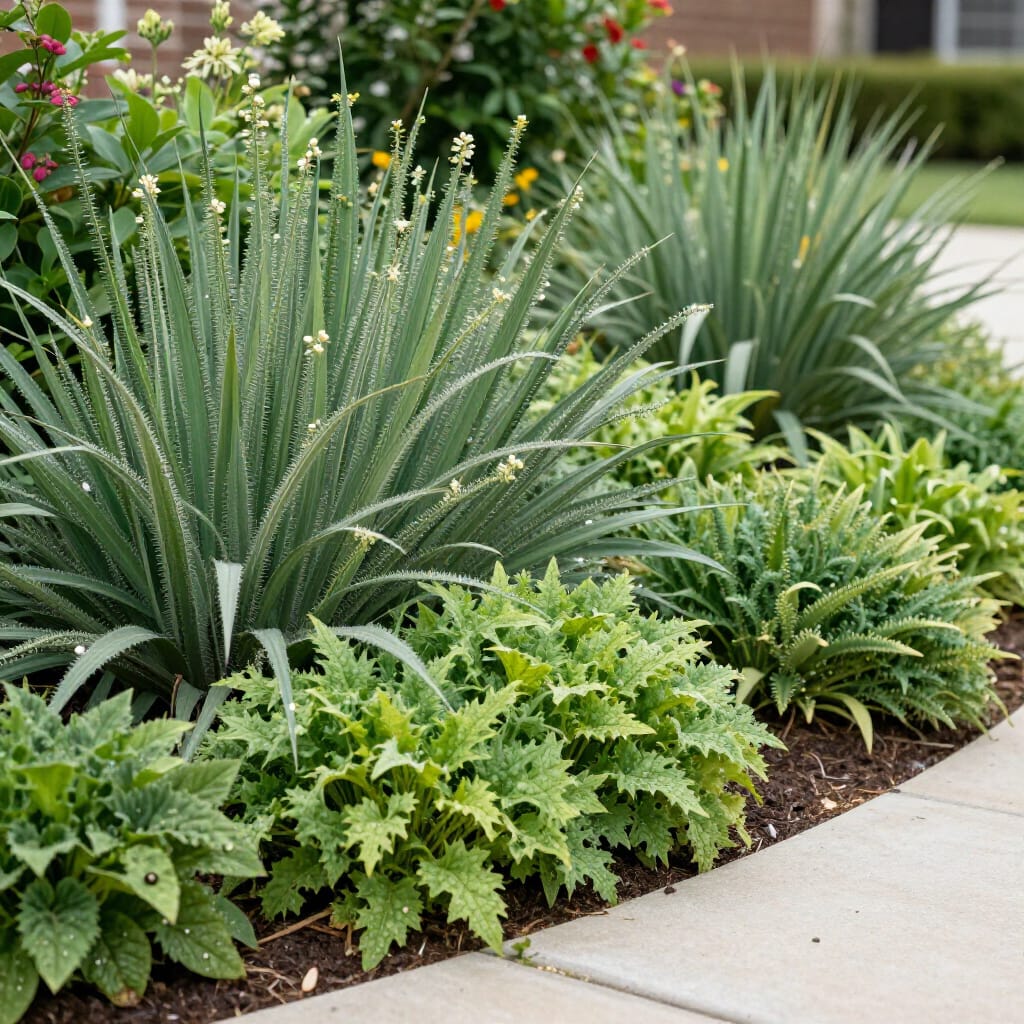
- Mulch: Natural bark or leaf mulch to conserve moisture and suppress weeds.
This mix gives year-round interest, supports pollinators, and keeps upkeep minimal.
Sustainability & Maintenance Tips
- Water deeply, not frequently. Once roots are established, most natives need less than 1 inch per week.
- Feed soil, not plants. Every spring, top-dress beds with 1–2 inches of finished compost.
- Avoid synthetic herbicides and pesticides. Hand-pull weeds or use organic vinegar-based sprays sparingly.
- Leave some leaves. A thin layer in fall provides habitat for beneficial insects.
Matching Plants to U.S. Regions
Here’s a quick reference based on general climate:
| Region | Reliable Choices |
| Northeast / Great Lakes | Serviceberry, Black-eyed Susan, Coneflower, Inkberry Holly |
| Southeast | Yaupon Holly, Crape Myrtle, Bee Balm, Blueberries |
| Southwest / California | Lavender, Desert Willow, California Poppy, Rosemary |
| Pacific Northwest | Evergreen Huckleberry, Sword Fern, Serviceberry, Ornamental Grasses |
| Midwest / Plains | Little Bluestem, Coneflower, Rudbeckia, Buffalo Grass |
Expert Insight
In my experience, the best front yard plant isn’t a single species it’s a balanced mix of native shrubs, perennials, and one focal tree suited to your local climate. That approach keeps your yard green and lively through all seasons with minimal intervention.
If you want something specific say, low-water plants for a sunny yard in Texas or deer-resistant options for upstate New York. I can tailor a short list for your zone and soil type.
Would you like me to create a region-specific front yard planting plan with organic soil prep and spacing guidelines for your area?