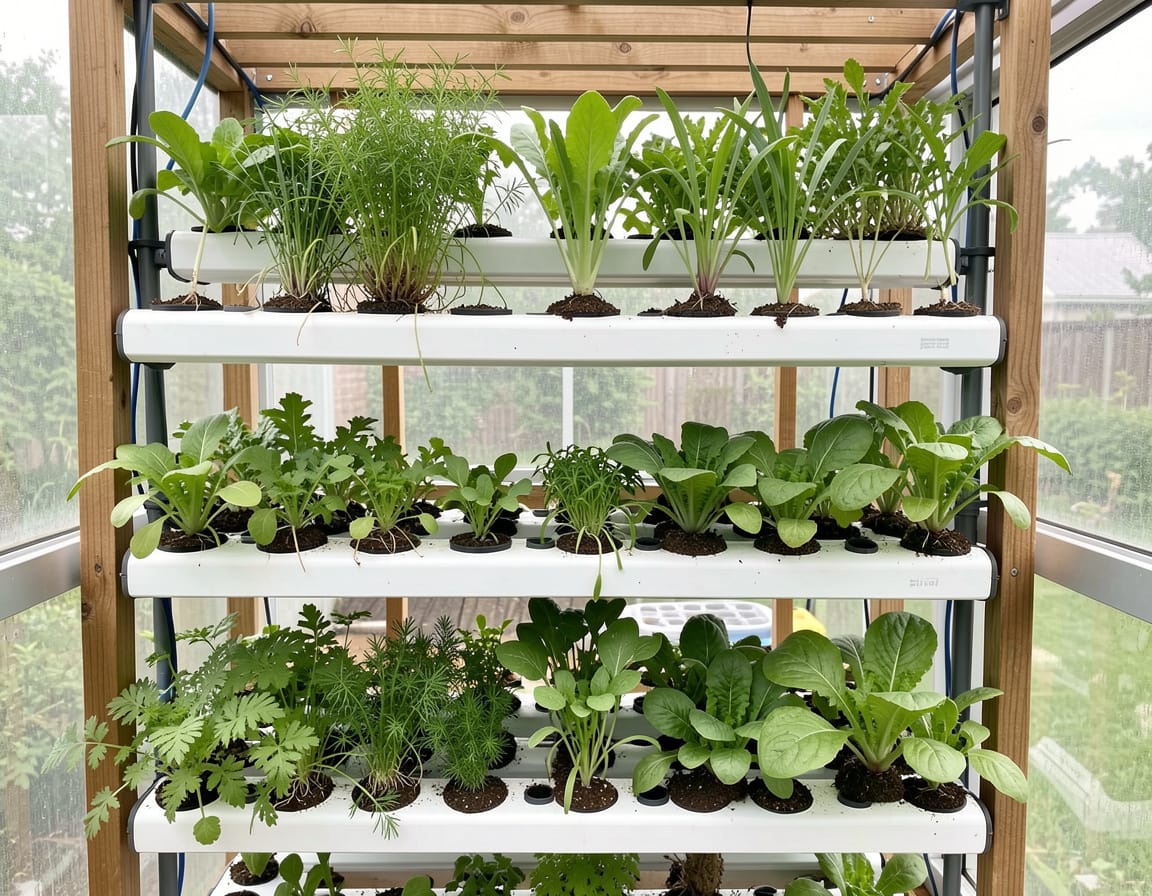
Every product is independently reviewed and selected by our editors. If you buy something through our links, we may earn an affiliate commission at no extra cost to you.
Vertical hydroponic gardens promise a lot: more food in less space, cleaner growing, faster harvests, and fewer pests. But after setting one up, many gardeners hit the same wall: what can I realistically grow in a vertical hydroponic garden without wasting time, money, or plants?
In real apartments, balconies, and small backyards I’ve worked with, vertical hydroponics succeeds or fails based on plant choice more than technology. Some plants are naturally suited to vertical systems. Others struggle with gravity, light distribution, or root space.
This guide answers what can I grow in a vertical hydroponic garden with clear, experience-based advice. You’ll learn which plants thrive, why they work, what beginners often get wrong, and how to set yourself up for consistent success—even in tight spaces.
Why Vertical Hydroponic Gardening Works (When Plants Are Chosen Correctly)
Vertical hydroponic systems work by circulating nutrient-rich water from top to bottom, allowing gravity to do part of the work. Plants that succeed in these systems usually share key traits:
- Compact or shallow root systems
- Light to moderate nutrient demands
- Upright or cascading growth habits
- Tolerance for frequent moisture at roots
Plants that struggle vertically often need:
- Deep, anchoring root zones
- Heavy fruit support
- Uneven or directional sunlight
- Pollination assistance
Understanding this helps avoid frustration and wasted setups.
What You’ll Need for a Vertical Hydroponic Garden
You don’t need an expensive system to grow well.
Essential Items
- Vertical hydroponic tower or wall system
- Full-spectrum LED grow lights (if indoors)
- Net cups or grow pockets
- Growing medium (clay pebbles, coco chips, or foam)
- Hydroponic nutrients (balanced, low-salt)
- Timer for pump and lights
- Clean water source
Budget-Friendly Options
- DIY PVC or gutter towers
- Repurposed food-grade containers
- Manual pump systems for small setups
Safety Notes
- Secure towers to prevent tipping
- Keep nutrient reservoirs covered and away from pets
- Clean spills promptly to avoid slippery floors
Best Plants to Grow in a Vertical Hydroponic Garden
Leafy Greens (Top Choice for Beginners)
If you’re asking what can I grow in a vertical hydroponic garden, leafy greens should be your starting point.
Best Leafy Greens
- Lettuce (loose-leaf, butterhead, romaine)
- Spinach
- Arugula
- Kale (baby varieties)
- Swiss chard (compact types)
Why they work:
- Shallow roots
- Fast growth cycles
- Harvest-friendly in vertical systems
Visual cues of success:
- Upright leaves
- Even green color
- Continuous new growth after cutting
Herbs (High Yield, Low Space)
Herbs adapt exceptionally well to vertical hydroponic gardens.
Best Hydroponic Herbs
- Basil
- Mint (best in lower pockets)
- Parsley
- Cilantro
- Chives
- Thyme
- Oregano
What beginners often miss:
Herbs near the top receive stronger light place sun-loving herbs there and shade-tolerant ones lower down.
Microgreens & Baby Greens
Microgreens are ideal for vertical hydroponics when space is limited.
Popular Choices
- Radish greens
- Broccoli greens
- Mustard greens
- Pea shoots
Benefits:
- Harvest in 7–14 days
- Minimal nutrient demand
- Ideal for kitchens and small indoor setups
Compact Fruiting Plants (Intermediate Level)
Some fruiting plants grow well vertically but only with strong support and light.
Best Options
- Cherry tomatoes (dwarf or determinate)
- Strawberries
- Small peppers (mini bell, chili)
Requirements:
- Strong grow lights (12–14 hours)
- Pruning and training
- Hand pollination indoors
- Heavier nutrient feed
Realistic expectation:
Fewer fruits than outdoor plants, but cleaner harvests and fewer pests.
Specialty Greens & Asian Greens
These often outperform traditional vegetables indoors.
- Bok choy (baby)
- Tatsoi
- Mizuna
- Pak choi
- Watercress
They tolerate cooler temperatures and partial shade, making them ideal for middle or lower tower sections.
Step-by-Step: How to Choose Plants for Your Vertical Hydroponic Garden
Step 1: Match Plant Weight to Tower Strength
Light plants up top, heavier plants lower.
Step 2: Match Light to Plant Needs
- Top levels: tomatoes, basil
- Middle levels: lettuce, herbs
- Lower levels: mint, spinach
Step 3: Start with One Plant Type
Mixed nutrient needs cause uneven growth in shared reservoirs.
Pro Tips & Best Practices (From Real Vertical Gardens)
- Rotate plants occasionally for even light exposure
- Prune aggressively to prevent overcrowding
- Keep water temperature between 65–72°F
- Clean pump filters weekly
- Label plants many greens look identical early on
Common Beginner Mistakes
- Overloading the tower
- Growing root vegetables
- Ignoring airflow
- Underestimating light needs
- Skipping system cleaning
FAQ: Vertical Hydroponic Gardening Questions
What can I grow in a vertical hydroponic garden year-round?
Leafy greens, herbs, and many microgreens can grow year-round with stable lighting and temperature.
Why are plants at the top growing faster than the bottom?
Light intensity and nutrient access are stronger at the top. Adjust light placement or rotate plants.
Can I grow root vegetables vertically?
Most root crops (carrots, beets, potatoes) are impractical in vertical hydroponic systems.
How often should I clean a vertical hydroponic system?
Light cleaning weekly; deep cleaning every 2–3 weeks.
Is vertical hydroponics safe around children and pets?
Yes, but towers should be secured and nutrient solutions kept inaccessible.
When NOT to Use a Vertical Hydroponic Garden
Vertical hydroponics may not be ideal if:
- You want large fruiting crops
- You lack sufficient lighting
- You prefer very low maintenance
- Power outages are frequent
Safer Alternatives
- Horizontal hydroponic trays
- Soil-based container gardening
- Raised outdoor beds
Alternative Growing Methods Compared
Vertical Hydroponics
Pros
- Maximizes space
- Clean and efficient
- High yield per square foot
Cons
- Requires electricity
- More maintenance than soil
Horizontal Hydroponics
Pros
- Easier nutrient balance
- Better for larger plants
Cons
- Uses more floor space
Soil Vertical Gardens
Pros
- Lower setup cost
- No pumps or power
Cons
- Slower growth
- Higher pest risk
Conclusion
Focus on leafy greens, herbs, microgreens, and a few compact fruiting plants. These crops match the biology of vertical systems and reward consistency rather than complexity.
Start simple, observe how plants respond, and scale up gradually. Vertical hydroponic gardening isn’t about growing everything it’s about growing the right plants in the right way, sustainably and successfully, even in the smallest of spaces.