Every product is independently reviewed and selected by our editors. If you buy something through our links, we may earn an affiliate commission at no extra cost to you.
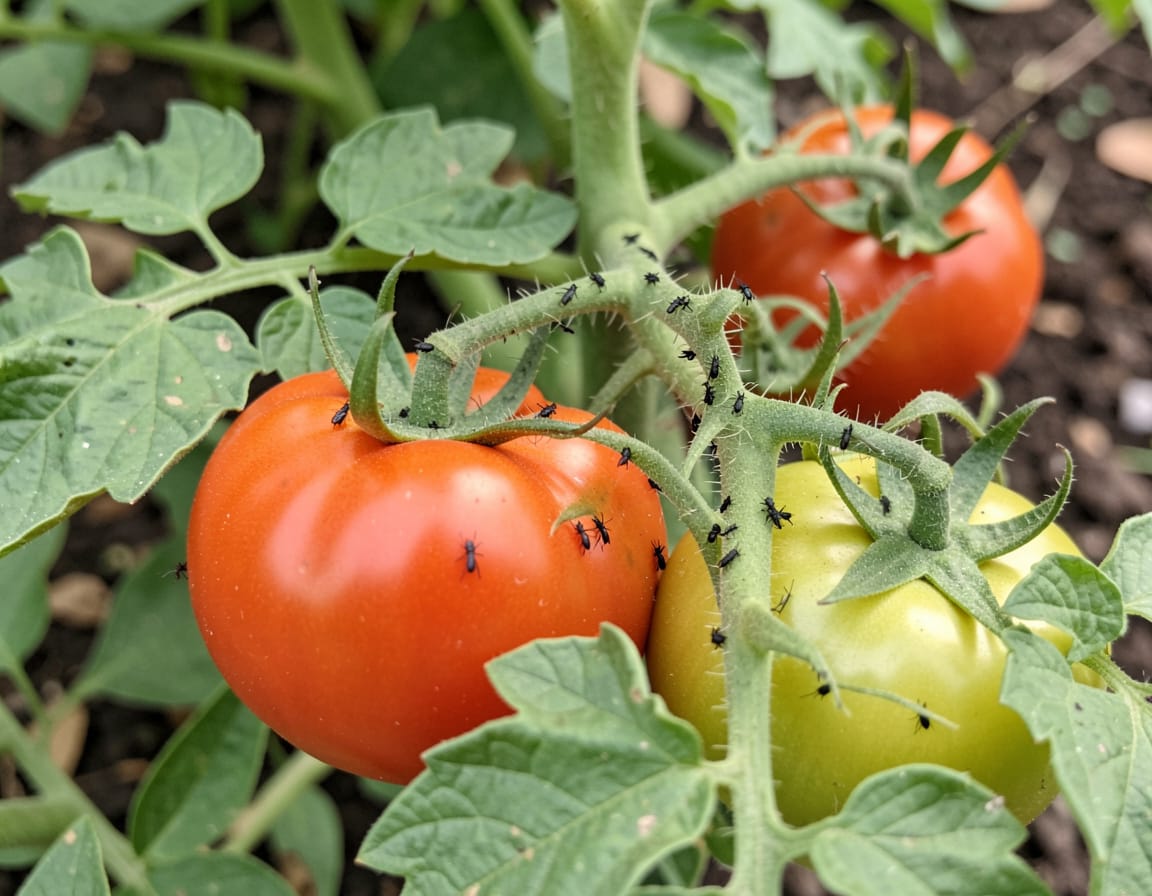
If you’ve walked out to check your tomato patch and spotted tiny black flying insects hovering around the leaves, you’re not alone. In my own home garden, I’ve battled these pests almost every summer usually right when the plants start looking strong. These bugs may seem harmless at first, but they can quickly weaken tomato plants, stunt growth, and attract secondary problems like mold.
The good news: once you identify them correctly and act early, they’re easy to control even in small balcony or terrace gardens.
This guide explains exactly what the little black flying bugs on your tomato plants are, why they show up, and how to get rid of them using methods I’ve personally tested in real gardens.
Why These Little Black Flying Bugs Appear on Tomato Plants
In most home gardens, the “little black flying bugs” on tomatoes are one of the following:
- Fungus gnats
- Aphids (black aphids in particular)
- Whiteflies that appear dark when backlit
- Thrips (some species appear dark and small)
These insects show up when conditions are warm, slightly humid, and when the potting soil stays damp for too long. Tomato plants are vigorous growers, and pests love the tender new growth and moist soil that often surrounds container-grown tomatoes.
The method below works because it disrupts their breeding cycle, removes food sources, and strengthens the tomato plant so it can recover quickly.
Why This Method Works
In real gardens, most infestations happen because:
- Soil stays constantly moist, attracting fungus gnats.
- Tender tomato growth releases more sap, attracting aphids and thrips.
- Over-fertilizing creates soft, weak growth, which pests exploit.
- Low airflow in balconies or patios allows flying bugs to multiply.
The solution focuses on three things I’ve learned from hands-on experience:
- Drying the topsoil breaks the life cycle of soil-dwelling pests like fungus gnats.
- Removing soft, damaged, or infested leaves deprives sap-feeding pests of food.
- Using light, natural sprays knocks down active pests without burning tomato foliage.
Most gardeners try to treat the bugs directly, but the real fix is correcting the environment the pests thrive in.
What You’ll Need
You probably already have most of these:
- Sticky yellow traps (budget-friendly and very effective)
- Neem oil or insecticidal soap (organic-safe)
- A small spray bottle
- Fresh, well-draining potting mix (if repotting is needed)
- A small fan (for balconies or patios with poor airflow)
- Diatomaceous earth (optional but helpful)
- Clean pruning scissors
Eco-friendly options:
- Neem oil
- Castile soap spray (½ teaspoon per liter of water)
- Sticky traps made from recycled plastic + homemade glue (resin + oil)
Step-by-Step: How to Identify and Remove the Little Black Flying Bugs on Tomato Plants
Step 1: Identify the Bug
Check these signs:
Fungus gnats
- Tiny black flies hovering around soil
- They scatter when you water
- Topsoil looks constantly damp
- Larvae visible in soil if you look closely
Black aphids
- Clustered under leaves or around stems
- Sticky residue (honeydew) on leaves
- Curling or distorted new growth
Thrips
- Extremely tiny, fast-moving, slender dark bugs
- Silvery scratches or streaks on leaves
- Flowers look damaged
Whiteflies (sometimes appear dark while flying)
- Cloud of tiny insects when you touch the plant
- White powdery adults but dark immature stages
Correct identification helps, but the treatment below works safely for all four.
Step 2: Dry Out the Soil Surface
Time: Morning or evening Why: Fungus gnats lay eggs in moist soil
Let the top inch of soil dry completely before watering again. In my container tomatoes, simply switching to deeper, less frequent watering made the gnats disappear within a week.
If the soil stays wet too long, check drainage holes or add aeration (perlite or coarse sand).
Step 3: Set Sticky Yellow Traps
Hang or place 1–2 per tomato plant.
In small balcony gardens, these traps catch:
- Adult fungus gnats
- Winged aphids
- Thrips
- Whiteflies
They help you monitor progress too. You’ll know it’s working when the number of new insects decreases after 2–3 days.
Step 4: Spray with Neem Oil or Insecticidal Soap
Time: Early evening (to avoid leaf burn) Frequency: Every 4–5 days for 2 weeks
Spray:
- Undersides of leaves
- New growth
- Stems
- Top layer of soil
From experience, light, repeated sprays are better than one strong spray. Strong soap can burn tomato leaves.
If using neem:
- Mix 1 teaspoon neem oil + a few drops mild soap + 1 liter water.
Shake well and apply immediately.
Step 5: Prune Infested Leaves
Remove:
- Curled leaves
- Sticky leaves
- Leaves with clusters of black aphids
Pruning improves airflow and removes the bugs’ hiding spots.
Important: Do not compost severely infested leaves dispose of them in sealed bags.
Step 6: Improve Airflow
Especially for balcony and terrace gardeners.
A small fan running for a few hours a day:
- Disrupts flying insects
- Keeps leaves dry
- Strengthens tomato stems naturally
I’ve seen huge reductions in whiteflies and gnats just by increasing airflow.
Pro Tips & Best Practices
- Water deeply but less often tomatoes hate constantly damp soil.
- Avoid splashing water on leaves, which attracts pests.
- Use mulch sparingly on potted tomatoes; too much keeps soil too moist.
- Don’t over-fertilize soft growth attracts aphids instantly.
- Check the underside of leaves weekly; early detection saves huge headaches.
- If pots stay wet, lift them slightly using pot feet or bricks.
Common Mistakes to Avoid
- Using strong soap that burns tomato leaves
- Watering every day “just because”
- Ignoring airflow in enclosed balconies
- Spraying during midday sun
- Using chemical pesticides in small home gardens (they cause more harm than good)
FAQ
Why are there so many tiny black flies in my tomato soil?
You likely have fungus gnats. They breed in moist potting soil, and tomatoes grown in containers are especially prone when watering is too frequent.
Can these black bugs kill my tomato plants?
Usually not immediately, but they weaken the plant, slow growth, and open the door to fungal problems. Heavy aphid or thrip infestations can damage fruiting if ignored.
Is neem oil safe for tomato plants?
Yes,if applied in the evening and mixed correctly. Midday spraying can cause leaf burn.
Why do these bugs keep coming back?
Most gardeners treat the insects but not the environment. Consistently wet soil, low airflow, and excess fertilizer invite pests back.
Can I still eat the tomatoes after treating the plants?
Yes. Neem oil and insecticidal soap are safe when used correctly. Rinse tomatoes before eating.
When NOT to Use This Method
- During extreme heatwaves (above 32°C), neem oil can burn foliage.
- On newly transplanted seedlings use milder soap sprays first.
- If soil is already extremely dry and hydrophobic; fix watering issues before treating pests.
For very heavy infestations, you may need to repot with fresh soil.
Alternative Methods
Beneficial insects
Ladybugs and lacewings help with aphids and whiteflies, but they’re harder to use in small balconies.
Hydrogen peroxide soil drench (for gnats)
Works well but must be diluted correctly (1 part 3% peroxide to 4 parts water). Best for severe infestations only.
Sticky traps alone
Good for monitoring but not enough as a standalone treatment.
For most home gardeners, the neem + airflow + soil drying method is easiest and safest.
Conclusion
If you’re wondering “what are the little black flying bugs on my tomato plants?”, the answer is usually fungus gnats, black aphids, thrips, or whitefliesall common in warm, container-based gardens. With early action and the simple steps above, you can clear them out quickly and keep your tomatoes healthy without harsh chemicals.
Focus on:
- Dry soil cycles
- Gentle but repeated sprays
- Good airflow
- Regular leaf checks
With a little patience and consistency, your tomato plants will bounce back fast and you’ll be better prepared the next time these pests show up.