Every product is independently reviewed and selected by our editors. If you buy something through our links, we may earn an affiliate commission at no extra cost to you.
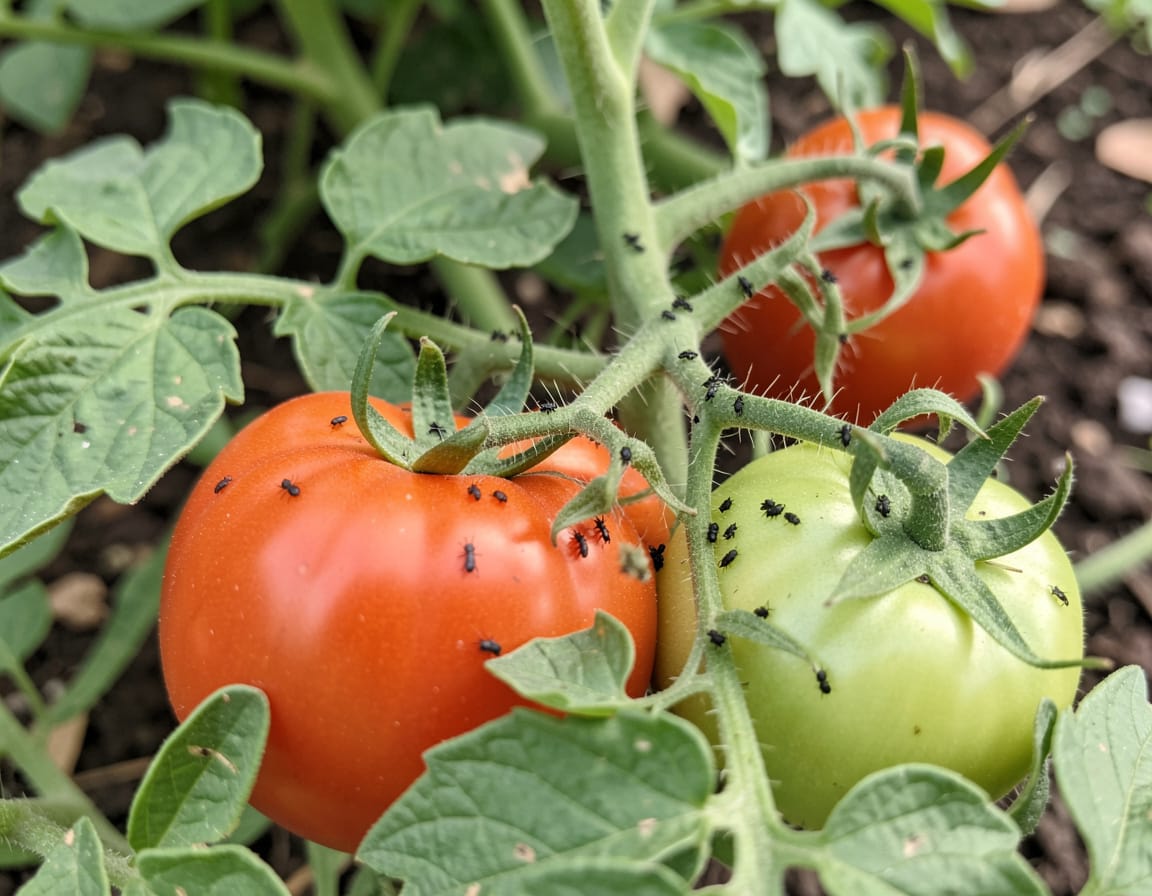
If you’ve ever walked out to check your tomatoes and suddenly noticed tiny black bugs clustered on the stems or hiding under the leaves, you’re not alone. In my own garden, these pests usually show up right when the plants are pushing new growth. They can weaken tomato plants surprisingly fast if you ignore them.
This guide breaks down exactly what those little black bugs are, how to confirm which pest you’re dealing with, and the fastest, safest ways to get rid of them tested in real home gardens and beginner-friendly.
Why Little Black Bugs Appear on Tomato Plants
Most black pests show up when:
- Weather turns warm and humid
- Plants are stressed from irregular watering
- Leaves are clustered tightly, creating hiding spots
- Ants are farming sap-sucking pests (aphids especially)
These bugs thrive on soft, new tomato growth. The earlier you catch them, the easier they are to remove.
The Most Common Little Black Bugs on Tomato Plants
Based on real-world garden observations, 95% of the time, those bugs are one of these:
- Black Aphids
- Flea Beetles
- Thrips
- Spider Mites (dark varieties)
- Black Vine Weevil Larvae (less common but possible in container tomatoes)
Below is how each one behaves and the signs to look for.
Why Identifying the Bug Matters
Each insect damages tomato plants differently, so treatment also changes. Sap suckers like aphids need a different approach than chewing insects like flea beetles.
Think of it this way:
- If the leaves look sticky or curled: Aphids or thrips
- If the leaves look “shot-holed” like tiny BB pellets: Flea beetles
- If there’s fine webbing: Spider mites
- If roots are failing in containers: Vine weevils
Accurate ID saves you from using the wrong method and wasting time.
What You’ll Need
For the solutions below:
- A spray bottle or pump sprayer
- Mild insecticidal soap or diluted castile soap
- Neem oil (cold-pressed, garden-safe)
- Soft cloth or microfiber pad
- Bucket of water
- Yellow sticky traps (for thrips/flea beetles)
- Row cover (optional, for flea beetles)
Eco-safe options:
- Homemade soap spray (1–2 tsp gentle soap per liter of water)
- Neem + water + a few drops of natural dish soap as an emulsifier
Avoid harsh chemical pesticides tomatoes are sensitive, and predators like ladybugs are too valuable to kill.
How to Identify Each Type of Little Black Bug (With Practical Fixes)
1. Black Aphids (Most Common)
How to identify:
- Cluster on new growth and stems
- Soft, pear‑shaped bodies
- Leaves become sticky from honeydew
- Ants often march up and down the plant
What works in real gardens:
- Spray the plant with water to knock them off especially the undersides of leaves.
- Follow with insecticidal soap every 3–4 days for 1–2 weeks.
- If ants are farming them, control the ants or they come right back.
Best time to treat: Early morning or at sunset (soap can burn leaves in midday sun).
2. Flea Beetles
How to identify:
- Tiny black jumping beetles
- Blast away quickly when you disturb the plant
- Leaves develop many tiny round “shot holes”
What works:
- Lay yellow sticky traps around the base of the plant.
- Drench soil with neem to interrupt larvae.
- Cover young plants with row cover until they grow stronger.
In my garden, flea beetles rarely kill tomatoes, but they can stunt early growth badly.
3. Thrips
How to identify:
- Slender, fast-moving, dark insects
- Silvery streaks on leaves
- Flowers become distorted
- Black specks of excrement on leaves
What works:
- Place yellow or blue sticky traps near flowers.
- Spray with neem every 5–7 days (evenings only).
- Remove heavily infested leaves thrips multiply fast.
Thrips love dry heat, so keeping plants consistently watered helps.
4. Spider Mites (Dark-Colored Types)
How to identify:
- Dust-like black or dark red dots
- Fine webbing on leaf undersides
- Leaves turn stippled, then dry out
Often appear during hot, dry spells especially on container tomatoes.
What works:
- Rinse leaves very well mites hate moisture.
- Use insecticidal soap or neem every 3 days for 2 weeks.
- Increase humidity slightly (spraying soil, not leaves).
5. Black Vine Weevil Larvae
Less common but possible if container soil stays too wet.
How to identify:
- Adults are black beetles; larvae are white with brown heads
- Plants wilt despite regular watering
- Roots appear chewed
What works:
- Remove affected soil from containers.
- Apply beneficial nematodes (eco-safe).
- Improve drainage vine weevils love soggy pots.
Step-by-Step Treatment Plan for Most Little Black Bugs on Tomatoes
If you aren’t sure which pest it is, this general method works for aphids, thrips, spider mites, and flea beetles.
- Inspect the plant closely. Look at undersides of leaves most pests hide there.
- Blast pests off with water. A strong spray from a hose nozzle removes about 80% immediately.
- Apply insecticidal soap or neem. Coat the undersides of leaves, stems, and new growth. Treat every 3–4 days for 2 weeks.
- Protect the plant from direct midday sun after spraying. Soap + direct sun = leaf burn.
- Improve airflow around the plant. Remove lower leaves touching the soil.
- Water consistently. Stressed tomatoes attract pests faster.
- Add sticky traps if thrips or flea beetles are suspected.
- Repeat treatments until no new bugs appear.
Pro Tips from Hands-On Experience
- Check early, especially after rain pests explode during humid weeks.
- Aphids return if ants are present; manage ants first.
- Never spray neem in bright sunlight it will scorch tomato leaves.
- Over-fertilized tomatoes attract pests due to tender new growth.
- Healthy airflow beats 50% of pest issues in small garden spaces.
FAQs
Why do my tomato plants suddenly have tiny black bugs? Usually warm, humid weather plus fresh new growth. Sap-sucking pests love soft tissue.
Are little black bugs on tomatoes harmful? Yes. They weaken plants, reduce fruit size, and spread disease if not controlled early.
Can I still eat tomatoes if the plant had pests? Yes wash them thoroughly. The bugs affect leaves, not the fruit flesh.
How often should I treat my tomato plant? Every 3–4 days with soap or neem until no new bugs appear.
Can I use vinegar or bleach spray? No both damage tomato leaves. Stick with garden-safe treatments.
Do ladybugs help? Absolutely. Ladybugs devour aphids and thrips. Avoid chemicals so they can thrive.
When NOT to Use Neem or Soap Spray
Avoid spraying if:
- Temperature is above 85°F (30°C)
- Plant is drought-stressed
- Leaves are already sunburned
- You used another oil-based product recently
In these cases, treat with water spray + physical removal first.
Alternative Methods
1. Biological Controls
- Ladybugs for aphids
- Lacewings for thrips
- Predatory mites for spider mites
Great for organic gardeners but often slower.
2. Row Covers Best for flea beetles on young plants.
3. Companion Planting Basil, marigold, and onion family plants deter pests moderately well.
Conclusion
If you’re wondering “What are the little black bugs on my tomato plants?”, chances are you’re dealing with aphids, flea beetles, thrips, or spider mites. Once you know what to look for, treating them becomes much easier.
A consistent routine strong water spray, insecticidal soap or neem, and good airflow usually clears the problem within a couple of weeks in real home gardens.
Stay observant, treat early, and your tomatoes will bounce back quickly. With a little regular care, you’ll stay ahead of most pest issues and enjoy a healthier, more productive tomato season.