Every product is independently reviewed and selected by our editors. If you buy something through our links, we may earn an affiliate commission at no extra cost to you.
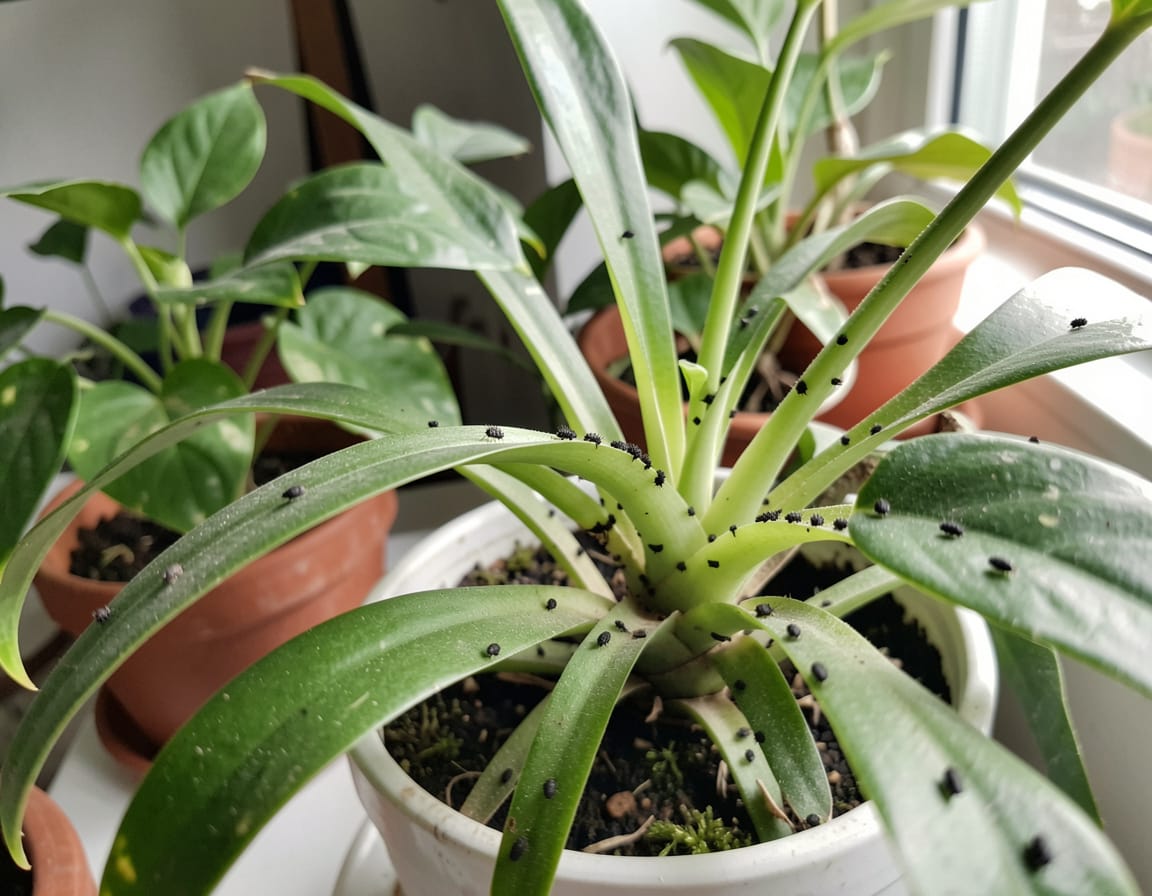
If you’ve suddenly noticed little black bugs on your indoor plants especially hovering around the soil or crawling on leaves you’re not alone. I’ve dealt with this many times in my own home and balcony garden, and the good news is that most black bugs on houseplants are easy to identify and get rid of once you know what you’re dealing with.
This guide breaks everything down in simple, practical steps you can use immediately.
Why You’re Seeing Little Black Bugs on Indoor Plants
In most real-world indoor setups (windowsills, grow shelves, balcony corners), these tiny black insects show up because the soil stays damp for too long, or there’s decaying organic matter in the pot. Indoors, where air movement is low, moisture doesn’t evaporate quickly making the perfect environment for pests.
The most common culprits are:
- Fungus gnats (tiny black flies hovering around the soil)
- Aphids (pear-shaped black insects clustered under leaves)
- Thrips (slender black insects that move quickly)
- Spider mites (dark forms) (tiny dots that leave webbing)
Most gardeners mistake them all for “gnats,” but identifying them correctly saves a lot of frustration.
I’ve managed these pests dozens of times in my own home garden, and the solutions below are the ones that reliably work in real living spaces not just theory.
Why These Methods Work
Indoor plant bugs follow a simple pattern:
- Fungus gnats breed in constantly moist potting soil.
- Aphids and thrips thrive on soft new growth and overfertilized plants.
- Spider mites explode in dry, dusty indoor conditions.
When you interrupt their environment by drying soil, improving airflow, cleaning leaves, or using the right organic controls the pests can’t reproduce.
These aren’t complicated fixes. They just require consistency.
What You’ll Need
You don’t need expensive pesticides. Most indoor gardeners already have these:
- Sticky traps (yellow or blue)
- Neem oil or insecticidal soap
- Hydrogen peroxide (3%)
- A spray bottle
- Fresh potting mix (well-draining)
- Bottom-watering tray
- Small fan (optional but very helpful)
Eco-safe options:
- Cinnamon powder (soil fungus reducer)
- Mosquito bits (Bti) for fungus gnat larvae
- Diatomaceous earth (food-grade)
Most of these are safe for homes with pets/children when used correctly avoid airborne dust and store inputs securely.
Step-by-Step: How to Identify and Remove Little Black Bugs
1. Identify the Bug (1 minute)
Check these signs:
Fungus gnats
- Tiny black flies
- Hovering around soil
- Larvae are tiny white worms in soil
Aphids
- Pear-shaped black or dark insects
- Usually clustered on stems/new leaves
- Leaves become sticky
Thrips
- Thin, black, fast-moving insects
- Leaves get silver streaks
Spider mites
- Black dots on leaves
- Webbing between stems
- Leaves look dusty or speckled
Once you identify the bug, use the appropriate steps below.
2. How to Get Rid of Fungus Gnats (Most Common Indoor Pest)
From real hands-on experience, this is the combo that works fastest:
Step 1: Let the Soil Dry Out
Allow the top 2–3 cm of soil to dry before watering again. Gnats cannot breed in dry soil.
Step 2: Use Hydrogen Peroxide Soil Drench
Mix:
- 1 part 3% hydrogen peroxide
- 4 parts water
Pour over soil once. This kills larvae safely without harming the plant.
Step 3: Add Sticky Traps
Place a few yellow sticky traps near the soil surface. They catch adult gnats within hours.
Step 4: Add a Top Layer
Add one of these:
- Fine gravel
- Coarse sand
- Diatomaceous earth
This prevents adults from laying eggs.
Step 5: Improve Airflow
Set a small fan on low for a few hours daily. Gnats hate moving air.
3. How to Get Rid of Aphids
Step 1: Wash Them Off
Use lukewarm water and gently rinse leaves (especially undersides).
Step 2: Spray Neem Oil or Insecticidal Soap
Apply every 3–4 days for two weeks.
Step 3: Cut Back Leggy, Soft Growth
Aphids love tender new leaves.
4. How to Get Rid of Thrips
Step 1: Prune Affected Leaves
Dispose of them securely.
Step 2: Use Blue Sticky Traps
Thrips are more attracted to blue than yellow.
Step 3: Apply Neem or Soap
Spray leaves and stems thoroughly, especially crevices.
5. How to Get Rid of Spider Mites
Step 1: Rinse the Plant
Focus on undersides of leaves.
Step 2: Increase Humidity
Mist daily or place a pebble tray with water. Spider mites slow down drastically in humid environments.
Step 3: Use an Oil Spray
Neem or horticultural oils suffocate mites and eggs. Spray weekly for 3 weeks.
Pro Tips & Best Practices
- Always check under leaves that’s where most pests hide.
- Bottom water your plants to keep the topsoil dryer.
- Quarantine any new plant for 7–10 days.
- Overfertilizing causes soft growth that attracts pests go easy on nitrogen.
- If you see flies when you water, it’s almost always fungus gnats.
- Replace old, compacted potting mix yearly; pests love stale soil.
FAQ
Why do I keep getting little black bugs in my plant soil?
Usually because the soil stays damp too long or has decayed organic matter.
Are fungus gnats harmful to my plants?
Adult gnats are harmless, but larvae can damage roots in large numbers.
Can I use cinnamon to kill fungus gnats?
Cinnamon helps reduce soil fungus (their food source), but it doesn’t kill larvae completely.
How often should I apply neem oil?
Every 7 days, or every 3 days for heavy infestations.
Are these bugs dangerous to pets?
Most are harmless, but avoid letting pets ingest soil drenched with hydrogen peroxide or neem.
Will repotting remove bugs?
Repotting helps if the soil is heavily infested, but always combine with other methods.
When NOT to Use These Methods
- Avoid hydrogen peroxide drenches on very young seedlings.
- Do not use neem oil in direct hot sunlight (leaf burn).
- Don’t use diatomaceous earth where pets may inhale dust.
- Do not over-dry moisture-loving plants (calatheas, ferns).
Alternative Methods You Can Try
Different approaches work better depending on your setup:
Bti (Mosquito Bits)
- Highly effective on fungus gnat larvae
- Safe and organic
- Works slowly (1–2 weeks)
Soil Replacement
- Best for severe infestations
- Instant reset for the plant
- Messy but effective
Sticky Traps Alone
- Helps monitor pests
- Won’t solve larvae problems
Biological Controls (beneficial nematodes)
- Organic and powerful
- Overkill for small houseplant collections
Conclusion
The little black bugs on your indoor plants whether fungus gnats, aphids, thrips, or mites are annoying but very fixable. By identifying the pest correctly, adjusting watering habits, and using gentle, proven treatments, you can clear the infestation within a couple of weeks.
Practical indoor gardening is all about balance: not too much water, enough airflow, and regular leaf checks. Once you build those habits, pest problems become rare and easy to manage.
If you’d like, I can also help you identify the bugs you have just send a photo.