Every product is independently reviewed and selected by our editors. If you buy something through our links, we may earn an affiliate commission at no extra cost to you.
Introduction: Why DIY Vertical Garden Options Matter
Over the past decade, DIY vertical garden options have become one of the most practical and beautiful solutions for U.S. homeowners and renters looking to bring more greenery into their living spaces. A vertical garden whether a simple wall-mounted herb rack or a full living wall installation allows you to grow plants upward instead of outward, making it ideal for small patios, balconies, or apartments with limited floor space.
From an organic home decorating perspective, vertical gardens do far more than save space. They improve indoor air quality, reduce stress, and enhance the natural aesthetic of your home. The plants act as living décor, filtering toxins while adding texture and life to your walls. And when you design and build them sustainably using reclaimed wood, untreated metal, or organic fibers you’re also reducing your environmental footprint and avoiding the off-gassing common with synthetic materials.
In my work helping families across the U.S. transform their homes naturally, I’ve found that the most successful vertical gardens are those built with realistic maintenance in mind and matched to the home’s light, humidity, and lifestyle. Below, I’ll walk you through the best DIY vertical garden options, how to build and care for them, and how to keep them healthy and sustainable year-round.
Everyday Organic Styling & Care Routine
Regardless of which vertical garden setup you choose, consistency is key. Plants thrive on small, regular acts of care rather than sporadic attention. Here’s a weekly rhythm I recommend to my clients:
- Check moisture levels – Stick your finger about an inch into the soil. If it’s dry, water gently until moisture begins to seep through the drainage holes.
- Rotate plants – Every few weeks, rotate or swap plants between sections to ensure even light distribution.
- Wipe leaves – Dust blocks light absorption; gently wipe leaves with a damp, organic cotton cloth.
- Inspect for pests – Look for tiny webs or sticky residue. Neem oil or insecticidal soap (OMRI-approved) are safe, non-toxic remedies.
- Feed organically – Once a month during the growing season, use a diluted liquid seaweed or compost tea fertilizer.
These habits keep your vertical garden vibrant without relying on chemical fertilizers or plastic-based décor.
What You’ll Need
When choosing among DIY vertical garden options, materials matter as much as design. The goal is to create a structure that’s both sustainable and healthy for your indoor environment.
| Item | Why It’s Used | Organic / Health Benefits | Sustainability Considerations |
| Reclaimed wood panels | Base frame or wall backing | Free of chemical finishes, adds warm texture | Diverts wood from landfills, reduces demand for new lumber |
| Terracotta or ceramic pots | Individual plant holders | Breathable, prevents root rot | Long-lasting and natural |
| Organic potting mix | Growing medium | No synthetic fertilizers or pesticides | Supports soil biodiversity |
| Coconut coir or sphagnum moss | Moisture retention | Natural alternative to peat | Renewable and compostable |
| Stainless steel or jute wall hooks | Mounting structure | Non-toxic alternative to plastic | Durable, recyclable |
| Drip irrigation kit (optional) | Controlled watering | Reduces water waste and overwatering | Conserves water and energy |
Deep Organic Setup or Seasonal Refresh
I encourage homeowners to treat their vertical gardens as living art installations that evolve with the seasons. Here’s how to refresh your setup sustainably:
Spring & Summer
- Replant herbs and fast growers: Basil, mint, parsley, and strawberries love the longer days.
- Top-dress the soil: Add a thin layer of compost or worm castings to replenish nutrients.
- Check irrigation: Warmer months evaporate moisture faster; consider adding a drip line or self-watering reservoir.
Fall & Winter
- Bring tender plants indoors: Many herbs and succulents will continue growing on a sunny kitchen wall.
- Switch to evergreens or ferns: They thrive in cooler, lower-light conditions.
- Clean and seal wooden frames: Use a plant-safe, natural oil such as tung or linseed oil.
This rotation keeps your design fresh and ensures your plants remain healthy through seasonal changes in temperature and daylight.
The Best DIY Vertical Garden Options
Below are the most functional and attractive vertical garden ideas I’ve successfully implemented in real U.S. homes. Each comes with practical notes on where it works best and how to keep it organic.
1. Wall-Mounted Pocket Planters
Fabric or felt wall pockets (made of recycled materials) are affordable and easy to install. They work well for herbs, small ferns, and trailing pothos.
- Best for: Apartments, kitchen walls, or patios.
- Tip: Choose pockets made from recycled PET felt or organic jute not synthetic felt, which can off-gas.
- Care: Water from the top row and let gravity do the rest, ensuring even distribution.
2. Reclaimed Wood Pallet Garden
Reclaimed pallets sanded and sealed with organic oil make excellent rustic vertical planters.
- Best for: Balconies or backyard fences.
- Tip: Always confirm the pallet is heat-treated (marked “HT”), not chemically treated (“MB”).
- Care: Lined pockets prevent soil loss and keep moisture even.
3. Hanging Mason Jar Garden
Mount a row of mason jars to a plank using hose clamps for a simple, modern look.
- Best for: Kitchen herbs or succulents near a window.
- Tip: Add drainage pebbles at the bottom of each jar.
- Care: Mist lightly; jars trap moisture easily.
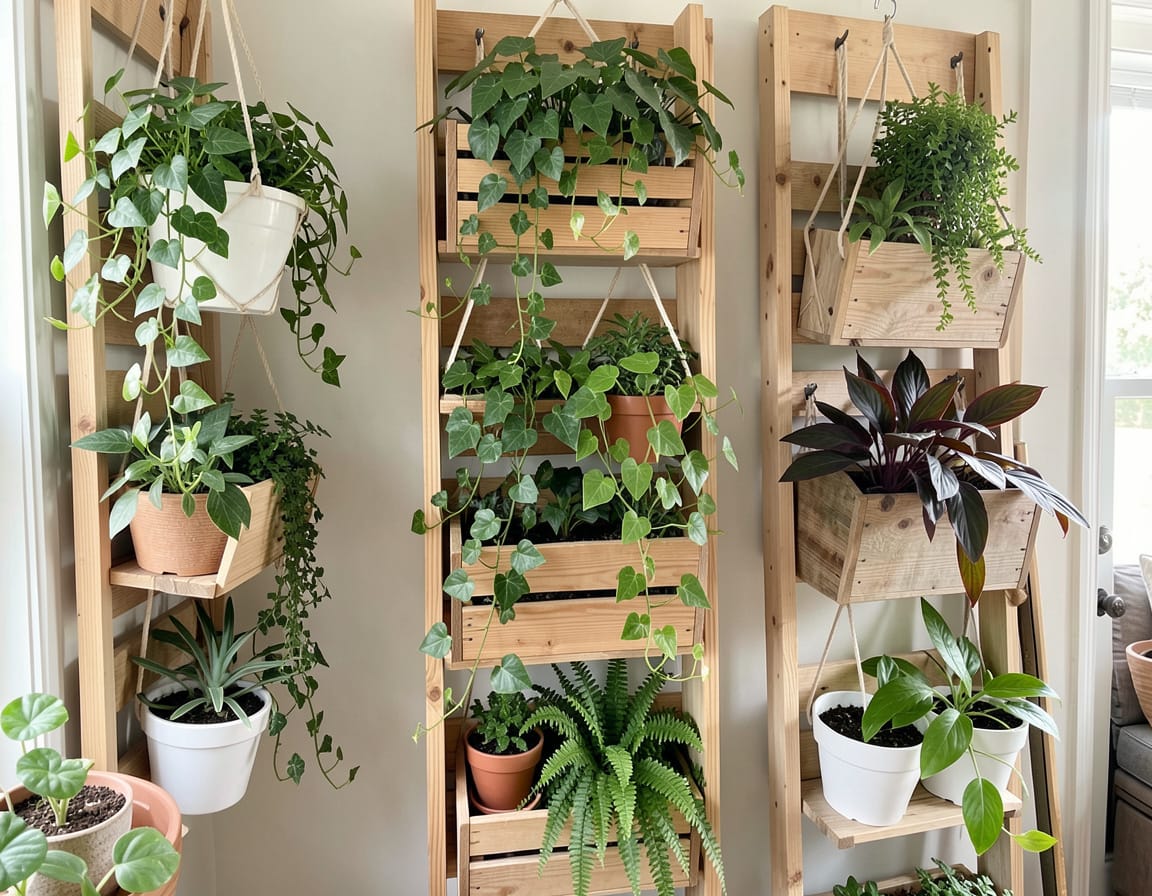
4. Ladder-Style Vertical Planter
A repurposed wooden ladder makes a beautiful vertical plant stand for mixed greenery.
- Best for: Living rooms or patios with partial sunlight.
- Tip: Style with layers taller plants on top, cascading species below.
- Care: Check for wood stability and reseal annually with natural oil.
5. Fence-Mounted Modular Boxes
Great for suburban homes, these square wooden boxes can be rearranged seasonally.
- Best for: Outdoor herbs or pollinator-friendly flowers.
- Tip: Use cedar it resists rot naturally and needs no synthetic sealants.
- Care: Replace or refresh soil annually to avoid compaction.
6. Hydroponic Vertical Tower (Organic-Compatible)
For those who want a more advanced system, hydroponic towers can be organic if you use mineral-based nutrients and natural pest prevention.
- Best for: Sunrooms or patios with strong light.
- Tip: Clean reservoirs monthly to prevent algae.
Prevention & Sustainability Tips
- Avoid synthetics: Skip plastic planters and vinyl-coated materials. These can leach chemicals over time.
- Mind the weight: Always check your wall load-bearing capacity before mounting.
- Reuse water: Collect excess water from the bottom tray and reuse it for outdoor plants.
- Compost trimmings: Dead leaves and stems make great compost.
- Encourage biodiversity: Mix flowering plants with edibles to attract pollinators and beneficial insects.
Common Mistakes to Avoid
- Using chemically treated pallets or lumber – “MB” stamped pallets are treated with methyl bromide, a toxic pesticide. Always choose “HT” or untreated wood.
- Overwatering – Especially in closed systems like mason jars, roots can suffocate easily.
- Ignoring light conditions – A north-facing wall won’t sustain sun-loving herbs. Choose shade-tolerant species instead.
- Neglecting ventilation – Plants need airflow to prevent mold. Avoid sealing vertical gardens against walls without gaps.
- Falling for “eco-friendly” marketing – Many so-called green products still contain synthetic adhesives or finishes. Look for third-party certifications (FSC, Greenguard, or OEKO-TEX).
Local U.S. Home Context
Whether you live in a Brooklyn apartment with a single sunny window or a Phoenix patio with intense sunlight, every environment has its own vertical gardening rhythm:
- Apartments: Go for lightweight felt planters or wall-mounted racks that don’t require drilling (use Command hooks).
- Urban balconies: Use compact vertical structures with drip trays to keep water from dripping onto neighbors.
- Suburban yards: Fence-mounted boxes or standing ladder gardens thrive year-round.
- Cold climates: Keep frost-sensitive plants portable for easy indoor transition.
- Low-light homes: Use low-light plants like pothos, philodendron, or ZZ plants with LED grow lights (warm-spectrum, low-energy).
Extra Expert Tips
- Budget-friendly upgrades: Reuse old picture frames to create “living frames” for small succulents.
- Low-maintenance approach: Stick to hardy, slow-growing varieties like snake plants or ferns if you travel frequently.
- Long-term sustainability: Rotate plants to maintain soil health and prevent nutrient depletion.
- Water-smart design: Add a thin layer of biochar in containers it improves moisture retention naturally.
- Plant pairing: Combine herbs that share similar light and moisture needs (e.g., basil, parsley, and thyme together).
Frequently Asked Questions (FAQ)
1. What’s the easiest DIY vertical garden option for beginners? Fabric wall pockets are by far the easiest. They’re lightweight, affordable, and simple to mount. Just be sure to choose recycled or organic materials and place them where they’ll receive bright, indirect light.
2. Can I build a DIY vertical garden indoors without damaging my walls? Yes. Use freestanding ladder-style planters or wall racks mounted with removable adhesive hooks. Always protect your wall with a moisture-resistant backing like cork or bamboo.
3. Which plants grow best in a DIY vertical garden? Herbs (basil, mint, parsley), trailing plants (pothos, ivy), and compact greens (lettuce, spinach) do exceptionally well. Match the plants to your light conditions this is the most common success factor.
4. How do I keep my DIY vertical garden organic? Use untreated, natural materials; organic potting mix; and avoid synthetic fertilizers or pest sprays. Compost trimmings and reuse materials whenever possible.
5. What should I do if my wall garden starts developing mold or mildew? Improve airflow by spacing plants further apart or adding a small fan. Wipe affected areas with a mix of water and a few drops of tea tree oil, which naturally inhibits mildew.
6. Can a vertical garden improve indoor air quality? Absolutely. Certain plants like peace lilies, spider plants, and ferns help remove common VOCs from the air, making them excellent choices for an indoor vertical setup.
7. Are vertical gardens suitable for renters? Yes. Freestanding options or modular hanging racks are renter-friendly and removable. I often recommend them for clients who want greenery without making permanent wall changes.
Conclusion: Building a Sustainable Future, One Wall at a Time
A well-planned DIY vertical garden isn’t just an aesthetic trend it’s a practical, health-focused, and environmentally conscious approach to home living. By using natural materials, organic soil, and mindful maintenance, you transform blank walls into thriving ecosystems that purify your air, calm your mind, and root your home in sustainability.
Whether you’re working with a sunny balcony or a shaded kitchen corner, the principles remain the same: start small, stay organic, and let your plants lead the way. With the right approach, your vertical garden will grow not only upward but with you, season by season, toward a more peaceful and natural home.