Every product is independently reviewed and selected by our editors. If you buy something through our links, we may earn an affiliate commission at no extra cost to you.
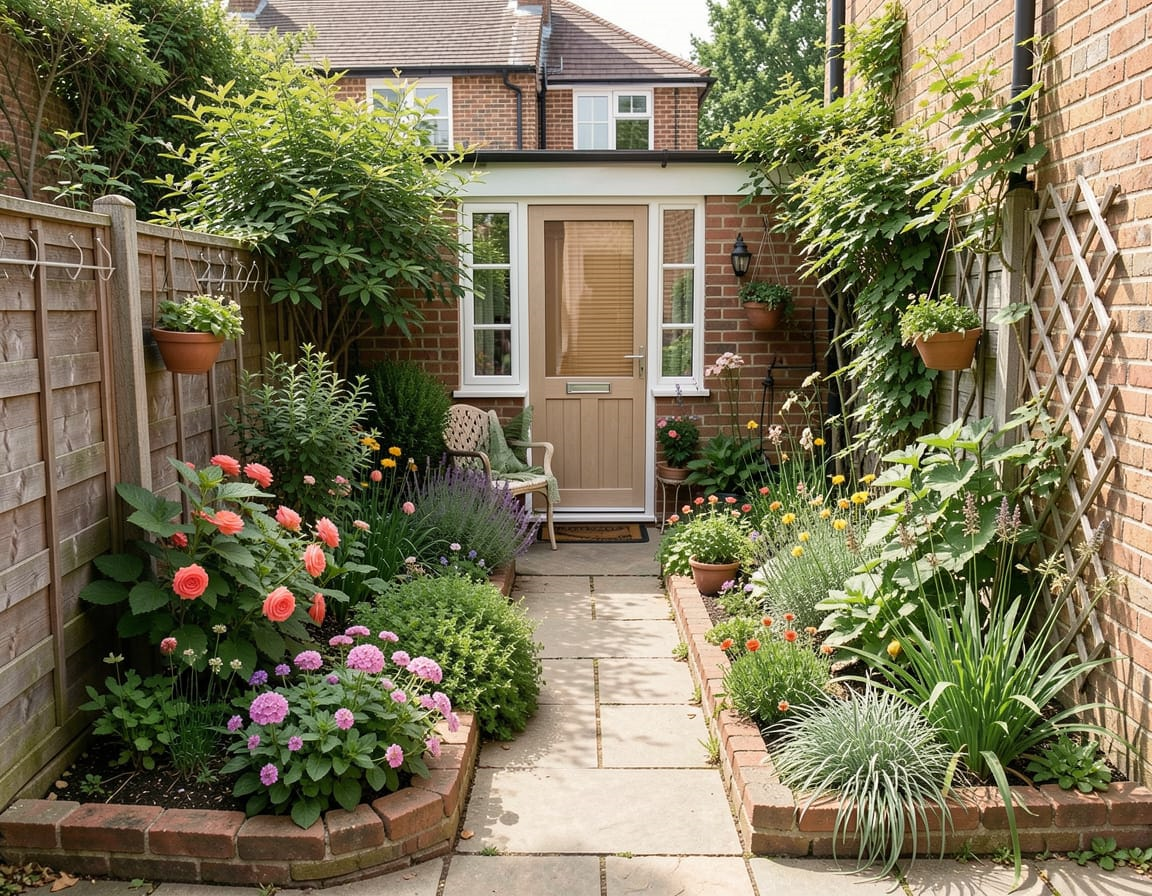
Tiny front gardens often feel impossible to design there’s barely any space, the soil is usually poor, and every plant or object has to earn its place. I’ve gardened in everything from narrow townhouse entrances to pocket‑sized terraces, and I’ve learned that tiny front gardens respond best to simple, intentional design with plants chosen for structure and reliability.
If your front garden is just a sliver of soil, a tiny paved area, or a narrow strip along a path, don’t worry. With the right layout and plant choices, you can turn even the smallest entrance into a tidy, green, welcoming space.
Why These Tiny Front Garden Ideas Work
Tiny gardens succeed when you:
- Use vertical space instead of relying on limited ground area
- Focus on structure (form, shapes, height) over quantity
- Choose plants that don’t outgrow the space
- Keep pathways and entrances clear for movement
- Work with the site’s light, drainage, and heat, not against them
In my own small-space gardens, less always becomes more. A few well‑chosen elements outperform clutter every time.
What Materials You’ll Need
- Compact shrubs or small architectural plants
- A couple of good-quality pots or raised containers
- Trellis or wall-mounted planters
- Gravel, mulch, or slate chips for tidy, low-maintenance surfaces
- Basic tools (trowel, pruners, watering can)
- Optional: solar lights, narrow edging, small boulders
Sustainable tip: use peat-free compost and drought-tolerant plants to reduce watering needs.
Tiny Front Garden Ideas (Practical & Beginner-Friendly)
1. Use One Great Container as a Focal Point
In tiny spaces, a single statement pot can transform the whole entrance.
Best plants for this:
- Dwarf olives
- Bay trees
- Compact conifers
- Small ornamental grasses
- Hebe or pittosporum mini varieties
Place the pot where it doesn’t block movement typically beside the door or at a corner.
2. Add Vertical Interest With Wall Planters or Trellis
When ground space is limited, go up.
You can:
- Train star jasmine or clematis on a trellis
- Use wall pockets for herbs and flowers
- Hang three matching planters for symmetry
This works incredibly well in narrow townhouse entrances.
3. Create a Small Gravel Garden With Just a Few Plants
Gravel keeps things tidy and low maintenance.
Steps:
- Lay a weed membrane.
- Add edging.
- Spread gravel or slate.
- Plant only three to five structural plants.
Great choices: lavender, dwarf grasses, small yuccas, sedum, rosemary.
4. Add Ornaments or Boulders for Instant Structure
In small spaces, stones or ornaments can create depth without crowding.
Try:
- One medium boulder with a few low plants around it
- A small birdbath
- A sculptural pot with nothing planted nearby
This keeps the garden visually balanced.
5. Plant a Mini Hedge for Privacy
Even a tiny strip of soil can hold a compact hedge.
Good small-space hedges:
- Box (or box alternatives like Ilex crenata)
- Lonicera nitida
- Dwarf pittosporum
- Lavender (a fragrant “hedge” option)
Keep them regularly trimmed to maintain shape.
6. Use Groundcover Plants Instead of Multiple Pots
These soften harsh edges and make the space look bigger.
Reliable options:
- Creeping thyme
- Erigeron (Mexican fleabane)
- Stonecrop sedums
- Snow-in-summer
Once established, they need very little care.
7. Add a Simple Stepping-Stone Path
Even two or three stepping stones give direction and prevent muddy shoes.
Use contrasting gravel around the stones to make them pop.
Pro Tips & Best Practices
- Choose compact or slow-growing plants tiny gardens cannot handle rapid spreaders.
- Avoid too many small pots; one or two larger ones look cleaner.
- Keep sightlines open don’t block windows or door visibility.
- Use evergreen plants for year-round appeal.
- Test sunlight patterns before planting; tiny spaces can shift from shade to full sun quickly.
Common Beginner Mistakes
- Overcrowding the space with lots of small plants
- Choosing plants that grow too big within one season
- Using mismatched pots (creates visual clutter)
- Forgetting to mulch soil dries out fast in small exposed areas
- Ignoring shade levels (front gardens often get reflected heat from walls)
FAQ
1. How do I make a tiny front garden look bigger? Use vertical elements, limit your color palette, and choose one strong focal point instead of many small items.
2. What plants are best for very small front gardens? Lavender, dwarf grasses, compact hebes, rosemary, small pittosporum, and sedum all do well.
3. Can I use gravel in a tiny front garden? Yes gravel is perfect for small spaces because it’s tidy, permeable, and low-maintenance.
4. How do I maintain privacy in a tiny front garden? Use a narrow hedge, tall ornamental grasses, or a trellis with evergreen climbers.
5. What if my front garden gets no sun? Choose shade lovers like ferns, heuchera, ivy, or small evergreen shrubs adapted to low light.
When NOT to Use Certain Ideas
- Avoid tall plants if your doorway is narrow or you need clear sightlines.
- Don’t use thirsty plants in hot, south-facing entrances they’ll struggle in small soil pockets.
- Skip mixed stone types if the area is tiny it can look messy instantly.
Alternative Approaches
- A potted-only garden (easiest for renters)
- A simple evergreen planting strip with mulch
- A minimal Japanese-inspired gravel entrance
- A modern look with concrete planters and architectural plants
Choose the style that suits the house exterior and your maintenance level.
Conclusion
A tiny front garden doesn’t limit your creativity it simply asks you to be intentional. With a few smart choices like a strong focal pot, vertical planting, simple gravel, and compact shrubs you can create a clean, stylish entrance that stays low‑maintenance and welcoming all year. Tiny spaces thrive on restraint, good structure, and plants that behave. Start small, observe how the space feels through the seasons, and refine as you go.