Every product is independently reviewed and selected by our editors. If you buy something through our links, we may earn an affiliate commission at no extra cost to you.
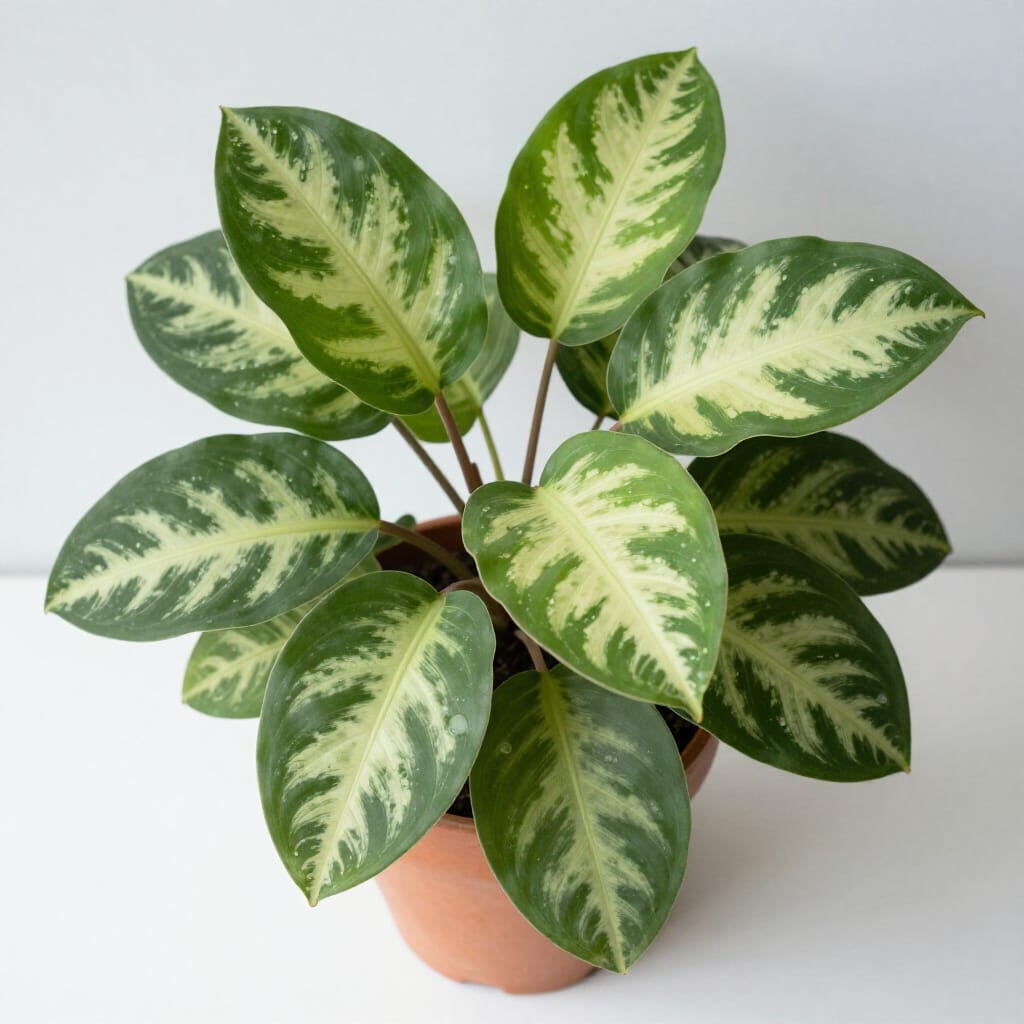
Syngonium ‘Albo Variegatum’ is one of those plants that can look flawless in photos and then frustrate you at home: new leaves come out mostly green, white parts brown and crispy, or the whole plant suddenly droops after a repot.
In real home, balcony, and terrace gardens, most issues with Syngonium podophyllum Albo Variegatum care come down to three things: light that’s either too low or too harsh, watering in a mix that holds too much water, and humidity swings (especially near AC/heaters). The good news is this plant is not “impossible” it just needs more consistency than a standard green syngonium.
Why This Care Method Works (Simple Plant Logic)
Variegation (the white/cream parts) has less chlorophyll, meaning:
- The plant needs brighter light than an all-green syngonium to photosynthesize enough.
- White tissue is more sensitive: it burns faster in sun and browns faster when underwatered, overwatered, or exposed to dry air.
Syngoniums are also aroids with fine roots that want:
- Moisture + oxygen at the same time (not soggy, not bone-dry)
- A medium that drains quickly but doesn’t dry out in 24 hours
That’s why the “airy aroid mix + bright indirect light + measured watering” approach gives the most stable results indoors.
What You’ll Need (Practical, Easily Available)
- Pot with drainage holes (non-negotiable)
- Chunky, airy potting mix (see recipe below)
- Perlite/pumice + orchid bark/coco chips (or one of them)
- Coco coir or quality indoor potting mix as the base
- A stake, moss pole, or trellis (optional but helpful)
- Balanced fertilizer (liquid or slow-release)
- Pruners + rubbing alcohol (tool hygiene)
- Optional: humidity tray, small humidifier, or pebble dish
Pet/child safety note
Syngonium is toxic if chewed (calcium oxalate crystals). Keep away from pets and toddlers, and wash hands after pruning if you’re sensitive.
Syngonium podophyllum ‘Albo Variegatum’ Care: The Core Checklist
1) Light (Most Important for Variegation)
Goal: bright, indirect light for most of the day.
- Best spot: near an east window or a bright north window (in many climates)
- Near a south/west window: keep it back from the glass or behind a sheer curtain
Practical cues (better than rules):
- If new leaves are coming out mostly green, it usually needs more light.
- If white areas look scorched/tan quickly, it’s getting too much direct sun.
- A grow light works well in apartments aim for 10–12 hours/day at a reasonable distance (don’t cook the leaves).
What beginners often miss: “Bright” doesn’t mean “sunbeam.” Direct hot sun through glass can burn white tissue fast.
2) Watering (How to Avoid Root Rot and Crisping)
Syngoniums like evenly moist conditions, but Albo is less forgiving when the mix stays wet.
How I water mine (repeatable method):
- Water thoroughly until excess drains out.
- Then wait until the top 2–5 cm (1–2 in) is dry (or the pot feels noticeably lighter).
- In cooler/low-light weeks, wait longer.
Common watering problems
- Drooping with wet soil: likely overwater/low oxygen → check roots.
- Crispy edges + dry pot fast: mix too airy or pot too small, or too much sun/heat.
If you’re unsure, use a simple finger test or a cheap moisture meter but trust the plant and pot weight more than a schedule.
3) Soil / Potting Mix (Aroid Mix That Works in Real Homes)
Ideal mix: fast draining, airy, but not “dust-dry” the next day.
Beginner-proof recipe (easy to source):
- 40% indoor potting mix or coco coir
- 30% perlite/pumice
- 20% orchid bark (or coco chips)
- 10% worm castings/compost (optional)
If you only have two components:
- Potting mix + perlite (about 50/50) is still much safer than dense soil.
Pot choice
- Use a pot just one size up from the root ball when repotting.
- Oversized pots stay wet too long and trigger root rot.
4) Temperature & Humidity (Keep It Steady)
- Ideal temperature: 18–28°C (65–82°F)
- Avoid cold drafts and hot blasts from AC/heaters.
Humidity
- Albo can survive average indoor humidity, but it looks better around 50–70%.
- If your home is dry, a small humidifier near the plant (not blasting it) helps reduce brown edges on white sections.
Real-world tip: Grouping plants together often stabilizes humidity more than pebble trays ever did in my experience though trays can help a little in small corners.
5) Fertilizer (Support Growth Without Burning)
Variegated plants grow slower, but they still need nutrients.
- Feed in spring/summer: every 2–4 weeks at half strength
- In autumn/winter: reduce or pause (depending on light and growth)
Use a balanced fertilizer (e.g., 10-10-10 or similar) or a foliage/houseplant feed.
Warning learned the hard way: overfeeding can show up as brown tips and stalled roots, especially in low light. If salts build up, flush the pot with clean water every 1–2 months.
6) Pruning & Training (Bushier Plant, Better Leaf Size)
Syngonium is a climber. If you let it trail, leaves may stay smaller; if you give support, leaves often size up.
- For a fuller plant: pinch/prune above a node to encourage branching.
- For bigger leaves: train onto a stake or moss pole (even a simple bamboo trellis helps).
About white-heavy leaves: If a stem starts producing almost all-white leaves, it may struggle long term (not enough chlorophyll). I sometimes prune back to a node that produced healthier green/variegated leaves to rebalance the plant.
Step-by-Step Routine (Easy Weekly Care Plan)
- Check light: Is it bright enough without direct harsh sun?
- Check moisture: Finger test top 1–2 inches + lift pot.
- Water only when ready: Deep soak, then drain fully never leave sitting in a saucer.
- Inspect leaves (especially white parts): early browning tells you conditions are off.
- Rotate the pot weekly for even growth.
- Monthly: wipe leaves, inspect for pests, flush soil if you fertilize.
Pro Tips & Best Practices (What Consistently Improves Results)
- Stability beats perfection. Variegated syngoniums hate sudden swings (dry → flood → dry).
- Use filtered/low-mineral water if your tap is hard. Hard water can contribute to tip burn over time (not always, but common).
- Don’t repot and change light at the same time. One stressor at a time keeps leaf loss minimal.
- Acclimate to brighter light gradually. Move closer to a window over 1–2 weeks.
- Quarantine new plants 2–3 weeks. Syngonium can pick up spider mites and thrips easily.
Troubleshooting: Common Syngonium Albo Problems (Fast Diagnosis)
Leaves turning mostly green
Cause: usually not enough light. Fix: move to brighter indirect light or add a grow light. Prune back to a more variegated node if needed.
Brown, crispy patches on white areas
Causes: direct sun scorch, low humidity, underwatering, or fertilizer salts. Fix: avoid direct sun, keep watering consistent, raise humidity moderately, flush the pot monthly if feeding.
Yellowing leaves + drooping
Cause: often overwatering or compact soil causing root stress. Fix: let it dry slightly, improve airflow/light. If it persists, check roots and repot into an airier mix.
New leaves small or deformed
Causes: low humidity, inconsistent watering, pests (thrips), or low nutrients. Fix: inspect for pests closely, stabilize care, feed lightly during active growth.
FAQ (Voice-Search Friendly)
How much light does Syngonium podophyllum ‘Albo Variegatum’ need?
Bright, indirect light most of the day. Too little light reduces variegation; too much direct sun burns white sections.
Can Syngonium Albo live in low light?
It can survive, but it often turns greener and grows weak/leggy. For good variegation, brighter indirect light (or a grow light) is usually needed.
How often should I water Syngonium Albo?
Water when the top 1–2 inches of mix dries and the pot feels lighter. In many homes that’s about weekly, but it varies with light, pot size, and season.
Should I mist Syngonium Albo?
Occasional misting won’t fix dry air long term and can encourage spotting if airflow is poor. A humidifier or stable room humidity works better.
Why are my Syngonium Albo leaves curling?
Curling is commonly from underwatering or dry air, but it can also be heat stress or pests. Check soil moisture first, then inspect for mites/thrips.
When NOT to Do Certain Things (Avoid These Setbacks)
- Don’t use heavy garden soil indoors (stays wet, compacts, root rot risk).
- Don’t keep it in direct afternoon sun, especially behind glass.
- Don’t size up pots too aggressively Albo roots prefer snug conditions with airflow.
- Don’t over-prune during winter if growth is slow (recovery takes longer).
Alternative Setups (Pick What Fits Your Home)
Option A: Classic airy pot mix (best for most beginners)
- Pros: balanced moisture + oxygen, easy watering rhythm
- Cons: needs a few ingredients
Option B: Semi-hydro (LECA)
- Pros: consistent moisture, less soil mess
- Cons: learning curve (nutrient solution, pH, transitions), not ideal if you forget maintenance
Option C: Water-only growing (not recommended long term)
- Pros: simple initially
- Cons: weaker root system, nutrient management required, transition to soil can shock
Conclusion
Reliable Syngonium podophyllum Albo Variegatum care is mostly about giving it bright indirect light, an airy aroid-style mix, and watering only when the top layer dries then keeping temperature and humidity reasonably steady. Expect the white parts to be more delicate, and treat browning as a clue to tweak conditions, not a failure.
If you share (1) your window direction, (2) your current soil mix, and (3) whether you’re seeing brown tips, leggy growth, or mostly-green leaves, I can tailor a quick care plan for your exact setup.