Every product is independently reviewed and selected by our editors. If you buy something through our links, we may earn an affiliate commission at no extra cost to you.
A spiral staircase can save space, add architectural interest, and solve difficult layout challenges but only if the dimensions are correct. Poorly sized spiral stairs feel cramped, unsafe, and uncomfortable to climb. Worse, they may fail building inspection. If you’re researching spiral staircase dimensions, this guide breaks down exact diameter requirements, tread sizing, riser calculations, headroom clearance, and building code standards plus practical comfort recommendations based on real-world residential installations.One of the biggest mistakes homeowners make with spiral stairs is choosing a diameter based purely on available floor space not usability. A 4-foot spiral may technically fit in a room, but it won’t function well as a primary staircase. Correct spiral staircase dimensions depend on:
- Intended use (primary vs secondary)
- Floor-to-floor height
- Building code requirements
- Available floor area
- Comfort expectations
In this guide, you’ll learn how to calculate proper sizing, avoid common dimension errors, and determine what works for your specific project.
Quick Summary
- Minimum diameter (secondary use): 5 feet
- Recommended diameter (primary use): 6–7 feet
- Minimum tread depth (walking line): 10 inches
- Minimum tread depth at narrow end: 6 inches (code dependent)
- Maximum riser height: 7.75 inches
- Minimum headroom clearance: 6 feet 6–8 inches
- Handrail height: 34–38 inches
Always verify local building codes, as requirements vary by state and municipality.
Understanding Spiral Staircase Geometry
Spiral staircases revolve around a central column, with wedge-shaped treads radiating outward. Unlike straight stairs, tread depth changes from the inner edge to the outer edge. Comfort is determined by the tread measurement at the walking line, typically 12 inches from the narrow end.If this measurement is too small, the staircase becomes awkward and unsafe.
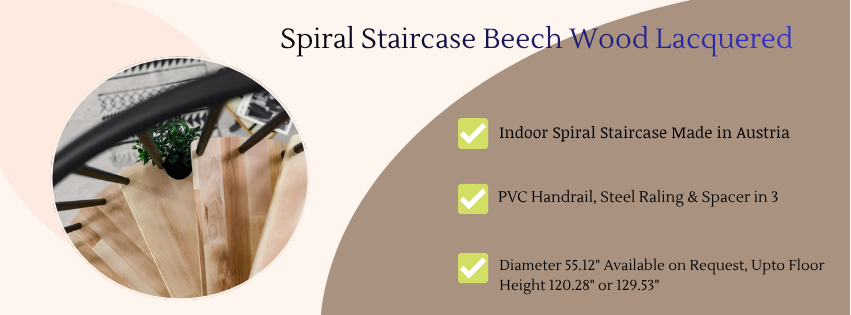
Spiral Staircase Diameter
Minimum Diameter
For residential applications:
- 4 feet (48 inches) – Absolute minimum in some codes (not recommended for daily use)
- 5 feet (60 inches) – Acceptable for secondary stairs
- 6–7 feet (72–84 inches) – Ideal for comfortable primary access
Why Diameter Matters
A larger diameter:
- Increases usable tread depth
- Reduces steepness
- Improves comfort
- Allows easier furniture movement
A small diameter saves floor space but sacrifices comfort.
Recommended Diameter by Use
| Use Case | Recommended Diameter |
| Loft access | 5 feet |
| Basement access | 5–6 feet |
| Primary living level access | 6–7 feet |
| Luxury architectural feature | 7–9 feet |
If this is the main staircase in your home, avoid anything under 6 feet.
Tread Dimensions
Minimum Tread Depth (Walking Line)
Most residential codes require:
- 10 inches minimum at 12 inches from narrow edge
Some local codes allow 7.5 inches at walking line for spiral stairs, but 10 inches is far more comfortable.
Narrow End Tread Depth
- Minimum 6 inches (check local code)
Anything less creates unsafe footing.
Tread Width (Radial Length)
The tread width equals the radius minus the central column diameter.
Example:
- 6-foot diameter stair (72 inches total)
- Central column = 4 inches
- Usable radius = ~34 inches
Wider radius = more usable step area.
Riser Height
Standard residential riser height:
- Maximum: 7.75 inches
- Ideal comfort: 7–7.5 inches
Lower risers increase comfort but require more total steps.
Calculating Number of Steps
Formula:
Total Floor-to-Floor Height ÷ Desired Riser Height = Number of Risers
Example:
108 inches ÷ 7.5 inches = 14.4 → Round to 15 risers
Adjust riser height slightly to maintain consistency across all steps.
Inconsistent riser height is one of the leading causes of stair-related falls.
Headroom Clearance
Most building codes require:
- Minimum 6 feet 6 inches to 6 feet 8 inches clearance vertically
Measured from tread nosing to ceiling above.
Tight spiral designs often fail headroom requirements.
Central Column Dimensions
Typical central support column:
- 3–6 inches diameter steel pipe
- Heavy-duty anchored base plate
Why it matters:
The column bears the structural load of the staircase. Undersized columns compromise stability.
For custom builds, consult a structural engineer to verify load capacity.
Floor Opening Size Requirements
The upper floor opening must match or exceed stair diameter.
Example:
6-foot stair = 6-foot minimum circular or square opening.
Add extra clearance for:
- Handrails
- Balusters
- Code compliance
A common mistake is under-sizing the upper opening.
Comfort vs Code: What Actually Feels Good to Climb
Building code defines the legal minimum. Comfort often requires exceeding it.
For a staircase used multiple times daily:
- 6.5–7-foot diameter
- 7-inch risers
- 10–11 inch walking line tread depth
Anything tighter feels steep and narrow.
Residential vs Commercial Spiral Stair Dimensions
Residential
- Smaller diameters allowed
- Lower traffic expectations
- More design flexibility
Commercial
- Stricter code compliance
- Wider diameters required
- Heavier load rating
- Higher railing requirements
Always verify commercial code if installing in multi-family or rental property.
Space Planning Considerations
Spiral stairs are ideal when:
- Floor space is limited
- Layout prevents straight stair run
- You want architectural interest
They are not ideal for:
- Moving large furniture
- Homes with elderly occupants
- High-traffic family use (unless wide diameter)
Material Impact on Dimensions
Steel Spiral Staircases
- Slim profiles
- Smaller footprint possible
- Prefabricated kit options
Cost: $3,000–$10,000 depending on finish.
Maintenance: Inspect fasteners annually.
Wood Spiral Staircases
- Warmer appearance
- Thicker treads required
- Slightly larger visual footprint
Cost: $8,000–$25,000 custom.
Maintenance: Refinishing every 8–12 years.
Concrete Spiral Staircases
- Large diameter
- Permanent installation
- Heavy structural planning
Cost: $20,000–$60,000+
Common Dimension Mistakes
- Choosing 4-foot diameter for main staircase
- Ignoring walking line tread depth
- Underestimating ceiling clearance
- Forgetting upper floor opening size
- Using inconsistent riser height
These mistakes lead to costly corrections.
Safety Enhancements Worth Considering
- Non-slip tread inserts
- Textured finishes
- LED step lighting
- Dual handrails for wider diameters
Lighting significantly improves spiral stair safety due to curved shadowing.
Budget Breakdown by Size
| Diameter | Approximate Cost Range |
| 5 ft kit | $3,000–$6,000 |
| 6 ft custom steel | $8,000–$15,000 |
| 7+ ft architectural | $20,000–$50,000+ |
Larger diameters increase fabrication and installation cost.
FAQ
What is the minimum spiral staircase diameter allowed?
Some residential codes allow 5 feet, but 6 feet is recommended for comfort.
What is the standard tread depth for spiral stairs?
Minimum 10 inches at the walking line (12 inches from narrow edge).
How steep is a spiral staircase?
Typically steeper than straight stairs due to compact design. Riser height often near maximum code allowance.
Can spiral stairs be used as primary stairs?
Yes, but they should be at least 6–7 feet in diameter for daily comfort.
How much space do spiral stairs save?
They eliminate the need for long horizontal runs, saving significant floor space in compact layouts.
Conclusion
Getting spiral staircase dimensions right is not optional it determines comfort, safety, and long-term satisfaction. While smaller diameters may appear space-efficient, they often feel cramped in daily use. For most homes, a 6–7 foot diameter spiral staircase with 7-inch risers and 10-inch walking-line tread depth provides the best balance between code compliance and usability. Always verify local building regulations. Work with experienced fabricators. Prioritize tread depth over minimal footprint. When properly sized and engineered, a spiral staircase becomes both a practical vertical solution and an architectural feature that enhances your home’s value and visual appeal for decades.
