Every product is independently reviewed and selected by our editors. If you buy something through our links, we may earn an affiliate commission at no extra cost to you.
Growing tomatoes at home whether it’s on a small balcony, a modest terrace, or in your backyard can be incredibly satisfying. But even experienced gardeners occasionally wrestle with a common dilemma: should you break up roots when planting tomatoes? After years of planting tomatoes in containers, raised beds, and directly in native soil, I know first-hand how root treatment at planting time can make or break your crop.
Let’s dig into a practical, experience-based guide so you plant tomatoes with more confidence and get healthier, more productive plants from day one.
How to Prevent Stunted Growth in Tomatoes by Fixing Root-Bound Roots
One of the most frequent rookie mistakes I see (and, honestly, made myself early on) is planting tomato seedlings straight from their nursery pots roots tightly circling and pot-bound without adjusting or inspecting them. The result? Stunted growth, yellowing leaves, reduced fruiting, or even dead plants.
This happens because tomato roots are resilient, but when left in dense, tangled mats, they struggle to expand and access nutrients or water in their new home. The solution is both simple and slightly nerve-wracking: breaking up, loosening, or “teasing” those roots before planting.
Over the years, I’ve had the best luck when I gently address the roots, but I know it can be intimidating for beginners. Here’s exactly how (and when) to do it, mistakes to avoid, and expert tips that’ll make your tomato planting much more successful.
Why This Method Works
Healthy tomato roots need to spread outward and downward quickly once transplanted. In cramped nursery pots, roots often circle the bottom or sides, becoming what’s called “root bound.” If you transplant without breaking up those dense mats:
- Roots may keep circling, failing to explore surrounding soil
- Nutrient and water uptake is sharply limited
- Plants often look leggy, droopy, or pale and may drop flowers/fruit
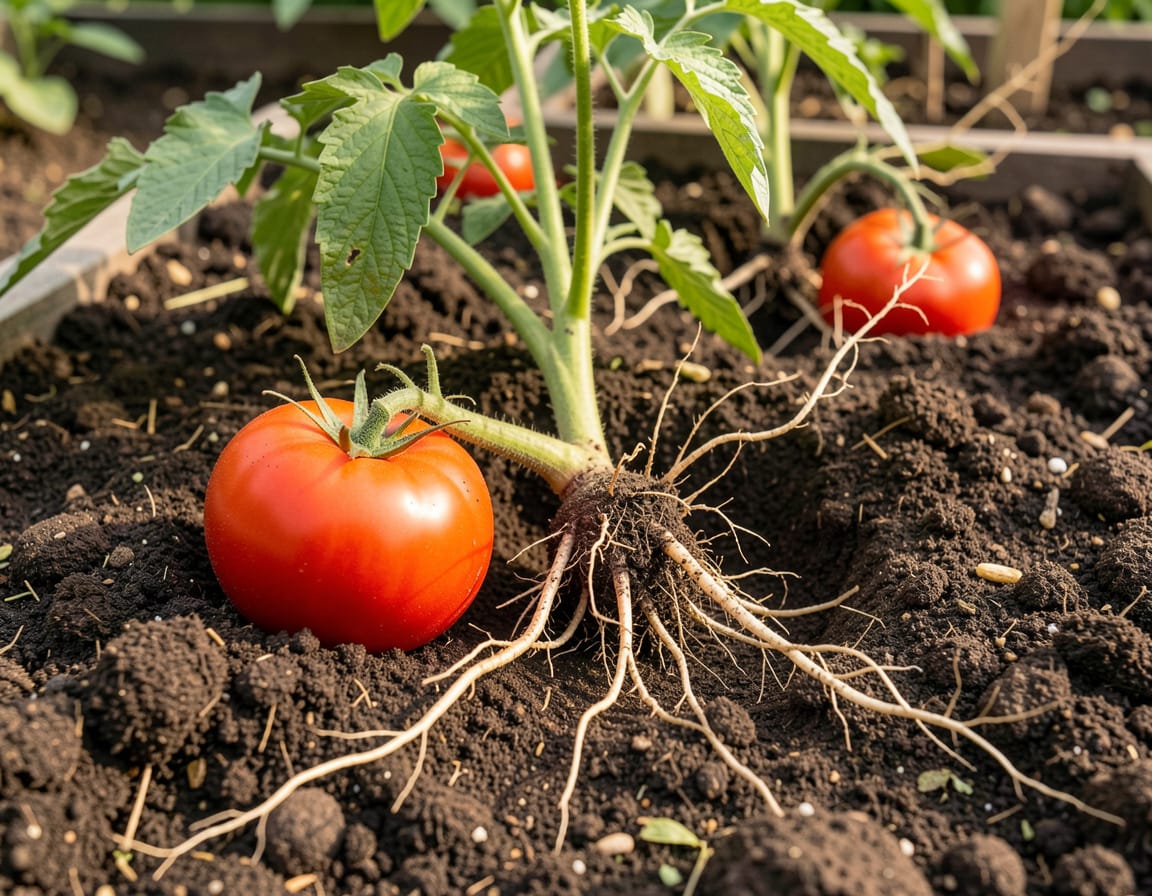
By gently breaking up or untangling these roots, you “wake them up” encouraging them to branch out into new soil. Tomatoes, unlike some plants, are famously robust about root disturbance and can even root from their buried stem. This makes them perfect candidates for root loosening at planting time.
In my own garden on everything from compact balcony pots to larger backyard beds tomatoes planted with loosened roots always bounced back faster compared to those left pot-bound. The difference is day-and-night when it comes to long-term health and yields.
What You’ll Need
You don’t need fancy gear. Here’s what will help:
- Tomato seedlings (seed tray or store-bought)
- A clean trowel
- Gloves (if you prefer)
- Small bucket of water
- Garden scissors (only if you spot dead, blackened, or mushy roots)
- Eco-friendly soil amendments (like worm castings or compost)
- Well-draining potting mix or garden soil
Budget-friendly tips:
- Reuse nursery pots for seed starting.
- Homemade compost or leaf mold are excellent organic amendments.
Step-by-Step Instructions: Breaking Up Tomato Roots Before Planting
1. Timing & Prepping Your Seedlings
- Best planting season: Early to mid-spring, after frost danger has passed.
- Best time of day: Early morning or late afternoon avoid the midday sun, which stresses seedlings.
Water your seedlings an hour before transplanting. Hydrated roots are more flexible and less prone to breakage.
2. Gently Remove the Plant
- Squeeze the pot sides or tap gently to loosen the root ball.
- Hold the seedling by its true leaves (not the stem) and ease it out.
3. Inspect The Root Ball
- Is it a dense mat of white roots circling the bottom and sides?
- Are roots brown, soft, or mushy? Trim these off.
4. Break Up Or “Tease” The Roots
- For slightly circling roots: Use your fingers to gently loosen the bottom and sides, “tickling” roots outward.
- For severely pot-bound roots: Use your fingers or a clean knife to make 2–3 shallow vertical cuts on the bottom and sides of the root ball. Don’t be afraid tomatoes can take it!
- For barely rooted seedlings: No need to disturb plant as-is.
Key sign: You want roots a bit splayed out, not stuck together in a thick ring.
5. Plant Deeply
Tomatoes thrive when planted deep:
- Place the seedling so that 2/3 of the stem is buried.
- Remove lower leaves those nodes in contact with soil will sprout new roots.
Backfill lightly, water thoroughly, and mulch if possible.
Pro Tips & Best Practices
- Don’t panic if some small roots break. Tomatoes recover fast.
- Always water in after transplanting. Settles soil and reduces transplant shock.
- Avoid slippery wet or dry root balls. Slightly damp is perfect for “teasing.”
- If using organic amendments, mix them into the planting hole—compost, worm castings, or aged manure help roots establish.
- Mulch after planting to conserve moisture and prevent soil splash.
- Don’t skip root inspection: Some pests (fungus gnats, root aphids) can hide inside root balls. Trim any damaged parts.
FAQ
Why is my tomato plant not growing after transplanting?
If you didn’t break up a pot-bound root ball, roots may not colonize new soil. The plant may stall (“transplant shock”). Loosening roots boosts recovery.
Can I do this if my seedling is very young or thin?
If the plant is very fragile with a small root system, minimal disturbance is best. Just tickle the bottom lightly or leave roots alone if they’re not circling.
How often should I water after transplanting?
For the first week, keep soil barely moist water lightly every 1–2 days if weather is hot/dry, less if cool. Avoid soggy soil.
Is it safe to break up roots if I’m planting in a container?
Absolutely! In fact, container tomatoes are especially prone to root bind. Always inspect before potting up.
What if roots break or snap when separating?
Tomatoes are tough. Unless you destroy the whole root ball, they’ll recover. Water well and keep shaded for a day if it’s hot.
Do I have to use expensive tools or amendments?
No. Clean hands and regular garden soil/compost work well. Focus on root health and proper planting depth.
When NOT to Break Up Roots
- Very young seedlings with barely developed roots: Leave them alone roots are too delicate.
- Sickly plants with very few healthy roots: Excess disturbance will stress them. Trim only mushy parts.
- Highly clay or compacted soil: Instead, focus on soil quality first; breaking roots alone won’t help.
If your environment is particularly windy or hot, extra care is needed to minimize shock after root disturbance.
Alternative Methods or Solutions
Other methods some gardeners use:
1. Soaking root balls:
- Pros: Hydrates roots, easy for beginners.
- Cons: Doesn’t fix severe root binding.
2. Planting as-is (no disturbance):
- Pros: Minimal transplant shock, safe for fragile seedlings.
- Cons: Risk of circling roots, stunted growth if already pot-bound.
3. Complete root washing (“bare-root” technique):
- Pros: Reveals hidden pests or rot.
- Cons: More stress to the plant; not needed for tomatoes in most home situations.
Best for beginners: Gently teasing roots is least risky and most effective for healthy, robust tomato plants.
Conclusion
So, should you break up roots when planting tomatoes? Based on years of home and balcony gardening, the answer is a confident yes for most garden-center or homegrown tomato transplants showing dense, circling roots. Gently loosening those roots jumpstarts growth, improves nutrient uptake, and leads to bigger, healthier plants.
Always adapt your technique to the plant’s age and condition. Be gentle, don’t panic about minor root breaks, and focus on a healthy soil environment with organic matter.
Remember: Patient, careful handling and observation beats rushing every time. May your next tomato crop bring baskets of juicy fruit and vibrant, pest-resistant plants all from a well-prepared start.
Happy gardening, and trust in real, hands-on experience for planting success one rootball a