Every product is independently reviewed and selected by our editors. If you buy something through our links, we may earn an affiliate commission at no extra cost to you.
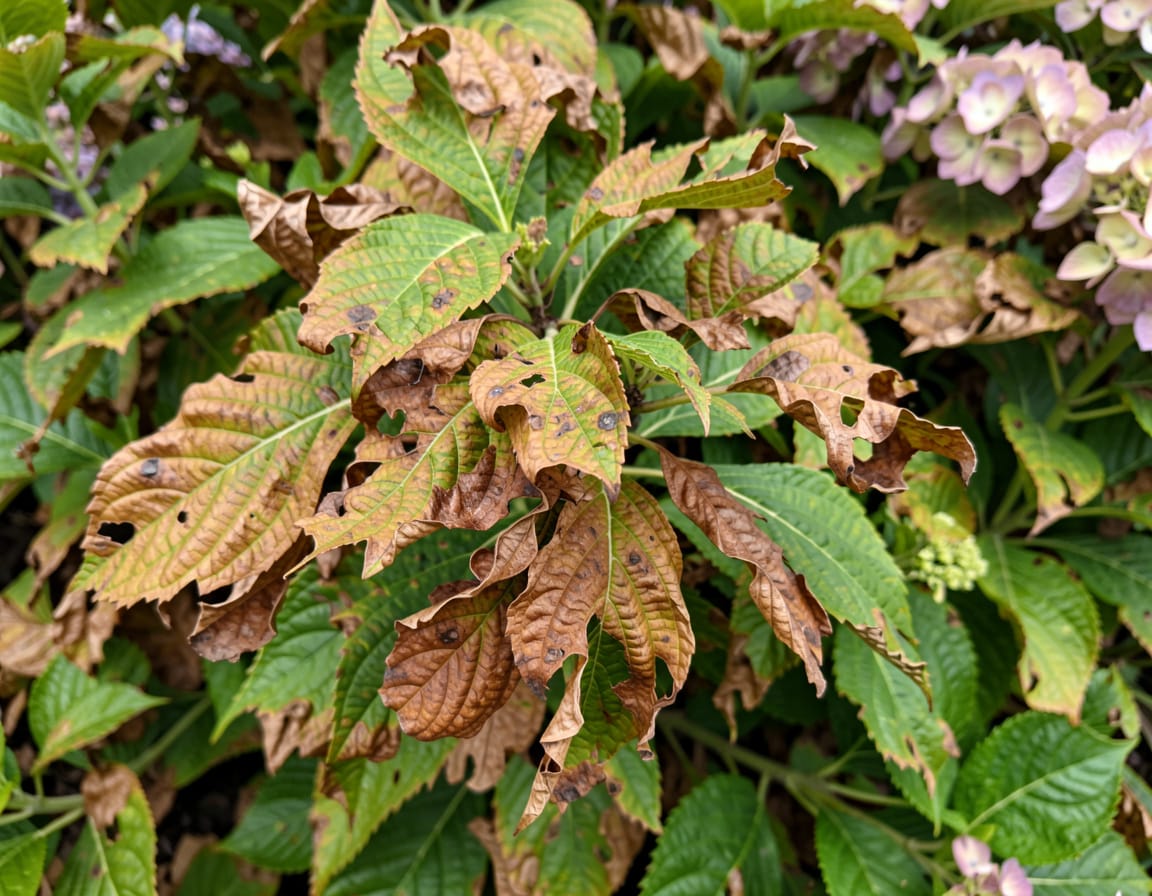
When you notice hydrangea leaves turning brown and falling off, it can feel like the whole plant is declining overnight. I’ve dealt with this many times in my own home garden especially during hot summers and after unexpected watering swings. The good news is that hydrangeas are resilient, and once you understand why the browning happens, recovery is usually straightforward.
This guide gives you clear, practical steps you can apply immediately, even if you’re new to gardening. Everything here comes from hands-on experience growing hydrangeas in small backyards, containers, and semi-shaded terraces.
Why Hydrangea Leaves Turn Brown and Fall Off
Hydrangeas shed leaves as a stress response. Browning usually starts at the edges or tips because that’s where moisture loss is highest. Once the plant feels overwhelmed by heat, drought, root issues, or fungal infection it drops leaves to protect itself.
Most cases come down to:
- Heat stress
- Inconsistent watering
- Poor soil drainage
- Fungal disease
- Sunburn
- Normal seasonal leaf drop (often misinterpreted as a problem)
Below, we break down the science in simple terms and show you exactly how to fix each cause.
Why This Method Works
The steps in this guide focus on:
- Stabilizing soil moisture without overwatering
- Improving drainage and airflow
- Identifying stress signs before they escalate
- Adjusting sunlight exposure based on hydrangea type
- Preventing fungal problems, which hydrangeas are prone to in humid or crowded spaces
Most hydrangeas bounce back quickly when their root zone is corrected. From experience, once the soil environment improves, you’ll see new healthy leaves within 2–4 weeks in warm weather.
What You’ll Need
- Garden trowel
- Mulch (compost, shredded leaves, or pine bark)
- pH-neutral potting soil or compost
- Pruning shears (clean and sharp)
- Watering can with a narrow spout
- Optional: neem oil or organic fungicide
- Optional: shade cloth for extreme heat
Budget alternatives:
- Use homemade leaf mulch
- Use diluted dish soap (1–2 drops per liter) as a gentle leaf wash for dust or minor pests
- Reuse cocopeat/compost mix from old containers after refreshing it
Step-by-Step: How to Fix Hydrangea Leaves Turning Brown and Falling Off
1. Check the soil moisture (the most common cause)
Hydrangeas want consistently moist not soggy soil.
How to check: Insert your finger 2–3 inches into the soil.
- Feels dry → underwatering
- Feels muddy or cool and heavy → overwatering
- Feels evenly damp → moisture is fine
Fix:
- If dry: Water deeply until the soil is moist throughout the root zone.
- If soggy: Stop watering for a few days and improve drainage (steps below).
2. Improve soil drainage
Hydrangeas sitting in waterlogged soil develop brown, dropping leaves very quickly.
What to do:
- For ground planting:
- Lightly aerate soil around the plant with a trowel.
- Add compost around the base to loosen clay-heavy soil.
- For containers:
- Make sure the pot has drainage holes.
- Add 20–30% perlite or coarse sand to the soil mix next time you repot.
3. Look for heat or sunburn stress
Container hydrangeas suffer the worst. On hot terraces, the soil heats up like an oven.
Signs:
- Brown, crispy edges
- Leaves folding or drooping during the afternoon
- Browning on the side facing the sun
Fix:
- Move potted hydrangeas to morning sun + afternoon shade.
- For in-ground plants, install temporary shade cloth during heatwaves.
4. Mulch properly
Mulch maintains even soil moisture and stops heat stress.
Apply a 2–3 inch layer of:
- Shredded leaves
- Compost
- Pine bark
Leave a 2-inch gap around the stem to prevent rot.
5. Inspect for fungal diseases
Hydrangeas commonly get:
- Leaf spot
- Anthracnose
- Powdery mildew
Signs:
- Spots that turn brown or tan
- Premature leaf drop
- Brown patches spreading inward
Fix:
- Remove affected leaves (don’t compost them).
- Improve airflow don’t crowd the plant.
- Spray with neem oil weekly for 2–3 weeks (evening only).
6. Fix watering timing
Water early in the morning so leaves dry quickly.
Evening watering can encourage fungal issues.
7. Prune only what’s necessary
Snip:
- Dead leaves
- Blackened stems
- Very weak branches
Do not prune heavily during mid-summer stress.
Pro Tips & Best Practices (From Real-World Gardening)
- Hydrangeas in pots dry out far faster than those in the ground sometimes twice a day in summer.
- Brown leaf edges often improve simply by adding mulch and consistent watering.
- If your hydrangea is in full afternoon sun in warm climates (zones 7–9), expect browning unless shaded.
- Avoid constantly “moisture-checking” the plant; too much disturbance can damage shallow roots.
- Hydrangeas hate sudden changes move pots gradually to a new spot over 3–5 days.
Common Beginner Mistakes
- Watering frequently but too shallowly
- Planting hydrangeas in clay soil without amending it
- Leaving wet leaves during evening watering
- Assuming browning means you must fertilize (it usually doesn’t!)
FAQ:
1. Why are my hydrangea leaves turning brown around the edges?
Most likely heat or drought stress. Edge browning is the first sign that the plant is losing water faster than it can take it up.
2. Why are my hydrangea leaves turning brown in pots but not in the garden?
Pots heat up and dry out much faster. Move the plant to partial shade and increase watering depth.
3. Can hydrangeas recover from brown, falling leaves?
Yes. As long as stems are green and firm, new leaves will grow once watering and soil conditions stabilize.
4. Should I remove brown hydrangea leaves?
Yes, if they are crispy, diseased, or fully dead. Gently remove them to improve airflow.
5. Why are only the bottom leaves turning brown and falling off?
This usually means the plant is redirecting energy to new top growth or coping with uneven watering.
6. Do hydrangeas lose leaves naturally?
Yes late summer to fall leaf drop is normal. But sudden mid-season browning is usually a stress issue.
When NOT to Use These Fixes
Avoid heavy watering or mulching if:
- Your soil is staying wet for days
- You’re in a cool, wet climate
- The plant is in full shade and airflow is low
In these cases, the issue is almost always fungal. Focus instead on:
- Airflow
- Pruning for space
- Using a fungicide
Don’t add more water or mulch it will make the problem worse.
Alternative Solutions If Browning Continues
1. Repotting (for container hydrangeas)
Use a mix of:
- 50% quality potting soil
- 25% compost
- 25% perlite
Repot only in early spring or fall.
2. Relocating
Hydrangeas often perk up dramatically when moved to:
- Morning sun
- Light afternoon shade
- Breeze-friendly spots
3. Controlled Deep Watering
Water slowly for 15–20 minutes to saturate the root ball without causing runoff.
Conclusion:
When you see hydrangea leaves turning brown and falling off, it’s almost always a fixable stress reaction. Start by adjusting water, improving drainage, adding mulch, and giving the plant gentler light. In my garden, these simple changes revive stressed hydrangeas far more reliably than fertilizers or complicated treatments.
Hydrangeas are forgiving once you stabilize their growing environment. With steady care and a little patience you’ll see healthy, fresh growth returning in just a few weeks.
If you want, I can help you diagnose the issue from a photo of your hydrangea.