Every product is independently reviewed and selected by our editors. If you buy something through our links, we may earn an affiliate commission at no extra cost to you.
If you’ve ever watered a potted plant in summer and found the soil bone-dry again by the afternoon, you’ve seen why choosing the right mulch matters. Container soil heats up faster, dries out quicker, and loses nutrients more easily than garden beds. In my own terrace and balcony containers, I noticed that once I started mulching correctly, the difference was immediate steadier moisture, fewer fungus gnats, and far less heat stress on delicate plants.
This guide breaks down how to select the best mulch for potted plants, using simple, real-world gardening experience. The goal is to help you match the right mulch to your plant, climate, and container so you can grow healthier plants with less work.
Why Mulching Works So Well in Containers
Mulch isn’t just a “nice extra” for potted plants. It actively improves the container micro‑environment.
Here’s why it works:
- Moisture retention: Container soil dries fast because it’s exposed on all sides. Mulch slows evaporation, so watering becomes more consistent.
- Temperature regulation: In summer, I’ve measured mulched pot surfaces staying 5–10°C cooler than bare soil.
- Prevents soil compaction: When watering unmulched pots, water can form channels and run down the sides. Mulch breaks the impact of the water.
- Discourages pests: Fungus gnats love exposed, consistently moist soil. A dry mulch layer disrupts their breeding cycle.
- Reduces nutrient loss: Sun exposure breaks down organic matter faster; mulch shields the soil surface.
The right mulch matched to your plant’s needs can completely change how your pots behave.
What You’ll Need
You don’t need anything fancy. Most good mulches for pots are easy to find or even repurposed.
Mulch Options (Choose According to Section Below)
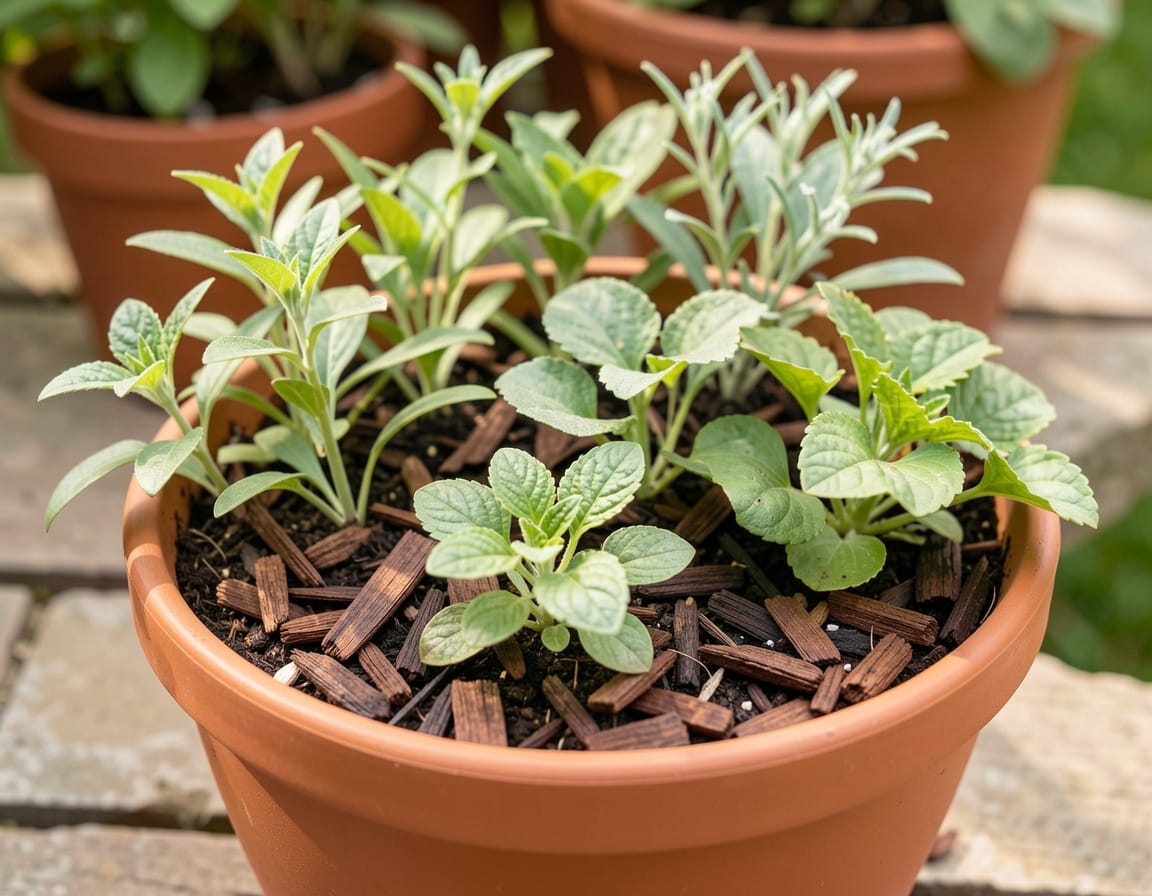
- Fine bark chips
- Coconut husk chips (coir chips)
- Shredded leaf mulch
- Straw or hay (non-seedy)
- Compost
- Pine needles
- Decorative pebbles
- Cocoa bean shells (pet owners: avoid can be toxic to dogs)
- Wood shavings (untreated)
Tools (Optional)
- Hand trowel
- Small rake or fork
- Gloves
- Watering can (for settling the mulch after application)
How to Select the Best Mulch for Potted Plants
Use these criteria to match the ideal mulch to your plant and container conditions.
1. Match Mulch to Plant Type
Different plants prefer different soil moisture and temperature conditions.
For moisture-loving plants (herbs like basil, tropical plants, ferns, houseplants):
- Coconut husk chips
- Leaf mulch
- Compost
- Straw These hold moisture evenly without suffocating the soil.
For drought-tolerant plants (succulents, cacti, Mediterranean herbs):
- Pebbles
- Grit
- Pine needles These keep the surface tidy without trapping too much moisture.
For fruiting or flowering plants (tomatoes, peppers, geraniums, roses):
- Bark chips
- Coconut husk chips
- Compost top-dressing These balance moisture retention with air circulation.
2. Consider Your Climate
Hot, dry climates: Choose mulches that insulate well, such as bark chips or coir. Avoid dark stones that heat up.
Cool or humid climates: Use lighter mulches like pine needles or thin bark layers to prevent rot and mold.
Rainy climates: Avoid dense compost mulches they can become soggy in containers.
3. Look at Pot Size and Material
- Small pots: Avoid chunky mulches (chips may look bulky and uneven). Choose fine bark or pebbles.
- Large pots: Chunky mulches work beautifully; they stay put and insulate better.
- Terracotta pots: They dry out faster → choose moisture-retentive mulches like coir or leaf mulch.
- Plastic or ceramic pots: These retain moisture → use lighter, airier mulches.
4. Prioritize Organic or Inorganic Based on Your Goal
- Organic mulches: Improve soil health long-term but may break down faster.
- Inorganic mulches: Stay clean, last years, and work well for succulents.
5. Choose Mulch You Can Maintain Easily
In small, balcony or indoor containers, neatness matters.
- Bark chips look tidy and hide irrigation lines.
- Pebbles keep soil from splashing onto floors and furniture.
- Straw can be messy in wind better for outdoor use.
Step‑by‑Step: How to Apply Mulch to Potted Plants
1. Water the Soil First
Always mulch moist soil. Mulching dry soil traps dryness in, and water won’t penetrate easily.
2. Loosen the Top Layer
Use a small fork to gently aerate the top 2–3 cm of soil. This prevents compaction before mulching.
3. Add a 1–3 cm Layer of Mulch
- Delicate houseplants: 1 cm
- Medium pots / herbs: 2 cm
- Outdoor containers: Up to 3 cm
Avoid burying stems or trunks.
4. Water Lightly to Settle the Mulch
This helps organic mulches settle into place without blowing away.
5. Monitor Moisture for 1–2 Weeks
Mulch changes how your pot holds water typically you’ll need to water less often.
Pro Tips & Best Practices
- Don’t mulch wet-sensitive plants too heavily. Over-mulching rosemary or lavender can cause rot.
- Avoid dyed wood chips in edible containers. Stick with natural, untreated materials.
- Mix finer mulches with coarse ones. This creates better airflow.
- Replace organic mulch every 3–6 months. Especially in hot, humid environments.
- For fungus gnat prevention: A 1 cm layer of aquarium gravel works extremely well.
- In very windy balconies: Use heavier mulches like pebbles or bark nuggets.
FAQs
1. Why is my mulch growing mold in potted plants? It usually means the surface is staying too wet. Switch to a thinner layer or choose a more breathable mulch like pine needles.
2. Can I use grass clippings as mulch in pots? Only if dried fully. Fresh clippings mat down and smell sour in containers.
3. How often should I replace mulch in pots? Organic mulches every 3–6 months; inorganic mulches last years.
4. Is it okay to mulch indoor plants? Yes just keep the layer thin and use tidy materials like pebbles or fine bark.
5. Why does my potting soil still dry out even with mulch? You may be using the wrong mulch type or too little. In very hot climates, coir chips or leaf mulch work best.
6. Can mulch attract insects? Organic mulches sometimes attract springtails or pill bugs, but it’s usually harmless. If it bothers you, switch to stone mulches.
When NOT to Use This Method
Avoid mulching in these cases:
- Plants that need very fast-drying soil (echeveria, some cacti) unless you use stones.
- Cold, damp climates in winter mulch can trap too much moisture.
- Poorly drained pots mulch can hide overwatering issues.
Safer alternatives include small gravel, sand, or simply leaving the surface bare during dormant periods.
Alternative Methods to Regulate Soil Moisture
Bottom Watering
Good for small houseplants but not ideal for large outdoor containers.
Adding Water-Holding Amendments
Coir or vermiculite mixed into the soil works well but doesn’t regulate temperature like mulch does.
Self-Watering Containers
Excellent for forgetful waterers but not suitable for drought-tolerant plants.
Mulching remains the most universal, beginner-friendly option.
Conclusion
Choosing the best mulch for potted plants comes down to understanding your plant, climate, and container. With the right mulch, pots stay consistently moist, cooler, and nutrient-rich without constant watering or troubleshooting.
Start simple: try bark chips for outdoor containers, coir chips for moisture lovers, and pebbles for succulents. Observe how your soil behaves for a week or two, then adjust. Container gardening always improves fastest when you make small, practical changes based on real observation.
With the proper mulch, you’ll spend less time watering and more time enjoying healthier, sturdier plants.