Every product is independently reviewed and selected by our editors. If you buy something through our links, we may earn an affiliate commission at no extra cost to you.
If there’s one task that has tested my patience in small backyard and terrace gardens, it’s dealing with bushes with deep roots. Whether you inherited an overgrown shrub from the previous homeowner or a once‑cute plant turned into a woody monster, removing it properly is essential.
Many beginners try yanking or chopping from the top, only to discover the real battle is underground. Deep, established root systems can anchor themselves tighter than expected and if you remove them incorrectly, they resprout, invite pests, or damage nearby soil structure.
This guide walks you through how to remove bushes with deep roots in the ground using the exact steps I’ve used in compact garden spaces where brute force isn’t an option.
Why This Method Works
Shrubs form wide, woody root systems that:
- Anchor the plant deeply
- Store energy that can cause regrowth if roots remain
- Bind tightly to compact or clay-heavy soil
Random pulling rarely works. But strategic removal loosening the soil, cutting at root junctions, and extracting the root crown lets you remove the bush safely with far less effort.
The process is simple when you work with the plant’s structure, not against it.
What You’ll Need
Here’s what I actually use in my home garden:
- Hand pruning shears
- Loppers (for thick branches)
- A pruning saw or folding saw
- A sharp shovel or spade
- A digging fork (optional but extremely helpful)
- Gloves (heavy-duty ones)
- A bucket or tarp for debris
- Hose or watering can
- Mulch or compost to refill the hole afterward
Budget-friendly alternatives:
- Use a kitchen knife you no longer care about for slicing fine roots
- Replace loppers with a hacksaw if needed
Eco-friendly considerations:
- Avoid chemical root killers
- Compost branches if disease-free
- Recycle the hole for new plantings
Step-by-Step Instructions
1. Cut Back the Bush to a Manageable Size
Do this during the cooler part of the day morning or late afternoon.
- Remove branches until only a short stump remains (20–30 cm).
- Cutting back top growth reduces leverage and lets you see the root crown clearly.
- Use loppers for thick stems; avoid tearing bark.
In my experience, this step alone makes the rest of the job twice as easy.
2. Water the Soil Deeply
This is the secret most beginners skip.
Water the area heavily either the night before or 2–3 hours before digging.
Why it matters:
- Soft, moist soil releases roots more easily
- Sandy soil becomes workable
- Clay soil loosens instead of clumping
Think of it as soaking stubborn dish residue before scrubbing.
3. Expose the Root Crown
Use a shovel or digging fork to remove soil around the stump.
- Start around 20–30 cm away from the stump
- Remove soil until you see the thick root “hub”
- Brush or pull soil back with gloved hands for precision
You’re looking for the main structural roots that shoot outward.
4. Loosen and Lift the Roots
Insert your shovel or fork at an angle under the main roots.
- Gently rock the tool back and forth
- Aim to lift the entire stump upward
- Listen and feel for roots cracking (a good sign!)
If a root is too thick:
- Stop pulling
- Expose the root further
- Cut it cleanly with loppers or a saw
Don’t try to “rip” roots out you’ll just tire yourself out and damage the surrounding soil.
5. Cut Major Roots to Free the Stump
Most deep-rooted bushes have:
- A central taproot
- Several thick lateral roots
- A ring of finer feeder roots
Cut each major root only after it’s exposed and accessible.
Safety note: Keep hands out of the path of the saw. Dry roots can kick back unexpectedly.
6. Remove the Root Crown Completely
Once enough major roots are cut, the entire stump will loosen.
Lift it out:
- Using both hands
- Or prying gently with a shovel
If it barely moves, don’t fight it there’s still a root attached. Trace and cut it before trying again.
7. Remove Remaining Root Fragments
Search for:
- Thicker leftover roots
- Sprouting suckers
- Any part of the root crown still connected
Leaving them behind can lead to surprise regrowth later.
8. Backfill and Restore the Soil
After removing the plant:
- Break up remaining compacted soil
- Add compost to replenish nutrients
- Top with mulch to regulate moisture
The soil will settle over weeks this is normal.
Pro Tips & Best Practices
Here are things I learned the hard way removing shrubs in tight home-garden spaces:
- Don’t rush root cutting patience saves effort.
- Watering the soil ahead of time reduces work by half.
- A digging fork is better than a shovel in clay soil because it lifts without creating suction.
- Avoid digging when soil is waterlogged it destroys soil structure.
- Don’t plant a new shrub immediately in the exact same spot; let the soil recover for at least 2–3 weeks.
- Watch for resprouts pull or snip them early.
FAQ
1. What’s the easiest way to remove a bush with deep roots?
Cut it down, water the soil deeply, expose the root crown, and remove roots systematically. The key is loosening not force.
2. Can I just cut the bush at ground level and leave the roots?
You can, but many shrubs will regrow aggressively from leftover roots.
3. Do I need to use chemicals to kill deep roots?
No. With proper root removal, chemicals are unnecessary and not eco-friendly.
4. How do I remove a bush in very hard, dry soil?
Water heavily the evening before, then water again right before you start digging.
5. Can I plant something new immediately after removing a shrub?
You can, but it’s better to enrich the soil first and wait a few weeks.
6. What if the roots are growing under a fence or pavement?
Expose and cut the roots safely at your property side. Don’t pull anything embedded under hardscaping you might cause damage.
When NOT to Use This Method
Avoid digging out deep-rooted shrubs when:
- Soil is extremely soggy or waterlogged (high risk of soil damage)
- It’s over 35°C / 95°F (risk of heat stress for you)
- You have back or knee injuries root removal can strain joints
- You’re dealing with invasive shrubs that resprout aggressively (alternate strategies needed)
If the bush is extremely large or close to structures, call a professional to avoid injury or foundation damage.
Alternative Methods or Solutions
1. Gradual Root Starvation
For massive shrubs:
- Cut all foliage
- Cover stump with a thick, opaque tarp
- Prevent sunlight for several months
Good for gardeners who prefer low physical effort.
2. Root Slicing for Shrubs Near Structures
Cut only the accessible roots:
- Use a root saw
- Leave roots under fences or patios untouched
This prevents structural damage.
3. Mechanical Removal (Last Resort)
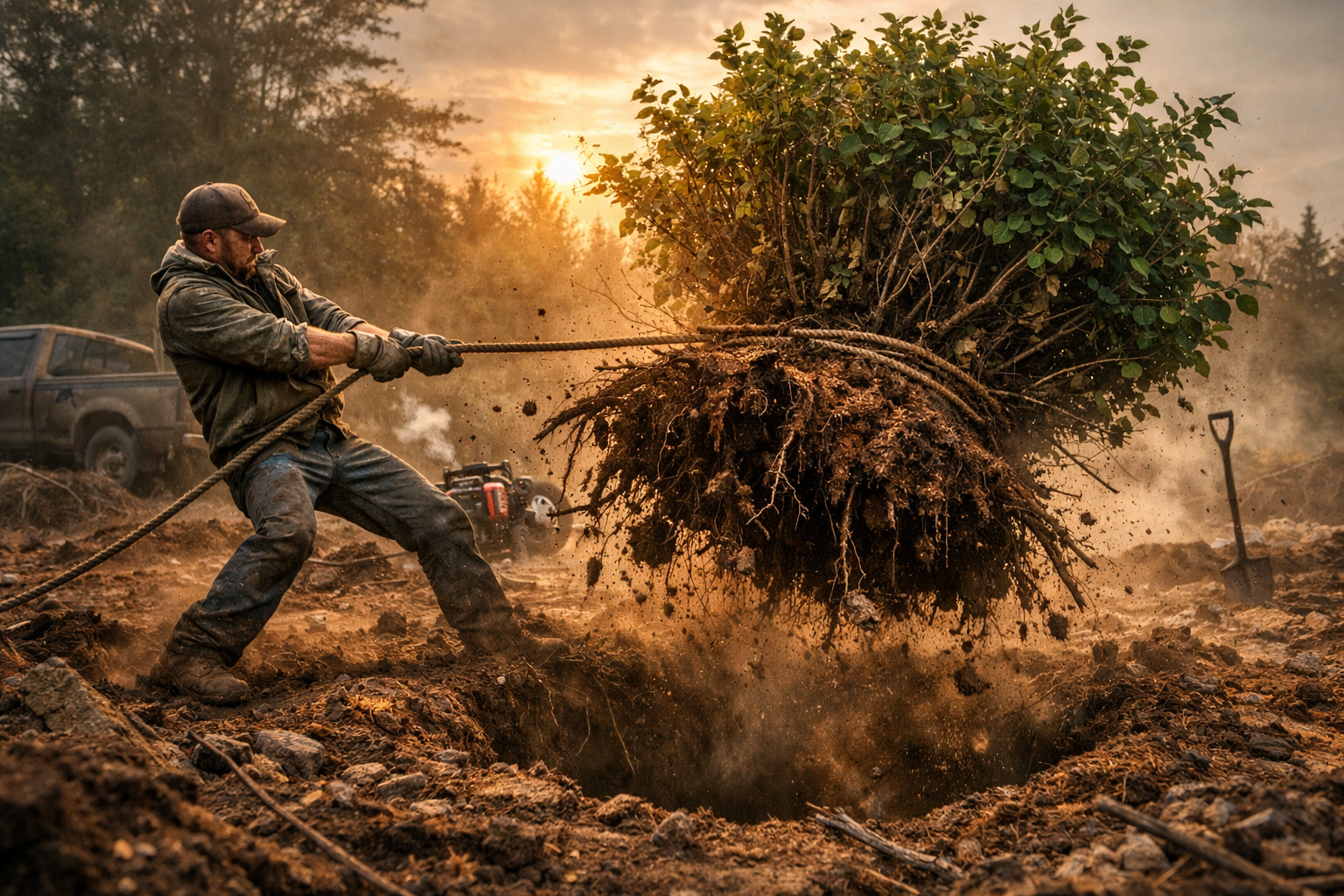
Tools like a winch or come-along can pull stumps, but only in open spaces and after exposing major roots.
Conclusion
Removing bushes with deep roots in the ground is a manageable task once you understand that success comes from loosening and cutting not yanking. By reducing the bush first, softening the soil, exposing the root crown, and removing roots strategically, you can clear even stubborn shrubs safely and cleanly.
Work patiently, protect your soil, and restore the area with compost afterward. With the right approach, you can reclaim your garden space without harming the surrounding environment or exhausting yourself.