Every product is independently reviewed and selected by our editors. If you buy something through our links, we may earn an affiliate commission at no extra cost to you.
Most gardeners add gravel to reduce maintenance then discover weeds pushing through, soil drying out too fast, or plants struggling in compacted, exposed ground. I’ve run into all three problems in my own gravel areas.
The issue is simple: gravel alone doesn’t function as mulch. Sunlight can still penetrate, weed seeds easily settle between stones, and water evaporates quickly from open gaps.
Mulching a gravel garden works because:
- it blocks light where weeds germinate
- it protects plant roots from heat
- it keeps moisture in the soil
- it fills the gaps gravel alone can’t protect
With a few small adjustments, a gravel garden becomes far easier to manage especially for beginners.
Why This Method Works
Plants in gravel gardens often sit in shallow, fast-draining soil. The stones reflect heat, making the top layer even warmer and drier. Mulch solves this by creating a buffer between soil and sun.
What I’ve consistently observed:
- Organic mulches (bark, compost, leaf mold) insulate roots and gradually improve soil texture.
- Mineral mulches (fine gravel, decomposed granite) suppress weeds without breaking down quickly.
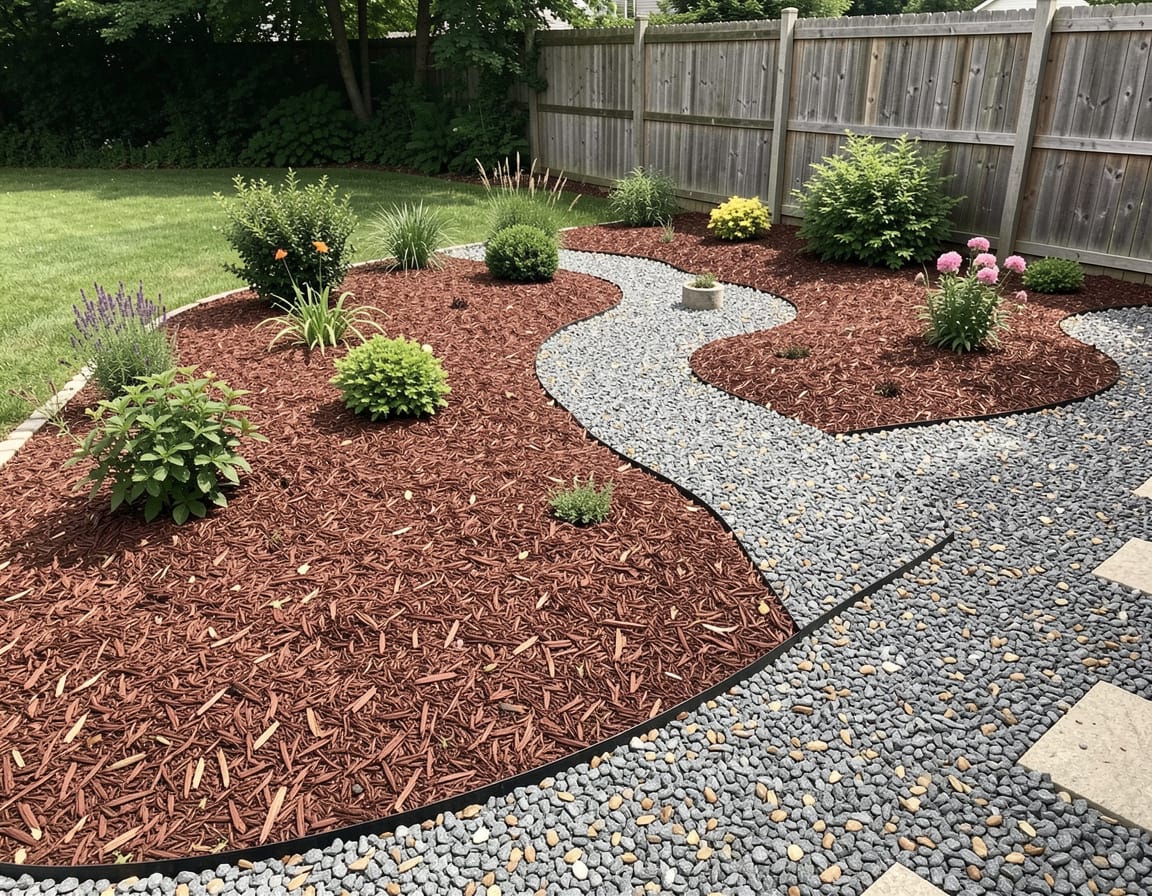
- A hybrid approach organic mulch beneath, gravel on top provides long-term moisture control without changing the garden’s clean, modern look.
Healthy microbial life also increases under mulch, even in gravel beds, improving plant resilience.
What You’ll Need
- Rake or hand cultivator
- Wheelbarrow, bucket, or large tub
- Landscape fabric (optional use sparingly)
- Organic mulch: compost, shredded bark, leaf mold
- Additional gravel (if topping up)
- Gloves and dust mask (important for dusty gravel)
Budget-friendly alternatives:
- Homemade leaf mold
- Partially composted garden waste
- Reused gravel from other areas
Eco-friendly options:
- Untreated bark chips
- Composted green waste
- Local quarried gravel instead of imported stones
Step-by-Step: How to Mulch a Gravel Garden
1. Start on a dry day
Wet gravel compacts and is harder to move. Dry conditions help you see contour and coverage clearly.
2. Weed thoroughly
Remove weeds by the roots. In my experience, even tiny taproot remnants regrow quickly in gravel.
3. Loosen the topsoil lightly
Use a hand fork to open compacted patches. Plants in gravel often suffer from oxygen-poor soil underneath.
4. Add a thin layer of organic mulch (optional but strongly recommended)
Spread 1–2 cm of compost or leaf mold around plants. This improves moisture retention without smothering roots. Don’t use thick bark here too chunky to stay hidden under gravel.
5. Replace or top up the gravel
Spread gravel back over the area until the organic mulch is fully concealed. Ideal depth: 4–5 cm. This keeps the garden looking neat while the hidden mulch works quietly underneath.
6. Water deeply
Water helps settle the layers. I’ve found plants bounce back faster when mulching is followed by a thorough soak.
7. Add finishing touches
Check for:
- exposed soil (cover it)
- gravel piled against stems (brush it away)
- uneven areas where water might pool
Pro Tips & Best Practices
- Choose gravel size wisely 10–20 mm stones suppress weeds better than pea gravel, which shifts easily.
- Avoid thick layers of bark chips on top They blow away and look messy in windy areas.
- Mulch annually before the heat arrives Late spring is ideal; early autumn works if summers are harsh.
- Don’t bury plant crowns Many gravel-garden favorites (lavender, rosemary) rot if crowns stay damp.
- Top up gravel every 1–2 years Wind, foot traffic, and decomposition reduce coverage over time.
- If you have heavy rain Use crushed stone or decomposed granite round stones wash away more easily.
Frequently Asked Questions
1. Can I mulch a gravel garden with compost only? Yes, but it won’t look like a gravel garden anymore. Compost works beautifully for plant health but must be topped with gravel if you want a clean, decorative finish.
2. Why do weeds keep growing in my gravel garden? Usually because the gravel layer is too thin (below 4 cm), or sunlight is reaching the soil surface. Adding mulch beneath the gravel fixes this.
3. Can I mulch around drought-tolerant plants like lavender? Yes just keep organic mulch away from the crown to avoid rot. I usually leave a small ring of open gravel right at the base.
4. How often should I refresh mulch in a gravel garden? Organic mulch decomposes every 12–18 months. Gravel generally needs topping up every one to two seasons depending on weather and foot traffic.
5. Is landscape fabric recommended under gravel? Only in high-traffic areas. In planted beds, it restricts root expansion and makes planting difficult later.
6. Can I mulch a gravel garden in a rainy climate? Yes just use mineral mulch (gravel, crushed stone) on top and keep organic mulch very thin to avoid waterlogging.
When NOT to Use This Method
- Very clay-heavy soil Organic mulch under gravel can trap moisture. Improve soil first or rely mainly on mineral mulch.
- Alpine or rock-garden species Some plants prefer lean, unamended soil and dislike compost beneath gravel.
- Areas with flooding or poor drainage Mulch may worsen water retention. Use raised beds or sharp sand instead.
- If gravel is used purely decoratively For paths or seating areas, skip the organic mulch layer.
Alternative Methods
1. Pure gravel mulch Best for drought-loving plants and extremely wet climates. Pros: long-lasting, low maintenance. Cons: poor moisture retention, weeds still possible.
2. Pure organic mulch Great for lush, moisture-loving plants. Pros: improves soil quickly. Cons: loses the clean gravel aesthetic, decomposes faster.
3. Landscape fabric + gravel Useful for paths or weed-prone areas. Pros: excellent weed suppression. Cons: not suitable for planted beds roots suffer over time.
Choose based on plant type and local rainfall.
Conclusion
Mulching a gravel garden is a simple upgrade that dramatically improves plant health, moisture retention, and weed suppression. By laying a thin organic layer beneath gravel, you get the nutrient benefits of compost with the clean, low-maintenance look of stone.
This method has worked reliably in my own small garden areas from hot balcony beds to dry, south-facing corners of the yard and it’s beginner-friendly once you understand the basics.
Take your time, observe how your plants respond, and adjust the mulch depth as the seasons change. Your gravel garden will thank you with