Every product is independently reviewed and selected by our editors. If you buy something through our links, we may earn an affiliate commission at no extra cost to you.
If you’ve ever tried rooting houseplant cuttings only to watch them rot, dry out, or sit motionless for weeks, you’re not alone. Many beginners assume Syngonium (arrowhead vine) is tricky to propagate, but in real home gardens including my own small balcony setup it’s one of the most forgiving plants if you cut and root it correctly.
Syngonium responds well to propagation because its nodes naturally produce roots whenever they touch moisture. With the right cutting technique, clean tools, and the correct rooting environment, you can turn one plant into several healthy new ones in just a few weeks.
Why Growing Syngonium From Cuttings Works
Arrowhead vines have growth habits that make propagation easy:
- Nodes contain dormant root buds. As soon as these buds get moisture and oxygen, they activate.
- Syngonium stems stay flexible. They tolerate both water propagation and soil propagation.
- The plant doesn’t need large energy reserves. Even a small cutting can root if it has one healthy leaf and a node.
In my experience, Syngonium is one of the fastest-rooting indoor plants often showing new roots in 7–14 days when kept warm and bright.
What You’ll Need
- Clean, sharp scissors or pruning shears
- A healthy Syngonium mother plant
- A small jar or nursery pot
- Filtered or tap water (left out 24 hours) or a light, airy potting mix
- Optional: rooting hormone (helpful but not required)
- Optional: neem solution for sterilizing tools
- Indirect bright light location
Eco-safe alternatives:
- Use cinnamon as a natural antifungal on fresh cuts.
- Reuse small yogurt cups for pots just poke drainage holes.
Step-by-Step: How to Grow Syngonium From Cuttings
1. Choose the Right Stem
Look for:
- A long vine with several nodes
- Firm, green stems (avoid mushy or yellowing ones)
- At least one healthy leaf on the cutting
2. Identify the Node
A node is the slightly swollen area where a leaf or aerial root grows. This is the only spot that will produce new roots.
3. Make a Clean Cut
- Cut just below a node.
- Keep 1–2 leaves on the cutting. Too many leaves cause moisture loss and slow rooting.
Best time: Morning, when the plant is hydrated and turgid.
4. Water Propagation (Beginner-Friendly)
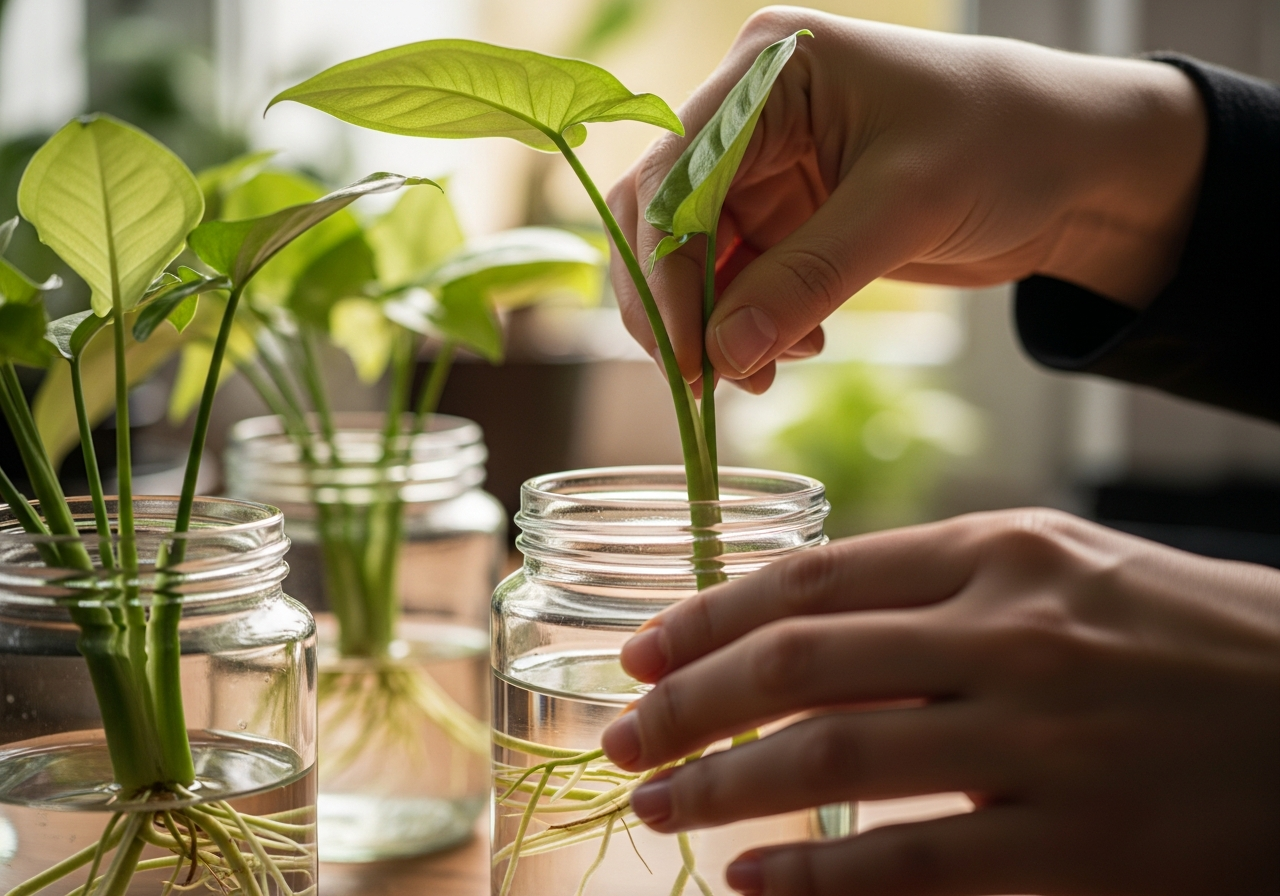
- Place the cutting in a jar with only the node submerged.
- Keep leaves above water.
- Place in bright, indirect light.
- Change the water every 3–5 days to prevent slimy bacterial buildup.
Visual cue: Roots begin as tiny white nubs at the node and thicken over time.
5. Soil Propagation (Faster Long-Term Growth)
- Prepare a mix of:
- 50% potting soil
- 25% coco peat
- 25% perlite or pumice
- Insert the cutting so the node is buried 1–2 cm deep.
- Water lightly; the soil should feel evenly moist, not soggy.
- Place in warm shade too much sun dries out the cutting.
6. Transitioning Water Roots to Soil (Critical Step)
If propagating in water:
- Wait until roots reach 2–4 inches.
- Plant gently into moist soil and keep humidity high for a week.
A clear sign the transition succeeded: The cutting stands firm and new growth appears within 2–4 weeks.
Pro Tips and Best Practices
- Warmth speeds everything. Rooting is fastest at 22–28°C.
- Avoid direct sun. It scorches tender leaves and dries the cutting.
- Don’t bury the leaf. It invites fungus and rot.
- Use a clear jar. Lets you monitor root progress and slime buildup.
- Rotate jars weekly. Prevents algae and keeps water oxygenated.
- If the cutting droops: Mist lightly; it’s adjusting, not dying.
What beginners often miss: A cutting can rot if the node stays too deep in soil or the mix is too dense. Syngonium likes oxygen around its emerging roots.
Common Mistakes to Avoid
- Using dull scissors (causes crushed tissue that rots)
- Submerging leaves in water
- Keeping the cutting in cold, low-light spots
- Soil that stays soggy for days
- Overcrowding multiple cuttings in one small jar
FAQ
Why are my Syngonium cuttings turning yellow? Usually due to overwatering or too little light. Move to brighter indirect light and ensure soil drains well.
How long does Syngonium take to root in water? Typically 1–3 weeks depending on temperature and light.
Can I propagate Syngonium without leaves? No. Leafless nodes rarely root well because they lack energy for new growth.
Should I use rooting hormone? It’s optional. I use it only for thicker, older stems.
Why are the roots slimy? Old water or algae buildup. Change the water and rinse the jar.
Can I grow multiple cuttings together? Yes plant them together for a fuller pot.
When NOT to Use This Method
Propagation may fail if:
- Temperatures are below 15°C
- The mother plant is diseased or pest-infested
- The stem is too young (soft, pale green)
- You only have extremely low-light conditions
In very humid climates, water propagation can encourage rot soil is safer there.
Alternatives to Growing Syngonium From Cuttings
1. Air Layering
- Great for large vines
- Lower rot risk
- Slightly slower
2. Division (if the plant is bushy)
- Instant new plant
- Requires disturbing the root ball
Which method should beginners pick? Water propagation is easiest for monitoring roots; soil propagation is best for long-term success.
Conclusion
Learning how to grow Syngonium from cuttings is one of the simplest ways to expand your indoor plant collection. With a clean cut, a healthy node, and a warm bright spot, Syngonium responds quickly and reliably. Be patient, keep conditions stable, and let the plant tell you what it needs through its leaves and roots. With practice, propagating Syngonium becomes second nature and a surprisingly satisfying part of home gardening.