Every product is independently reviewed and selected by our editors. If you buy something through our links, we may earn an affiliate commission at no extra cost to you.
Growing food indoors during the colder months is one of the most empowering steps you can take toward a healthier, more sustainable home. Learning how to grow lettuce indoors in winter is not just about fresh greens when outdoor gardens are dormant it’s about protecting your indoor air quality, supporting mental well-being, and maintaining a toxin-free living environment rooted in organic home décor principles.
In my experience working with U.S. homeowners and renters, winter indoor lettuce becomes more than food. It becomes a living design element, a daily ritual, and a reliable way to stay connected to nature when the landscape outside feels dormant and gray.
Why Learning How to Grow Lettuce Indoors in Winter Truly Matters
Health & Indoor Air Quality
Winter homes are sealed tight. Windows stay closed, heaters run constantly, and indoor air quality often declines. In real homes, I’ve seen how adding living plants like lettuce helps balance humidity and reduce that “stale air” feeling common in winter. More importantly, growing your own lettuce indoors eliminates exposure to pesticide residues commonly found on store-bought winter greens.
Mental Well-Being & Seasonal Stress
Winter can feel long and draining. Caring for living plants provides structure, routine, and a sense of progress powerful tools for reducing stress and seasonal fatigue. Many clients tell me their indoor lettuce becomes a small but meaningful anchor during darker months.
Sustainability & Environmental Impact
Winter produce often travels thousands of miles and arrives wrapped in plastic. Growing lettuce indoors reduces food miles, packaging waste, and dependence on industrial agriculture key goals of sustainable home design.
Creating a Toxin-Free, Calming Living Space
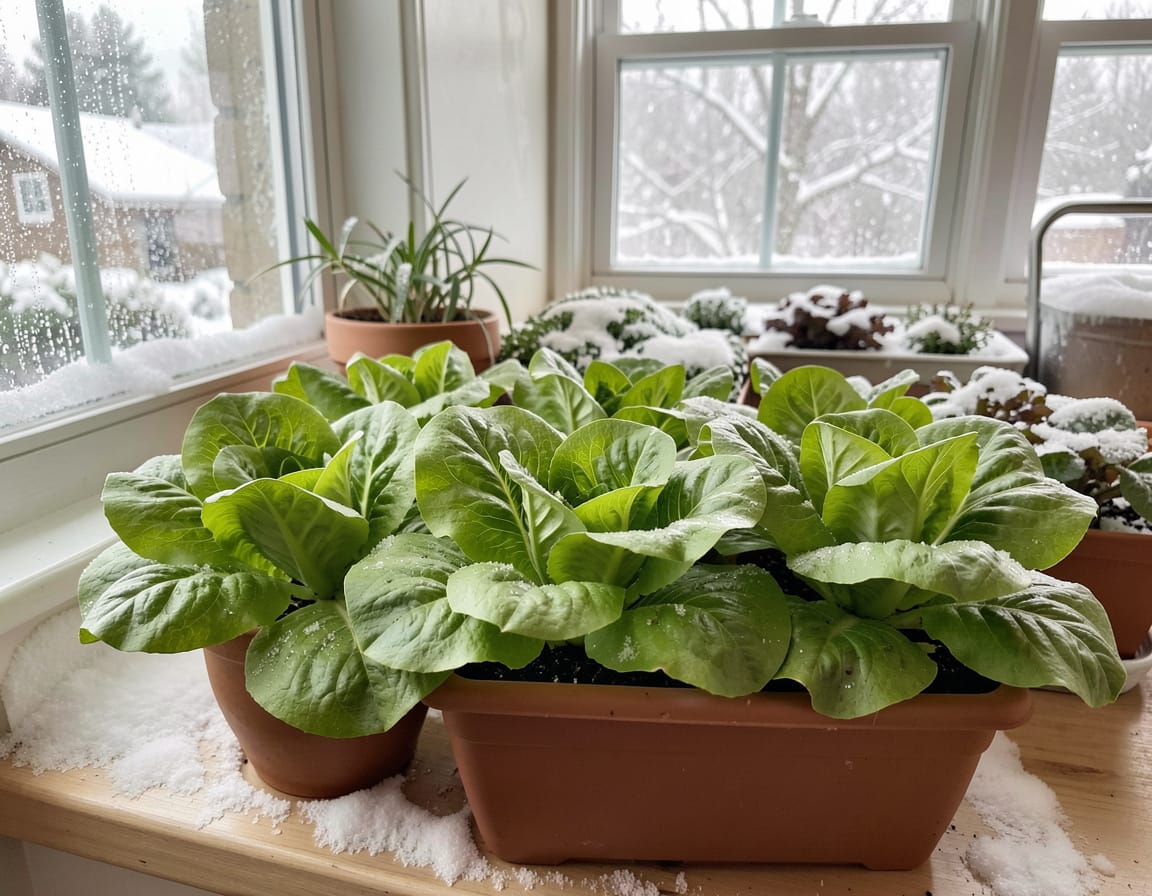
Indoor lettuce aligns beautifully with natural interior decoration. When paired with clay pots, wooden shelving, and natural light, it reinforces a calm, grounded home atmosphere while remaining fully functional.
Everyday Organic Styling & Care Routine for Winter Indoor Lettuce
Winter lettuce thrives on consistency, not perfection. A simple routine keeps plants healthy and integrates seamlessly into eco-friendly home styling.
Daily Check-In (3–5 minutes)
- Check soil moisture with your fingertip
- Observe leaf posture and color
- Ensure plants are not touching cold window glass
Weekly Care
- Rotate containers for even light exposure
- Trim outer leaves to encourage new growth
- Wipe nearby surfaces to improve light reflection
In real homes, I recommend tying plant care to an existing winter habitlike morning tea or evening kitchen cleanup so it never feels like extra work.
What You’ll Need to Grow Lettuce Indoors in Winter (Organic & Sustainable)
Winter conditions require thoughtful material choices. These are the essentials I consistently recommend based on hands-on experience.
Essential Supplies Explained
| Item | What It Is | Why It’s Used | Organic / Health Benefits | Sustainability Considerations |
| Lettuce Seeds | Loose-leaf or butterhead varieties | Best for low-light, indoor growth | No chemical residues | Choose organic or open-pollinated seeds |
| Containers | Pots, bowls, or trays with drainage | Root health and moisture control | Avoids plastic toxins | Ceramic, terracotta, or repurposed items |
| Organic Potting Mix | Chemical-free growing medium | Supports healthy roots | No synthetic fertilizers | Peat-free options protect ecosystems |
| Grow Light | Full-spectrum LED | Compensates for short winter days | Prevents weak, leggy growth | Energy-efficient LEDs save electricity |
| Drainage Tray | Collects excess water | Prevents mold and rot | Improves indoor air quality | Reusable metal or ceramic |
| Watering Can | Gentle watering tool | Prevents soil compaction | Reduces overwatering | Durable, long-lasting materials |
From professional experience, grow lights are the single most important winter investment for indoor lettuce success.
How to Grow Lettuce Indoors in Winter: Step-by-Step Organic Method
This process has been refined through years of helping clients grow food in apartments, condos, and single-family homes across different U.S. climates.
Step 1: Choose Winter-Friendly Lettuce Varieties
Loose-leaf lettuces (red leaf, green leaf, oak leaf) and butterhead types perform best indoors during winter. They mature quickly and tolerate lower light better than romaine or iceberg types.
Step 2: Prepare Containers Thoughtfully
Ensure drainage holes are present. In rentals where drilling isn’t allowed, use shallow trays with careful watering. Cold floors can shock roots, so elevate containers slightly using wooden risers or shelves.
Step 3: Fill with Organic Soil
Fill containers to within one inch of the rim. Lightly moisten soil before planting to create an even environment for seeds.
Step 4: Sow Seeds Correctly
Scatter seeds thinly on the surface. Lettuce seeds need light to germinate, so press gently into the soil without covering heavily.
Step 5: Water Gently
Use a spray bottle or fine-spout can. Soil should be evenly moist, never soggy.
Step 6: Provide Consistent Light
Position grow lights 4–6 inches above plants. Aim for 10–12 hours of light daily. In my experience, inconsistent lighting is the most common reason winter lettuce fails.
How to Grow Lettuce Indoors in Winter Without Harming Indoor Air Quality
Winter homes are vulnerable to mold and poor air circulation, so lettuce care must be mindful.
- Avoid standing water in trays
- Ensure airflow without placing plants near cold drafts
- Use breathable containers like terracotta
- Do not over-fertilize healthy soil is enough
Healthy lettuce should smell fresh and earthy, never sour or musty.
Deep Organic Setup or Seasonal Refresh for Winter Growing
Winter is the perfect time to simplify and reset your indoor garden.
Seasonal Refresh Strategies
- Replace the top inch of soil every 6–8 weeks
- Clean grow light surfaces to maintain brightness
- Reorganize plants to reduce crowding
Long-Term Plant & Material Health
Rotate containers occasionally to prevent salt buildup in soil. Compost spent soil outdoors in spring whenever possible.
These habits support both organic gardening practices and long-term eco-friendly home styling.
Prevention & Sustainability Tips for Winter Indoor Lettuce
Avoid Synthetic Décor & Finishes
Many decorative planters are sealed with chemical coatings. Stick to raw clay, ceramic, wood, or glass to keep your indoor environment non-toxic.
Prevent Plant Stress
- Keep plants away from heating vents
- Maintain room temperatures between 60–70°F
- Avoid sudden light changes
Reduce Waste
- Harvest outer leaves instead of whole plants
- Reuse containers season after season
- Compost trimmings
Maintain Organic Beauty
Healthy lettuce should enhance your space, not clutter it. Thoughtful placement supports natural interior decoration while keeping function front and center.
Common Mistakes to Avoid When Growing Lettuce Indoors in Winter
Falling for “Eco-Friendly” Marketing
I’ve seen clients unknowingly use chemically treated soils marketed as natural. Always read labels carefully.
Poor Lighting Placement
Light too far away leads to weak, pale leaves. Light too close causes drying and stress.
Overwatering & Poor Ventilation
Winter evaporation is slow. Overwatering suffocates roots and invites mold—bad for plants and indoor air.
Unsustainable Materials
Disposable plastic trays crack and degrade quickly. They contradict sustainable home design and create unnecessary waste.
Local U.S. Home Context: Realistic Winter Growing Scenarios
Small Apartments & Rentals
Use vertical shelving, windowsill trays, or rolling carts. Grow lights allow flexibility without permanent installation.
Open-Concept Homes
Group lettuce with other indoor plants to stabilize humidity and create visual balance.
Seasonal Climate Variations
Northern climates rely heavily on grow lights. Southern homes may still benefit from supplemental lighting due to short winter days.
Urban vs Suburban Homes
Urban dwellers often grow exclusively indoors. Suburban homeowners may combine indoor lettuce with cold-frame greens outdoors.
Limited Natural Light
I’ve helped many renters succeed with one shelf, one LED light, and three containers simple, affordable, and effective.
Extra Expert Tips From Hands-On Experience
- Budget-Friendly Upgrade: Use reflective white walls or backing boards to amplify light
- Low-Maintenance Strategy: Grow multiple small batches instead of one large container
- Flavor Tip: Harvest in the morning for sweeter leaves
- Design Tip: Pair lettuce with linen runners, wooden trays, or stone surfaces for cohesive organic décor
- Long-Term Hack: Stagger planting every 10 days for continuous winter harvest
These refinements make winter indoor gardening feel intentional rather than experimental.
FAQ: Winter Indoor Lettuce & Organic Home Living
1. Is it difficult to learn how to grow lettuce indoors in winter?
Not at all. With proper lighting and mindful watering, lettuce is one of the easiest winter crops.
2. Do I need a grow light to grow lettuce indoors in winter?
In most U.S. homes, yes. Short days and low sun angles make supplemental light essential.
3. How long does winter indoor lettuce take to grow?
Most varieties are ready in 30–45 days, with baby greens available earlier.
4. Is indoor winter lettuce safe for homes with pets and kids?
Yes. Lettuce is non-toxic and safe, making it ideal for family households.
5. Can I grow lettuce indoors without fertilizer?
High-quality organic soil usually provides enough nutrients. Light compost tea can help if growth slows.
6. Why does my winter lettuce taste bitter?
Bitterness usually comes from heat stress or inconsistent watering. Keep temperatures steady and harvest young leaves.
Conclusion
Learning how to grow lettuce indoors in winter is about more than fresh greens it’s about resilience, wellness, and intentional living. In real homes, winter lettuce supports cleaner air, reduces grocery dependence, and brings life into spaces that often feel closed-off during colder months.
By combining organic gardening practices with thoughtful eco-friendly home styling, indoor lettuce becomes both nourishment and décor. With the right setup, consistent care, and sustainable materials, anyone renter or homeowner can grow confidently all winter long.
This is sustainable living made practical, calming, and genuinely rewarding.