Every product is independently reviewed and selected by our editors. If you buy something through our links, we may earn an affiliate commission at no extra cost to you.
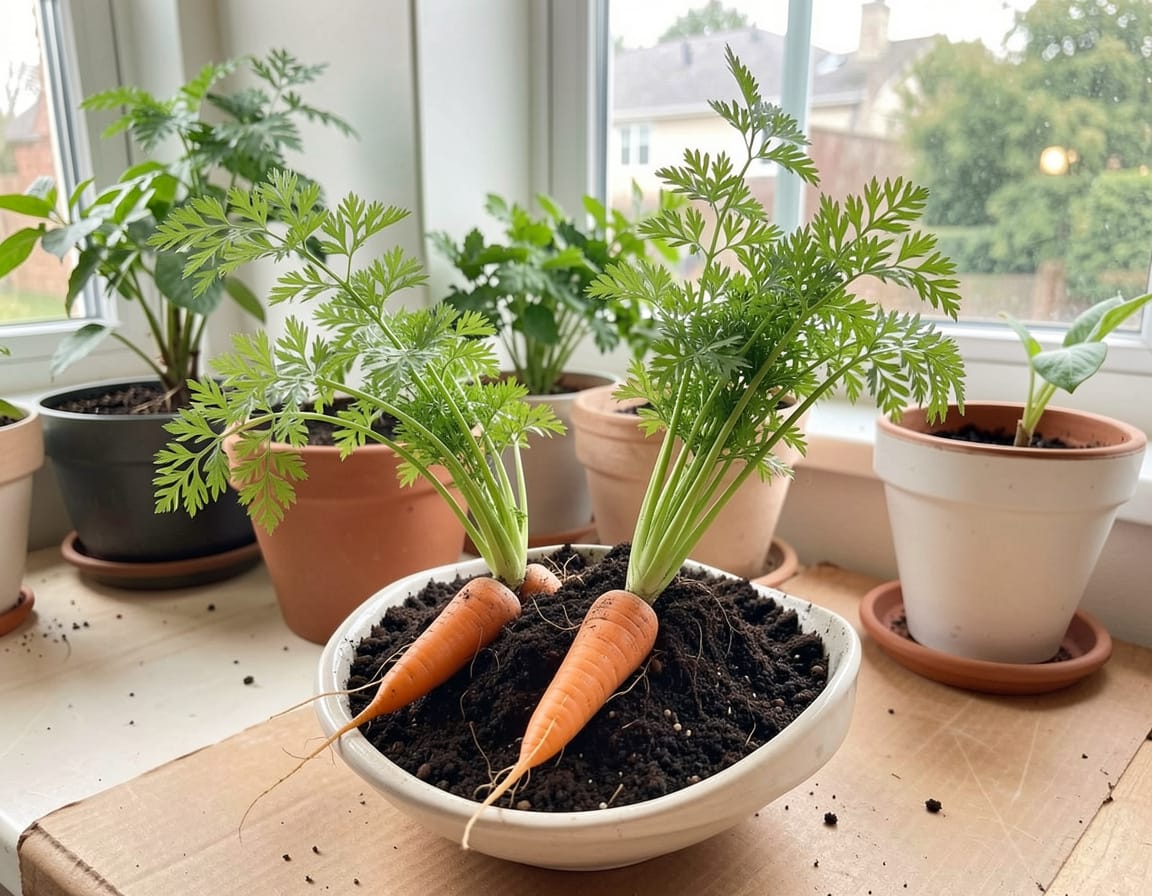
Growing full carrots without seeds isn’t possible because carrots don’t regenerate a new taproot. However, you can grow fresh carrot greens indoors from carrot tops. These greens are edible, aromatic, and useful in salads, pestos, and garnishes. They’re also one of the easiest indoor gardening projects reat for kids, beginners, or anyone with limited space.
I’ve done this on a kitchen windowsill many times using leftover carrot tops. They sprout quickly, and as long as they get light and regular moisture, they thrive indoors.
Below is a clean, simple guide you can follow immediately.
Why This Method Works
A carrot root won’t regrow, but the crown (the top 1–2 inches of a carrot) still contains growing points. Indoors, with moisture and light, those growing points push out:
- Fresh green foliage
- Small white feeder roots (but not a new carrot)
It’s a low‑maintenance, mess‑free way to get usable greens from kitchen scraps.
What You’ll Need
- Carrot tops (1–2 inches of the upper part of the carrot)
- Shallow bowl, jar lid, or small dish
- Fresh water
- Optional: small pot and potting mix if you want fuller greens
- Sunny window or a basic LED grow light
Cheap alternatives: any shallow container, rainwater or filtered tap water, recycled nursery pot.
Step-by-Step: How to Grow Carrot Greens Indoors Without Seeds
1. Prepare the Carrot Tops
Cut the top 1–2 inches off a firm carrot. Make sure the crown (where the greens used to be) is intact this is where regrowth happens.
2. Place the Tops in a Shallow Dish
Set the carrot tops cut side down, crown side up. Add water so the bottom ¼ inch is submerged.
Indoor cue: too much water causes rot; too little dries them out.
3. Give Them Strong Light
Place the dish in a bright window or under a grow light. Carrot tops regrow fastest with 6–8 hours of light.
Signs you’re doing it right:
- New green shoots appear within 3–5 days
- Tiny hair‑like roots form underneath
4. Change the Water Every 1–2 Days
This prevents bacterial slime and rot. Indoors, warm rooms make water go foul faster change it daily in summer.
5. Transplant to Potting Mix (Optional but Highly Recommended)
Once the tops have roots and 1–2 inches of new greens, place them in a small pot with loose potting soil.
Benefits of transplanting:
- Faster growth
- Fuller greens
- Less chance of rot
Keep soil lightly moist—not soggy.
6. Harvest Greens as Needed
Snip the greens with scissors once they reach 4–6 inches tall. They continue to regrow for several weeks.
Pro Tips From Real Indoor Experience
- Don’t bury the crown leave it slightly exposed to prevent rot.
- Indoor heating dries things quickly; mist leaves lightly if they look limp.
- Rotate the pot or dish weekly to prevent lopsided growth.
- Avoid cold drafts from winter windows; carrot tops stop growing below 55°F.
- Use filtered or dechlorinated water if tap water causes yellowing.
Common beginner mistake: leaving carrot tops in stagnant water too long. They rot fast.
FAQ
Can carrot tops grow a new carrot root indoors? No. The taproot (the carrot) cannot regrow once harvested.
How long do carrot tops live indoors? Usually 3–6 weeks with regular care.
Can you plant a whole carrot to grow a new one? It will grow greens and flowers, but not a new edible carrot.
Do carrot greens taste good? Yes—mild, slightly herbal, great in pestos, soups, and salads.
Do I need soil or can I keep them in water forever? They’ll survive in water, but soil gives fuller, healthier greens.
When Not to Use This Method
Avoid growing carrot tops indoors if:
- Your indoor space gets almost no light (they will yellow quickly)
- The room is very cold
- You expect full carrots this method only grows greens
If you want full roots, you must grow carrots from seed.
Alternatives for Indoor Gardeners
Microgreens
Pros: fast, nutritious, minimal space Cons: constant re‑sowing
Leafy herbs (parsley, cilantro, basil)
Pros: long‑lasting, useful Cons: need moderate light
Carrots from seed indoors
Pros: produces full carrots Cons: requires deeper pots and longer time
Conclusion
Learning how to grow carrots without seeds indoors is really about regrowing flavorful carrot greens from kitchen scraps. With just a shallow dish, a sunny window, and a bit of water, you’ll have fresh greens within days. It’s simple, clean, and surprisingly rewarding perfect for beginners or small indoor spaces.
If you later want full, homegrown carrots, move on to growing them from seed. For now, enjoy the fresh greens and the satisfaction of turning scraps into something useful.