Every product is independently reviewed and selected by our editors. If you buy something through our links, we may earn an affiliate commission at no extra cost to you.
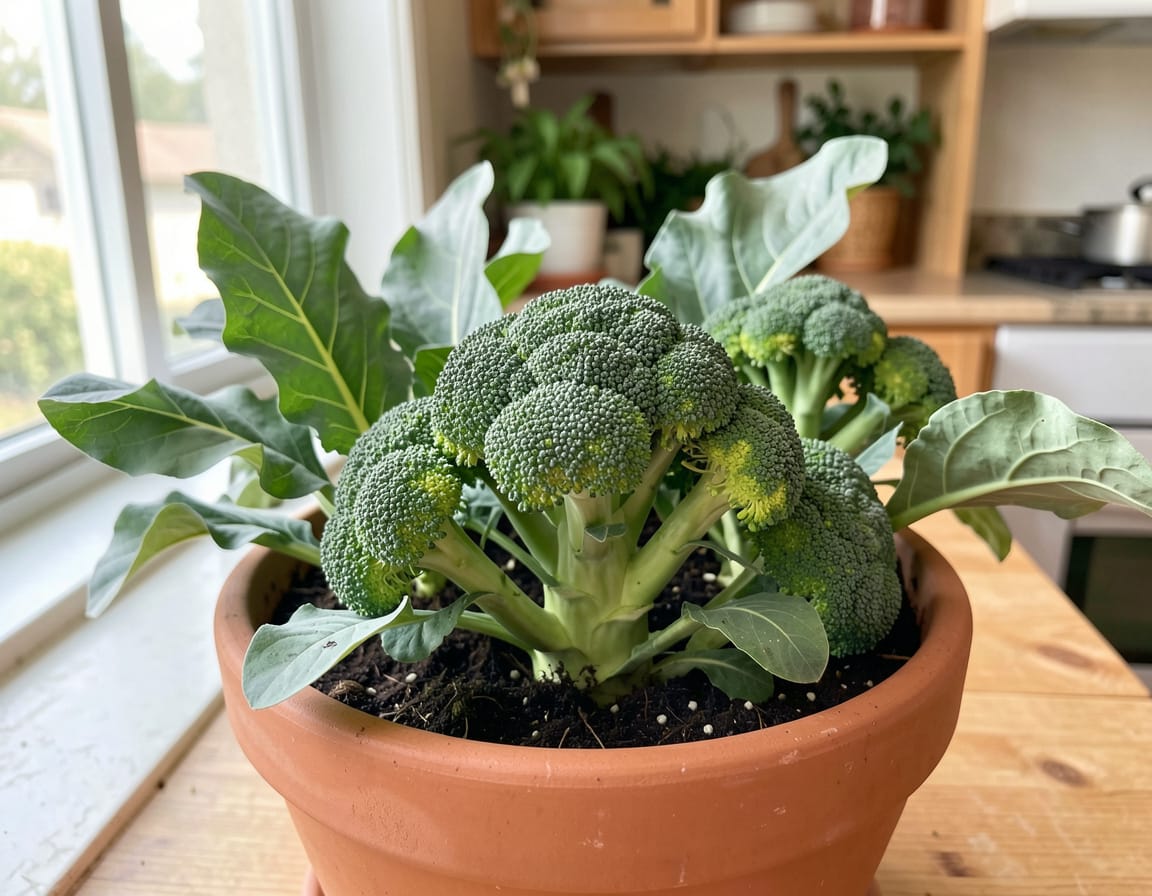
If you love fresh, crisp broccoli but don’t have garden space, you’ll be glad to know you can grow it successfully in pots. I’ve grown broccoli on both a sunny terrace and a small backyard deck enough to learn that container-grown broccoli can be just as productive as garden-grown plants when given the right care.
The key is understanding what broccoli truly needs: cool temperatures, deep soil, and steady feeding. Once you get those three right, you can harvest tight green heads even from a single container.
Why Broccoli Grows Well in Containers
Broccoli belongs to the cool-season brassica family (along with cabbage and cauliflower). It grows best when roots stay cool, soil stays evenly moist, and the plant gets 5–6 hours of sunlight daily.
In containers, you can control all of these factors soil quality, watering, and pest protection much better than in open ground.
From my hands-on trials, container broccoli actually produced cleaner, less pest-damaged heads because I could move pots away from cabbage moth zones and shade them slightly on hot days.
What You’ll Need
You don’t need anything fancy to start. Here’s what works best:
- Container: At least 5 gallons (12–14 inches deep and wide) per plant
- Soil mix: 40% compost, 40% cocopeat or potting soil, 20% perlite or coarse sand
- Seeds or seedlings: Compact varieties like De Cicco, Calabrese, or Green Magic do well in pots
- Slow-release organic fertilizer or composted manure
- Liquid feed: Seaweed extract or fish emulsion (for mid-season feeding)
- Mulch: Straw, dry leaves, or coco chips
- Watering can with a fine spout
Eco tip: Avoid garden soil in containers it compacts easily and suffocates the roots of brassicas like broccoli.
Step-by-Step: How to Grow Broccoli at Home in a Container
1. Choose the Right Variety
Not all broccoli types suit container growing. Compact or early-maturing varieties such as ‘De Cicco,’ ‘Green Magic,’ or ‘Calabrese’ are ideal because they form heads quickly and don’t need as much root space.
2. Sow or Transplant
- From seed: Sow seeds ¼ inch deep in small nursery trays or pots. Keep moist but not soggy. Seeds germinate in 5–10 days.
- Transplant: When seedlings have 4–5 true leaves and sturdy stems (about 3–4 weeks old), move them into their final container.
Hands-on tip: Transplant on a cloudy day or late afternoon to reduce shock.
3. Prepare the Potting Mix
Use a light, fertile, well-draining mix. Broccoli roots are shallow but wide-spreading—they need air as much as moisture. Mix thoroughly:
- 2 parts compost
- 2 parts cocopeat or potting soil
- 1 part perlite or coarse sand Add a handful of bone meal or neem cake powder for slow-release nutrients and pest resistance.
4. Planting
Place one seedling per pot (broccoli needs elbow room). Plant deep enough so the first leaves sit just above soil level. Water thoroughly after planting to settle the soil.
5. Light and Temperature
- Sunlight: 5–6 hours of direct light daily. Morning sun is ideal; harsh afternoon heat can cause stress.
- Temperature: Best growth between 15–24°C (59–75°F). If you live in a warmer climate, start broccoli in late fall or early winter when temperatures are cooler. If it’s too hot, move containers to partial shade during mid-day.
6. Watering
Broccoli loves consistent moisture never let the soil dry out completely.
- Water every 2–3 days, more often in hot weather.
- Always water at the base, not the leaves.
- Avoid waterlogging the roots will rot quickly.
Observation from experience: Plants that dried out even once produced smaller, looser heads. Consistent moisture made all the difference.
7. Feeding Schedule
Broccoli is a heavy feeder. In containers, nutrients wash out faster, so regular feeding is key.
- Mix slow-release organic fertilizer into the soil when planting.
- After 3–4 weeks, begin feeding every two weeks with diluted seaweed extract, compost tea, or liquid vermicompost.
- Once the central head forms, boost with a phosphorus-rich fertilizer to encourage tight flower buds.
8. Mulching
Adding a 1–2 inch mulch layer (straw, dry leaves, or coco chips) helps maintain soil moisture and keeps roots cool especially important on balconies or terraces where pots heat up quickly.
9. Pest Management (Naturally)
In my container broccoli experiments, the main pests were aphids and cabbage worms. Here’s what worked:
- Neem oil spray: Mix 5 ml neem oil + 1 liter of water + a few drops of mild soap. Spray weekly on undersides of leaves.
- Hand-picking: In small setups, simply remove caterpillars early in the morning.
- Companion plants: Grow mint or marigold near your broccoli pots they deter common brassica pests naturally.
10. Harvesting
Broccoli forms a main central head first. Harvest it before the buds open into yellow flowers.
- Cut the head with 5–6 inches of stem attached.
- After harvesting the main head, the plant will often produce smaller side shoots—these taste just as good!
From my container plants, each produced one large head and several smaller side shoots over the next few weeks.
Pro Tips from Real Container Gardening Experience
- Don’t overcrowd. One plant per pot two will compete and produce smaller heads.
- Keep it cool. Above 26°C (79°F), broccoli bolts (flowers prematurely). Move pots to partial shade if needed.
- Rotate crops. Don’t grow other cabbage-family plants in the same container for at least one season to avoid soil-borne disease buildup.
- Handle gently. Broccoli roots are sensitive avoid moving pots once the plant starts forming heads.
- Water early in the day. Wet leaves at night invite fungal disease.
Common Questions About Growing Broccoli in Containers
1. How long does broccoli take to grow in pots?
Typically 70–100 days from seed to harvest, depending on variety and weather.
2. Can broccoli grow indoors?
Yes, under strong grow lights (minimum 6–8 hours of light daily) and in a cool, ventilated space. However, it performs best outdoors or on a bright balcony.
3. How big should the container be for broccoli?
A 12–14 inch deep and wide pot (about 5 gallons) per plant gives the roots enough space to spread.
4. Why is my broccoli plant tall but not forming a head?
Usually due to too much heat or low light. Try cooler conditions and full sun exposure.
5. Can I reuse the soil after harvesting broccoli?
Yes, after removing roots and adding fresh compost or fertilizer. Avoid replanting other brassicas in the same soil immediately.
6. How do I know when to harvest?
Harvest when the central head is firm, dark green, and tight. If you see small yellow petals forming, harvest immediately it’s about to flower.
When Broccoli Struggles in Containers
Avoid growing broccoli in the following conditions:
- Hot tropical summers (plants bolt before forming heads)
- Shallow pots (<10 inches deep)—roots overheat and dry quickly
- Constant shade—heads stay small and loose
- Inconsistent watering—causes bitter taste and poor head formation
If you have these conditions, try leafy brassicas like kale or mustard greens instead—they’re more forgiving.
Alternative Crops for Warm Weather or Small Spaces
If your climate is too hot for broccoli, try:
- Kale – thrives in partial shade and heat-tolerant
- Pak choi / Bok choy – grows fast and easy in small pots
- Arugula (rocket) – ready in 3–4 weeks, continuous harvests
These share broccoli’s flavor family but suit a wider range of conditions.
Conclusion
So, how to grow broccoli at home in a container? Choose a compact variety, give it cool weather and deep soil, water consistently, and feed regularly. That’s the winning formula.
From my own balcony and terrace trials, broccoli became one of the most satisfying cool-season crops to grow especially when those first tight green heads appeared after weeks of patient care.
Container-grown broccoli lets you enjoy fresh, organic produce even in small city spaces. Start with one pot this season you’ll be amazed at how much life (and flavor) can grow from a single container.