Every product is independently reviewed and selected by our editors. If you buy something through our links, we may earn an affiliate commission at no extra cost to you.
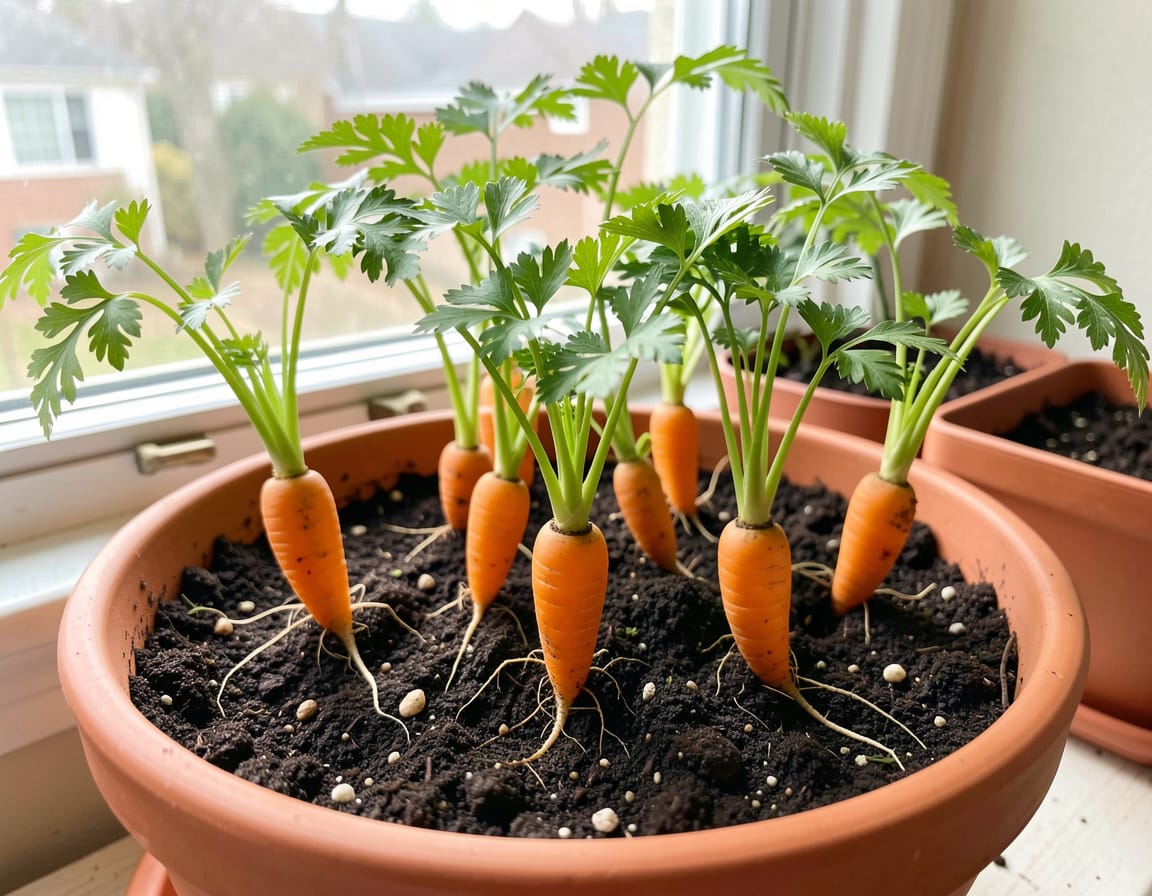
Growing baby carrots indoors is one of the easiest ways to enjoy fresh, crunchy roots without needing a big garden. I’ve grown them on a sunny kitchen windowsill, under a cheap grow light in winter, and even in a shallow wooden tray on my balcony. When you understand what carrots actually need consistent moisture, loose soil, and steady light they grow reliably indoors with very little fuss.
Below is a practical, experience-based guide you can follow immediately.
Why Growing Baby Carrots Indoors Works
Baby carrots aren’t a different plant they’re simply harvested young. Because they stay small (often 3–5 inches), they don’t need deep containers, and they mature faster than full-size varieties. Indoors, you control moisture, temperature, and pests, which solves the biggest carrot problems I’ve seen outdoors: uneven watering, compacted soil, and carrot fly.
The result: straighter, sweeter, more tender carrots.
What You’ll Need
- A shallow pot or tray at least 6–8 inches deep
- Loose, fine-textured potting mix (peat-free if possible)
- Slow-release organic fertilizer or compost
- Baby carrot seeds (varieties like ‘Adelaide’, ‘Parmex’, ‘Little Finger’)
- Spray bottle or fine-rose watering can
- Sunny window (south-facing) or a basic LED grow light
- A small fan (optional but helpful for airflow)
Budget alternatives: recycled salad containers with drainage holes, homemade compost mix, or an inexpensive clamp-on grow light.
How to Grow Baby Carrots Indoors (Step-by-Step)
1. Prepare the Container
Use a clean pot at least 6 inches deep. Carrots fork easily if the soil is compacted, so fill the container loosely don’t press the soil down too hard.
Good soil cues:
- Feels fluffy when squeezed
- No clumps or wood chunks
- Moist but not soggy
2. Wet the Soil Before Sowing
Carrot seeds germinate best in evenly moist soil. Water the soil lightly until it feels like a wrung-out sponge.
In my experience, pre-moistened soil prevents the seeds from shifting around during watering.
3. Sow the Seeds Thinly
Scatter seeds across the surface, aiming for about one seed every half-inch. Baby carrots don’t need much thinning if you sow lightly.
Lightly cover with a thin layer of soil (no more than ¼ inch).
4. Keep the Surface Moist
Carrot seeds are slow to sprout 7 to 14 days indoors. Mist daily or cover the container with a breathable lid until the first sprouts appear.
Avoid heavy watering during this stage; it displaces seeds and creates patchy rows.
5. Provide Strong Light
Place the container where it gets 6–8 hours of direct sunlight. If your indoor light is weak, use a simple LED grow light set 6–8 inches above the seedlings.
Visual cue: Seedlings should stay short and upright. Tall, pale, stretched seedlings indicate too little light.
6. Thin Seedlings (If Needed)
Once the seedlings are 2 inches tall, thin them to 1–1.5 inches apart. Crowded carrots stay small and warped.
7. Water Consistently
Carrots need steady moisture to form crispy, tender roots. Indoors, I water lightly every 2–3 days, adjusting based on conditions.
Signs you’re watering correctly:
- Soil stays slightly damp
- No standing water
- Green tops remain firm, not floppy
8. Harvest in 30–50 Days
Baby carrots mature quickly. Gently brush back soil to check their size. If they’re finger-length, they’re ready.
Harvest by grasping the greens at the base and pulling straight up. If they resist, loosen soil around them with your fingers.
Pro Tips & Best Practices
- Use fresh seeds; old carrot seeds germinate poorly.
- Keep soil consistently moist dry spells cause woody, cracked roots.
- Don’t add too much nitrogen (e.g., too much compost); it causes hairy roots and leafy tops.
- Rotate your container slightly each week to prevent tilted growth toward the light.
- If growing near a window in winter, cold drafts can stunt the roots use a small barrier if needed.
Common beginner mistake: pressing soil down too firmly. Carrots need soft soil to grow straight.
FAQ
Why are my indoor baby carrots thin or tiny? Usually overcrowding or not enough light. Thin them out and move the container to a brighter spot.
Can I grow baby carrots indoors without sunlight? Yes, but you’ll need a grow light. Even a cheap LED bar works well.
How often should I water carrots indoors? Lightly every 2–3 days, or whenever the top inch feels dry.
Why are my carrot leaves turning yellow? Overwatering or poor drainage is the usual cause. Let the soil dry slightly and ensure the pot has holes.
Can I reuse soil for the next round? Only if it’s still loose and pest-free. I usually mix in a bit of fresh compost before replanting.
When Not to Grow Baby Carrots Indoors
- Extremely low-light homes without access to a grow light
- Very hot indoor environments (above 80°F), which can turn carrots bitter
- Containers shallower than 6 inches
- Soil mixes with bark chunks or clay, which cause forked roots
If any of these apply, grow microgreens or leafy herbs instead they tolerate poor indoor conditions better.
Alternative Methods
Hydroponic Baby Carrots
Pros: clean roots, fast growth Cons: higher setup cost, more monitoring
Fabric Grow Bags
Pros: great drainage, lightweight Cons: need a drip tray; dries faster
Deep Window Boxes
Pros: perfect for balconies Cons: may need more frequent watering
For beginners, a simple 6–8 inch pot with loose potting mix is the easiest and most forgiving method.
Conclusion
Growing baby carrots indoors is simple once you understand their needs: loose soil, bright light, and steady moisture. With a shallow pot and a sunny windowsill (or a basic grow light), you can harvest tender, sweet carrots in just a few weeks. Start small, water consistently, and adjust the light as needed these are the habits that always give me the best indoor harvests.
You’ll be surprised how much flavor such a small garden project can produce.