Every product is independently reviewed and selected by our editors. If you buy something through our links, we may earn an affiliate commission at no extra cost to you.
Few things ruin a barefoot walk through the lawn like stepping on sharp burrs. They cling to clothes, pet fur, and socks, and they spread fast if not handled correctly. In my own yard, burr-producing weeds were worst in areas with thin grass, compacted soil, and neglected corners where sunlight or water was uneven.
The good news: with consistent lawn care and the right removal method, burrs can be controlled naturally no harsh chemicals needed.
This guide shows how to get rid of burrs in your lawn using practical, experience-tested steps.
Why Burrs Take Over Lawns
Plants that produce burrs like sandbur, burweed (sticker weed), and goathead thrive when grass is weak. They take advantage of:
- dry, compacted soil
- bare or patchy turf
- heat-stressed lawns
- poor mowing habits
- overgrazed areas (for rural yards)
In my own yard, burr-producing weeds always showed up first in thin spots where the grass couldn’t outcompete them.
Strong, dense turf is your best long-term defense.
What You’ll Need
- Lawn rake or dethatching rake
- Sturdy gloves (burrs are painful)
- Lawn bags
- Mower with sharp blade
- Hose or sprinkler
- Organic soil amendments (compost, topsoil)
- Optional: vinegar solution, corn gluten meal, or iron-based organic herbicide
Step-by-Step: How to Get Rid of Burrs in Your Lawn
This method works for burrweed, sandbur, goathead, and other sticker weeds.
1. Remove Existing Burrs Before They Spread
Do this before mowing otherwise you’ll spread seeds.
Best methods:
- Use a broom, rake, or even a piece of carpet scrap dragged across the lawn to catch burrs.
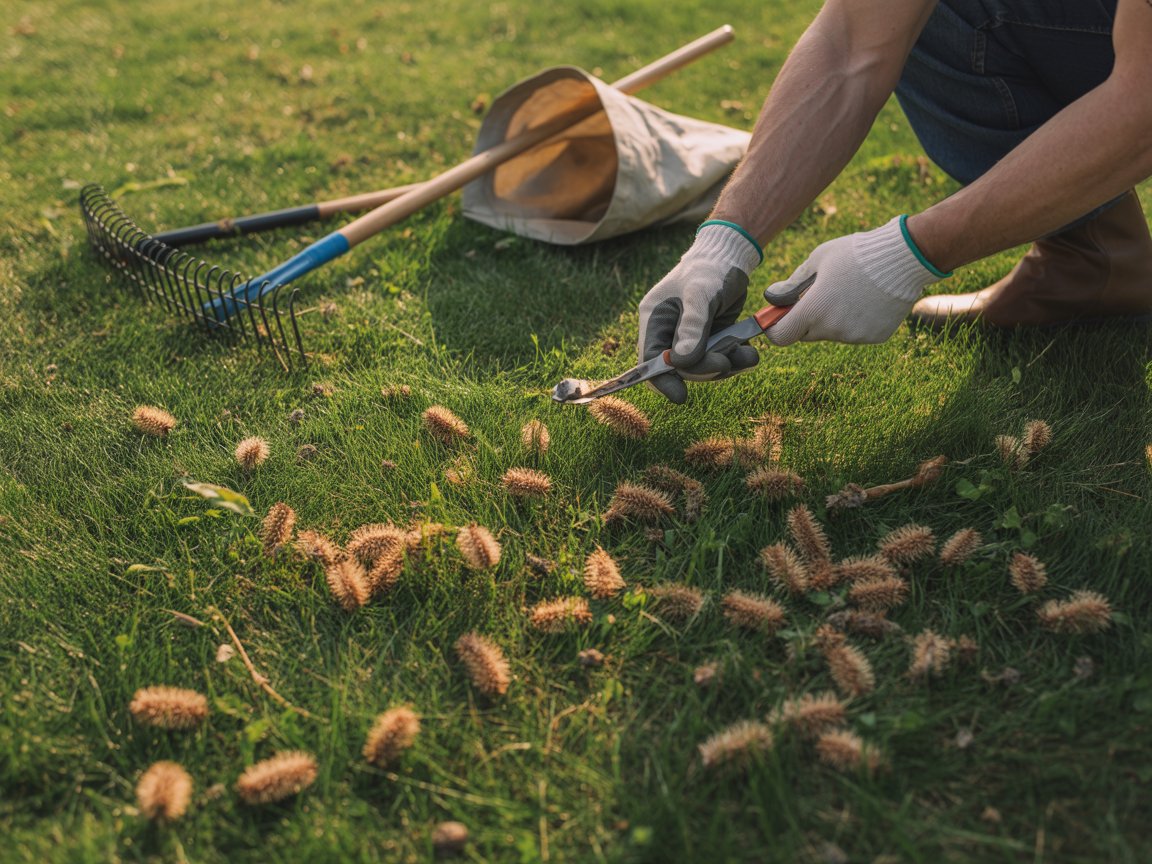
- Wear gloves and hand-pull plants with burr clusters.
- Double-bag the burrs so seeds don’t escape.
Real-world tip: Dragging a cheap welcome mat upside-down catches burrs better than anything else I’ve tested.
2. Mow the Area Short (But Not Scalp It)
Set your mower slightly lower than normal for one or two passes.
This helps:
- expose burr plants
- prevent reseeding
- make hand-pulling easier
Afterward, raise your mower height again taller grass outcompetes burr weeds.
3. Water Deeply to Soften Soil
Water thoroughly the day before removing the plants. Damp soil helps the root pull out more cleanly.
Dry soil breaks roots right at the surface, causing burr plants to regrow.
4. Hand-Pull Burr Plants (The Most Reliable Method)
Grip at the base, pull slowly, and get as much root as possible.
Focus on lighter-green patches you’ll often find burrweed hiding in weaker turf.
5. Improve Soil Health and Lawn Density
Burr weeds hate competition. Thick, healthy grass crowds them out naturally.
After removal, fill bare spots with:
- compost
- topsoil
- overseeding with your grass type
What I’ve noticed in my own yard: Burr-prone patches almost always have compacted soil. Once I aerated and overseeded, the burrs stopped returning.
6. Water on a Deep, Infrequent Schedule
Shallow watering encourages weed seeds to sprout. Deep watering helps turf roots grow longer and stronger.
Aim for:
- 1 inch of water per week
- early morning watering
7. Use Natural Weed-Suppressing Tools (Optional)
If the infestation is severe:
Corn gluten meal Acts as a natural pre-emergent, reducing burr seed germination.
Vinegar spray Works on young burrweed seedlings, but avoid overspray on grass.
Iron-based organic herbicides Safe for lawns when applied as directed.
Pro Tips & Best Practices
- Keep your mower blade sharp dull blades weaken turf.
- Avoid cutting more than one-third of grass height at once.
- Burrs spike in late summer; target weeds in spring before burrs form.
- Be consistent a single season of neglect brings them back.
- Pets spread burrs easily; brush paws after outdoor time if your yard is infested.
FAQ: Getting Rid of Burrs in Your Lawn
1. Why does my lawn suddenly have burrs? Thin, stressed grass allows burr-producing weeds to take hold.
2. Will burrs go away on their own? No. Burrs contain seeds and will spread rapidly if not removed.
3. Is there a natural way to kill burr weeds? Yes: hand-pulling, vinegar sprays, iron herbicides, and corn gluten meal.
4. Do burrs come from specific weeds? Yes sandbur, burweed, goathead, and carpetbur produce painful seed pods.
5. How do I prevent burrs long-term? Thicken your turf through overseeding, watering deeply, and improving soil.
6. Can I mow burrs to get rid of them? Mowing spreads seeds. Always remove burrs first.
When NOT to Remove Burrs Manually
Avoid hand-pulling if:
- burrs have already dropped seed into soil
- the soil is bone-dry (roots will snap)
- you have stinging or sharp burr types like goathead these can puncture gloves
In these cases, rake first, then use soil improvements and natural pre-emergents to stop the next generation.
Alternative Approaches
For severe infestations:
- Soil solarization (hot climates)
- Seasonal aeration and overseeding
- Smothering small areas with cardboard + compost
For sandy soils: Sandbur thrives in dry sand; switching to drought-tolerant grass + deep watering helps reclaim the area.
Conclusion: Mastering How to Get Rid of Burrs in Your Lawn
Learning how to get rid of burrs in your lawn naturally comes down to three principles:
- remove existing burrs before they spread
- strengthen the lawn so weeds can’t compete
- maintain healthy watering and mowing habits
With consistent effort, even badly infested yards can become burr-free within a season or two. A thick, well-cared-for lawn is the best long-term prevention and it feels a lot better under bare feet.