Every product is independently reviewed and selected by our editors. If you buy something through our links, we may earn an affiliate commission at no extra cost to you.
Indoor plants do more than decorate a garden. They filter air, soften hard surfaces, and when you’re growing herbs become part of the food you serve. But many home owners overlook one critical task: how to clean indoor plant roots safely and effectively. Root cleaning isn’t just a gardening chore. Done right, it protects plant health, prevents odors and pests, and keeps sinks, drains, and nearby appliances from unnecessary wear.
In this guide, you’ll learn how to clean indoor plant roots in a way that fits real U.S. A small apartments, busy households, open floor plans, and homes where plants live inches from food prep zones. Whether you’re rinsing basil roots in the sink, refreshing a peace lily near the dishwasher, or dealing with algae in a hydroponic herb jar, this article gives you practical, safe, and proven methods you can use immediately.
What “How to Clean Indoor Plant Roots” Really Means (and Why It Matters)
When people hear “cleaning plant roots,” they often picture aggressive scrubbing or soaking in chemicals. That’s not what healthy root cleaning looks like. Learning how to clean indoor plant roots means removing old soil, mineral buildup, algae, salt residue, and decaying organic matter without damaging delicate root tissue.
In root hygiene matters for several reasons:
- Food safety: Herbs like mint, cilantro, and basil are often grown near sinks and counters. Dirty roots can harbor bacteria, mold, or fungus gnats.
- Odor control: Root rot and stagnant water cause musty smells that linger in open gardens.
- Appliance longevity: Soil and grit washed down indoor garden can accelerate drain buildup and garbage disposal wear.
- Plant health: Clean roots absorb nutrients more efficiently, resulting in stronger growth and fewer pests.
Root cleaning is not a daily task. It’s a targeted maintenance habit that fits naturally into gardens planner especially when timed with watering, repotting, or trimming herbs for cooking.
Quick Cleaning Routine: A Simple After-Use or Monthly Reset
This quick routine is ideal for lightly soiled roots, hydroponic herbs, or plants you’ve just bought from a store.
Step-by-Step Quick Root Cleaning
- Prepare your sink
- Clear dishes and wipe away food residue.
- Use a sink strainer to catch soil and prevent drain clogs.
- Remove the plant gently
- Tip the pot sideways.
- Support the base of the plant with one hand.
- Slide it out without pulling on stems.
- Shake off loose soil
- Do this over a trash can or compost bin, not the sink.
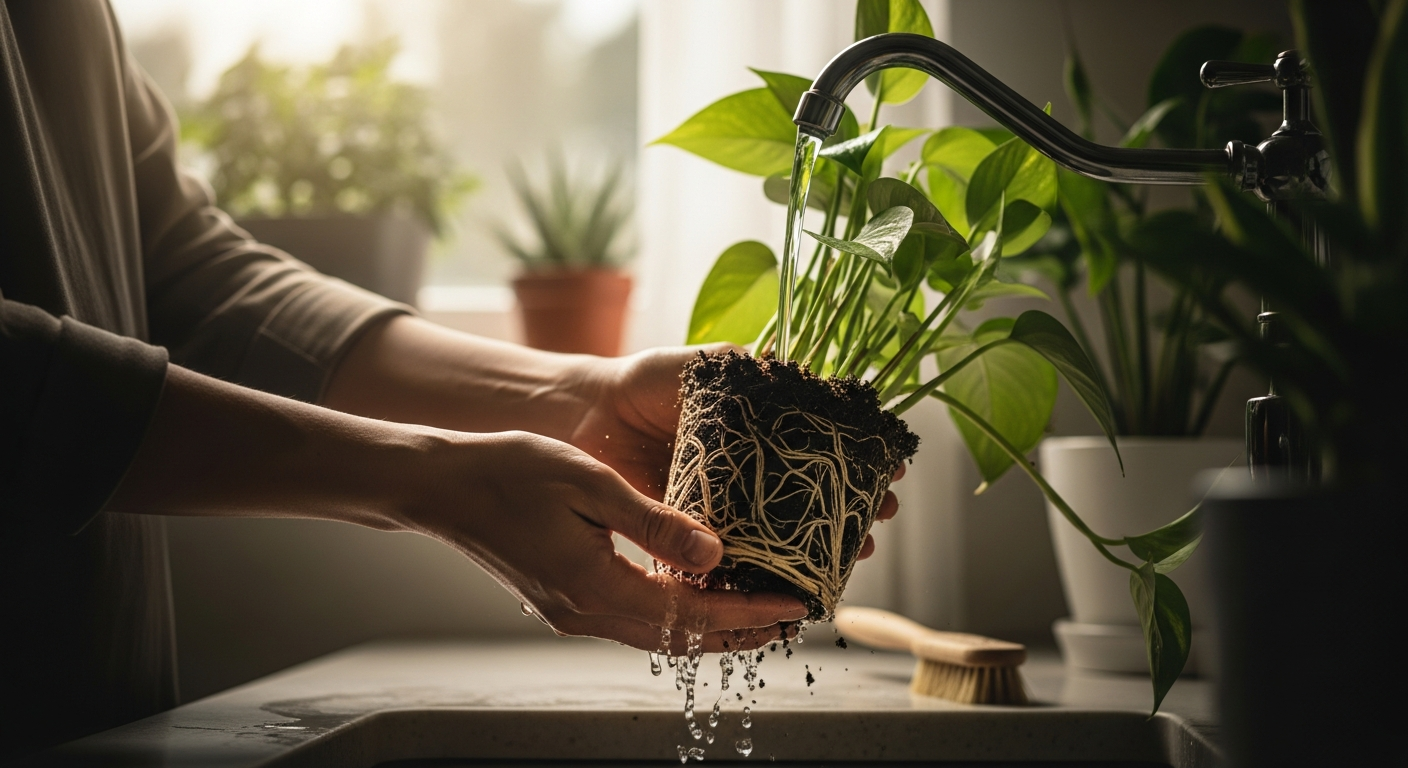
- Rinse with lukewarm water
- Use low water pressure.
- Let water flow over the roots, not directly at them.
- Rotate the plant to rinse evenly.
- Inspect roots
- Healthy roots are firm and white, tan, or light brown.
- Trim only clearly dead, black, or mushy roots with clean scissors.
- Pat dry
- Use a clean towel or paper towel.
- Never let roots sit in standing water.
This routine takes 5–10 minutes and works well for pothos, spider plants, philodendrons, and herbs.
What You’ll Need: Tools and Materials
You don’t need specialty gardening gear. Most items are already in a well-equipped home.
| Item | Why It Matters | Appartment-Safe Tip |
| Sink strainer | Prevents soil from clogging drains | Use a fine mesh style |
| Clean scissors or shears | Trims dead roots | Sanitize with rubbing alcohol |
| Soft-bristle brush (optional) | Removes stubborn residue | A new vegetable brush works |
| Bowl or colander | Supports roots during rinsing | Dedicate one for plants |
| Lukewarm water | Prevents root shock | Avoid hot or ice-cold water |
| Paper towels or clean cloth | Drying roots | Keep separate from food towels |
Avoid bleach, dish soap, vinegar, or disinfectant sprays. These damage roots and leave residues unsafe for edible plants.
Deep Cleaning Process: How to Clean Indoor Plant Roots Thoroughly
Use this method when:
- Repotting
- Treating fungus gnats
- Switching from soil to water (or vice versa)
- Correcting root rot
- Refreshing long-neglected plants
Step 1: Remove Old Soil Completely
Hold the plant over a trash can and gently tease soil away with your fingers. For compacted roots, tap the root ball lightly on the counter (protected with a towel).
Step 2: Rinse in Stages
Instead of blasting roots under the faucet, use a bowl of water:
- Swish roots gently
- Dump dirty water
- Refill and repeat until mostly clear
This method protects fragile root hairs.
Step 3: Address Buildup and Algae
For hydroponic plants or jars:
- Use a soft brush to remove green algae
- Rinse roots separately from containers
Step 4: Trim Damaged Roots
Cut:
- Blackened
- Slimy
- Hollow roots
Never remove more than 25–30% of the root mass.
Step 5: Let Roots Breathe
Set the plant on a clean towel for 10–20 minutes before repotting. This reduces transplant shock.
This deep cleaning method is the most effective way to truly understand how to clean indoor plant roots without compromising plant health.
Prevention Tips: Keep Roots Cleaner for Longer
Root cleaning shouldn’t be constant. These habits reduce buildup dramatically:
- Water correctly: Overwatering is the #1 cause of root problems in garden.
- Use pots with drainage: Decorative cachepots should never hold standing water.
- Flush soil monthly: Run clean water through the pot until it drains freely.
- Clean saucers: Empty and rinse weekly.
- Avoid fertilizer overuse: Salt buildup damages roots.
For herbs, harvest regularly. Frequent trimming keeps roots active and less prone to decay.
Common Mistakes to Avoid
Even well-intentioned garden owners make these errors:
- Using dish soap
- Soap strips protective root membranes.
- Soaking roots too long
- Roots need oxygen, not baths.
- Scrubbing aggressively
- Root hairs are as delicate as eyelashes.
- Cleaning too often
- Stress weakens plants.
- Rinsing soil down the drain
- Leads to plumbing issues and disposal damage.
Local Context: Real U.S. Homes, Real Challenges
In small apartments, plants often live on windowsills above sinks. In coastal areas, humidity accelerates mold growth. In outdoor garden, odors spread quickly. And in homes with frequent takeout and entertaining, counters get crowded.
Root cleaning fits best when:
- Done during dish-free moments
- Combined with sink cleaning
- Scheduled monthly, not randomly
If you grow herbs for cooking, treat root care as part of food prep hygiene—just like washing produce.
Extra Tips and Smart Hacks
- Label plant towels: Keep plant care separate from food linens.
- Use a salad spinner (plant-only): Excellent for drying roots gently.
- Rinse containers separately: Never mix with dishes.
- Check roots before guests arrive: Healthy plants smell fresh, not earthy.
FAQ: How to Clean Indoor Plant Roots
1. How often should I learn how to clean indoor plant roots?
Most indoor plants need root cleaning only every 3–6 months, or during repotting.
2. Can I clean roots in my appartment-safely?
Yes—use a strainer, avoid chemicals, and rinse the sink afterward.
3. Is root cleaning safe for edible herbs?
Absolutely, when done with clean water and sanitized tools.
4. What do unhealthy roots look like?
Black, mushy, or foul-smelling roots indicate rot.
5. Should I clean roots before repotting?
Yes. It helps the plant adjust to fresh soil.
6. Can root cleaning help with pests?
Yes. Fungus gnat larvae often live in dirty soil.
Conclusion: How to Clean Indoor Plant Roots with Confidence
Understanding how to clean indoor plant roots isn’t about perfection it’s about mindful care that fits your lifestyle. With simple tools, safe methods, and realistic timing, you can keep plants thriving without risking food safety or damaging appliances.
Clean roots mean healthier plants, fresher garden and fewer surprises under the sink. Once you’ve done it once, it becomes second nature just another smart habit in a well-run home.