Every product is independently reviewed and selected by our editors. If you buy something through our links, we may earn an affiliate commission at no extra cost to you.
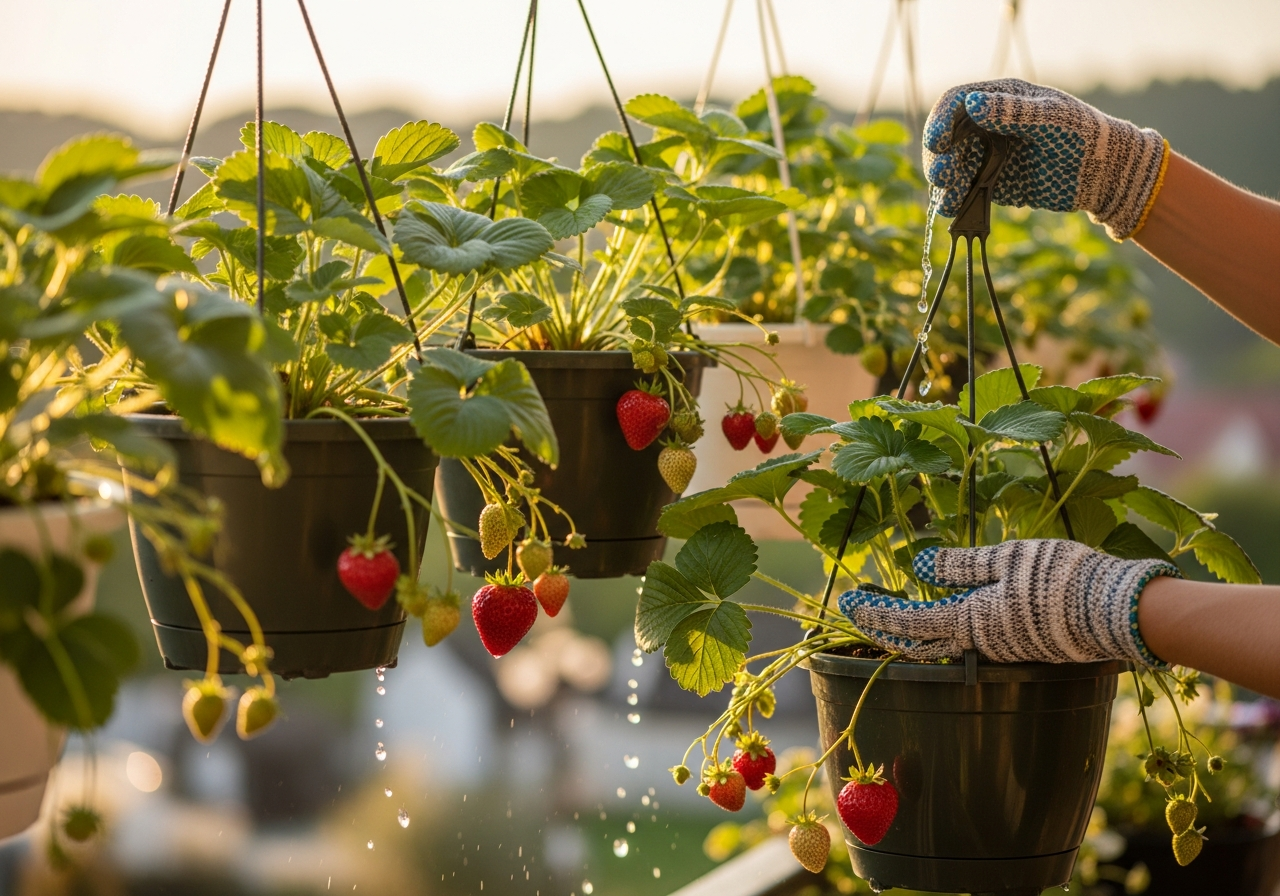
If you’ve ever grown strawberries in the ground and battled slugs, soggy fruit, or runners taking over, hanging strawberry plants in pots feel like a breath of fresh air. They stay cleaner, get better airflow, and fit beautifully on balconies and small patios. But they also dry out faster and need slightly different care than container strawberries placed on the ground. After years of growing strawberries in hanging baskets on my sunny terrace, I’ve learned exactly what keeps them thriving and what causes plants to slow down or suddenly crash.
This guide walks you through how to care for hanging strawberry plants in pots using practical, real‑world tips beginners can follow immediately.
Why Hanging Strawberry Plants Need Special Care
Strawberries grown in hanging pots behave a little differently because:
- The elevated position exposes the soil to more wind, causing faster drying.
- Smaller soil volume means nutrients are used up more quickly.
- Heat builds up faster in hanging containers, especially black or metal ones.
- Fruit dangles beautifully, but plants need stronger hydration and feeding to support it.
With the right setup, though, hanging pots produce cleaner, sweeter berries with fewer pests than ground-grown plants.
Why This Method Works
Hanging strawberries thrive because:
- Improved airflow reduces fungal problems like powdery mildew.
- Fruit stays off the soil, so you avoid rot and slug damage.
- Better sunlight exposure encourages flowering and more runners.
- Root-zone control helps maintain nutrient-rich, loose soil—something garden beds often lack.
From experience, the key is consistent moisture and feeding. Hanging pots dry out faster than any other container I own, especially in early summer heat.
What You’ll Need
- Hanging pot or basket (10–12 inches minimum)
- Premium potting mix (light, airy, well-draining)
- Slow-release organic fertilizer (e.g., berry fertilizer or balanced 5-5-5)
- Liquid feed (seaweed, fish emulsion, compost tea)
- Mulch (straw, coco chips, or pine needles)
- Watering can or drip attachment for hanging baskets
- Optional: Self-watering hanging pot
Eco-friendly options: compost-rich homemade mix, organic feeds, recycled plastic or coir hanging baskets.
Step-by-Step: How to Care for Hanging Strawberry Plants in Pots
1. Choose the Right Spot
Strawberries in hanging pots need:
- 6–8 hours of sun daily
- Protection from harsh afternoon heat in very hot climates
- Good airflow (but avoid constant strong wind that dries soil too fast)
On my terrace, the pots do best hung slightly under the shade of a pergola where they get morning and midday sun.
2. Use a Proper Soil Mix
Fill the pot with:
- 2 parts high-quality potting mix
- 1 part compost
- A handful of perlite or coco chips for extra drainage
Avoid garden soil it compacts and suffocates the roots.
3. Plant at the Right Depth
This is a beginner mistake:
- Keep the crown (the center knot of the plant) above soil level. If buried, the plant rots. If exposed too high, it dries out.
Visual cue: The crown should sit like a little “button” resting just on top of the soil.
4. Water Correctly
This is the most important part of caring for hanging strawberry plants.
- Check soil daily in warm weather.
- Water when the top inch feels dry.
- Water deeply until it runs out the drainage holes.
- In hot climates, expect watering every day sometimes twice.
If fruit shrivels or tastes bland, dehydration is usually the culprit.
5. Feed Regularly
Hanging strawberries burn through nutrients quickly.
- Add slow-release fertilizer at planting.
- Apply a liquid feed every 10–14 days during active growth.
I alternate seaweed and compost tea. This keeps the leaves deep green and the flowers coming continuously.
6. Mulch to Prevent Drying
A thin layer of mulch keeps soil cool and steady.
Great mulches for hanging strawberries:
- Pine needles
- Shredded straw
- Coco husk chips
Avoid large, heavy mulches (like bark) which can crush crowns in small pots.
7. Remove Runners (Unless You Want More Plants)
In hanging pots, runners drain energy from fruit production. Unless you’re propagating:
- Pinch runners off as soon as they appear. This simple habit can increase your berry yield noticeably.
8. Keep Harvesting
Ripe berries left on the plant slow future flowering.
Pick berries:
- When fully red
- Early in the morning
- Every 1–2 days in peak season
This prevents pests and encourages more fruit.
Pro Tips & Best Practices
- Choose day-neutral varieties (like Albion, Evie 2, Seascape) for constant fruiting in pots.
- Use light-colored pots in hot climates to prevent overheating.
- Rotate the pot weekly so all sides receive equal light.
- If birds are a problem, drape a light mesh over the basket don’t use heavy netting that traps leaves.
- In rainy seasons, check more often for rot; remove soggy berries immediately.
Common beginner mistakes:
- Watering lightly but frequently (leads to shallow roots).
- Planting too many strawberries in one hanging pot.
- Using old, heavy soil that compacts quickly.
- Ignoring drainage holes hanging baskets need excellent drainage.
FAQ
1. Why are my hanging strawberry leaves turning brown at the edges? Usually underwatering. Hanging pots dry out faster. Give deeper, more frequent water, especially in warm or windy weather.
2. How often should I fertilize strawberries in hanging pots? Light feeding every 10–14 days during active growth works best because nutrients wash out quickly.
3. Can I grow hanging strawberries in partial shade? Yes, but expect fewer berries. Aim for morning sun plus bright indirect light in the afternoon.
4. Why are my strawberries small or misshapen? Common causes: inconsistent watering, low nutrients, or poor pollination. Lightly shake the pot during flowering to help pollinate.
5. Should I bring hanging strawberries indoors in winter? In cold climates (below freezing), yes. Overwinter them in an unheated garage or sheltered spot. In mild climates, they can stay outdoors.
6. Can I use self-watering pots? Yes these are great for beginners. Just don’t let the reservoir go stagnant; refresh it regularly.
When NOT to Use This Method
Avoid hanging strawberry pots if:
- You live in areas with extremely hot, dry winds (soil dries too fast).
- You can only water once every 2–3 days in summer.
- You’re growing June-bearing varieties (they prefer large container space).
- You choose overly shallow baskets 5 inches or less is not enough root space.
Safer alternatives: Use a deep patio container or raised bed instead.
Alternative Methods
Regular Containers
- Pros: Easier watering, holds moisture longer.
- Cons: Less airflow, fruit can touch soil.
Strawberry Towers
- Pros: Space-saving, good for many plants.
- Cons: Upper layers dry out very fast; requires even more vigilant watering.
Ground Beds
- Pros: Natural moisture retention, less frequent watering.
- Cons: More pests, runners spread everywhere.
Hanging pots win for clean fruit, limited space, and fewer pests but only if you keep soil moisture consistent.
Conclusion
Growing strawberries in hanging pots is one of the easiest ways to get clean, sweet fruit in a small garden if you understand their higher water and nutrient needs. By giving them sunny placement, consistent deep watering, light regular feeding, and quick harvesting, you’ll enjoy a steady stream of bright red berries right at eye level.
Now that you know how to care for hanging strawberry plants in pots, start with just one or two baskets and observe how they respond in your specific climate. With a little consistency, they’ll reward you season after season.