Every product is independently reviewed and selected by our editors. If you buy something through our links, we may earn an affiliate commission at no extra cost to you.
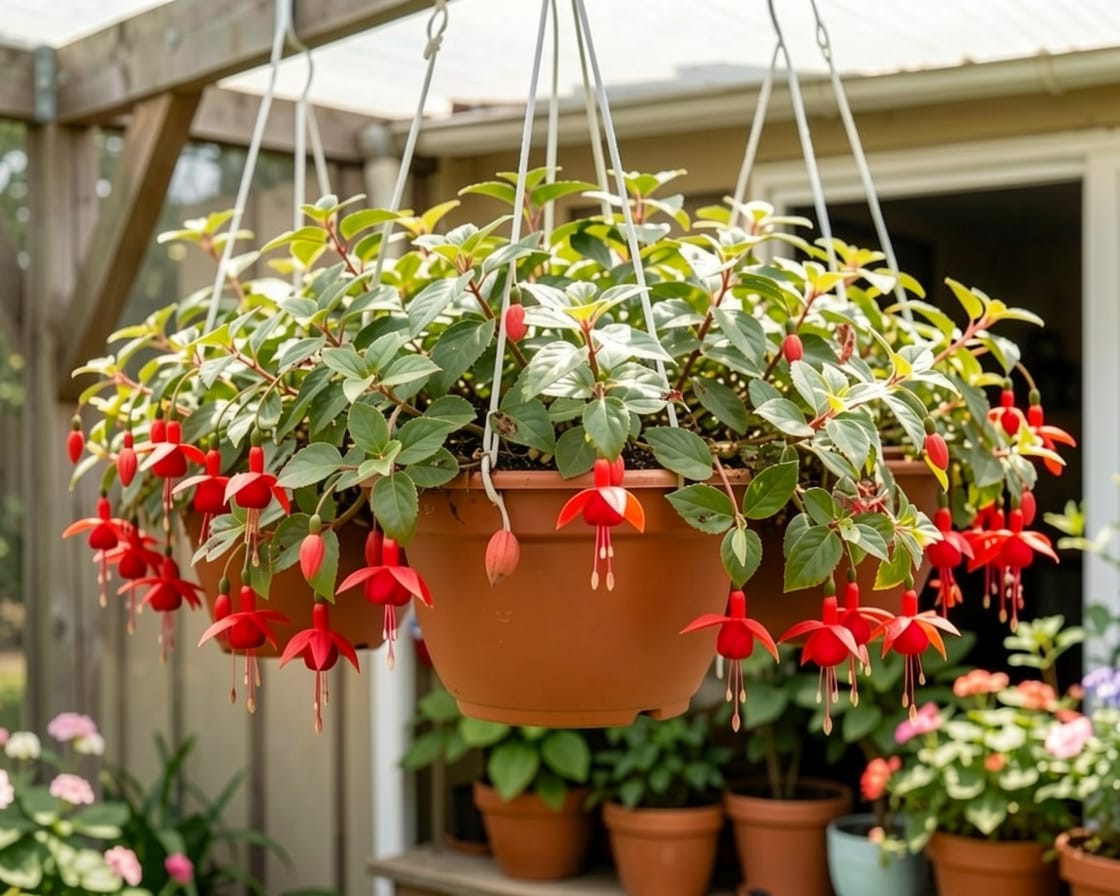
Hanging fuchsias look spectacular on balconies, patios, and shaded porches, but they’re also some of the easiest baskets to lose if you water inconsistently or give them too much sun. When I first started growing them on my covered terrace, I learned quickly that fuchsias thrive in cool, moist, airy conditions not intense heat. Once you match their natural preferences, they bloom continuously and stay full all season.
Below is a practical, experience‑based guide on how to care for hanging fuchsia plants so beginners can keep them flowering beautifully.
Why Hanging Fuchsias Need Special Care
Hanging baskets expose fuchsias to:
- Faster moisture loss
- More wind
- More heat around the root zone
- Limited nutrients (small soil volume)
Because fuchsias prefer cool, moist, and shady environments, hanging pots can push them into stress quickly if care slips.
Why This Method Works
When cared for correctly, hanging fuchsias perform exceptionally well because:
- Their arching, trailing growth fits naturally over the pot’s edge
- Good airflow prevents fungal issues
- Flowers stay dry and clean, improving bloom quality
- You control soil and drainage more easily than in beds
The key is keeping the soil evenly moist and protecting them from harsh sun.
What You’ll Need
- 12–14 inch hanging basket
- High‑quality potting mix with good drainage
- Compost or worm castings
- Slow‑release bloom fertilizer
- Liquid fertilizer for mid‑season boosts
- Watering can with a gentle spout
- Light mulch (optional)
- Shaded or semi‑shaded outdoor location
Eco‑friendly options: compost‑rich soil, organic bloom fertilizers, coco‑fiber baskets.
Step-by-Step: How to Care for Hanging Fuchsia Plants
1. Choose the Right Location
Fuchsias thrive in:
- Bright shade or dappled light
- Morning sun only
- Completely shaded afternoons
If exposed to strong afternoon sun, leaves wilt and blooms drop even with good watering.
2. Use the Right Soil Mix
Fuchsias like moist but well‑drained soil.
Mix:
- 2 parts potting mix
- 1 part compost
- A handful of perlite
This keeps roots cool and oxygenated.
3. Water Consistently
This is the most important part of caring for hanging fuchsias.
- Check soil daily in warm weather
- Water when the top inch feels slightly dry
- Water deeply until it drains from the bottom
- In hot climates: expect to water once or twice daily
Signs of underwatering:
- Sudden drooping
- Pale, dry buds
- Flowers dropping before opening
Fuchsias do not bounce back well from repeated drying.
4. Feed Regularly
Hanging fuchsias bloom heavily and need steady nutrients.
- Slow‑release fertilizer at planting
- Liquid fertilizer every 10–14 days during active blooming
I alternate between seaweed and a flower‑boost formula; this keeps plants full without burning them.
5. Protect From Heat
Fuchsias struggle above 30°C (86°F).
If hot days are coming:
- Move baskets to deeper shade
- Mist the foliage lightly (but not the flowers)
- Water early morning and late evening
This keeps them from collapsing in mid‑summer.
6. Deadhead and Trim
Removing old blooms encourages continuous flowering.
- Pinch off spent flowers and seed pods
- Lightly trim straggly stems
- If plants get leggy mid‑season, trim by one‑third to refresh growth
This rejuvenates the plant and increases bloom density.
7. Encourage Bushy Growth
Pinch growing tips when the plant is young.
- Pinch once every 2–3 weeks early in the season
- Stop once heavy flowering begins
This gives you a full, rounded basket instead of long, bare stems.
Pro Tips & Best Practices
- Never let fuchsias sit in full, hot sun they decline quickly.
- Use self‑watering hanging pots in dry climates.
- Rotate baskets weekly for even shape.
- Avoid wetting the flowers directly; they bruise easily.
- If nights are cold, bring baskets into a sheltered area fuchsias dislike cold snaps.
Common beginner mistakes:
- Underwatering during warm spells
- Letting the plant dry out repeatedly
- Too much sun
- Heavy feeding in hot weather (can burn stressed roots)
FAQ
1. Why are my fuchsia leaves turning yellow? Usually overwatering or heat stress. Ensure good drainage and move to more shade.
2. Why is my fuchsia dropping flower buds? Most often dryness. Even one missed watering can trigger bud drop.
3. Can I grow hanging fuchsias indoors? They generally decline indoors due to low humidity and insufficient light.
4. How often should I fertilize hanging fuchsias? Every 10–14 days with a dilute liquid feed during the blooming season.
5. Can fuchsias survive full shade? Yes, but they bloom less. Bright shade is ideal.
6. Do fuchsias survive winter? Depends on your climate. In cold regions, bring them indoors or overwinter in a cool, bright, frost‑free place.
When NOT to Use Hanging Fuchsia Baskets
Avoid hanging fuchsias if:
- Your outdoor area gets strong afternoon sun
- You cannot water daily in summer
- You live in extremely hot or dry climates without shade
- Frost is frequent and space for overwintering is limited
In these cases, shade‑loving, heat‑tolerant plants are safer.
Alternative Methods
Shaded patio containers
- Better moisture retention
- Easier to maintain
- Less airflow than hanging baskets
Planting in shaded garden beds
- Natural moisture and cooler soil
- May attract pests like slugs
Wall-mounted planters
- Good airflow and access
- Might dry faster than containers
Hanging baskets are best when you have bright shade and can water consistently.
Conclusion
Now that you know how to care for hanging fuchsia plants, focus on the basics: bright shade, steady moisture, cool conditions, and regular feeding. These plants are incredibly rewarding when their simple needs are met, producing cascading blooms that stay vibrant for months.
Start with one or two baskets, observe how they respond to your sunlight and weather, and adjust watering from there. With consistent care, your hanging fuchsias will stay lush and full all season.