Every product is independently reviewed and selected by our editors. If you buy something through our links, we may earn an affiliate commission at no extra cost to you.
If you’ve ever wondered how long does spinach take to grow indoors, you’re asking the right question and not just for gardening reasons. In my experience working with U.S. homeowners and renters, spinach is one of the most rewarding edible plants for indoor spaces because it grows quickly, thrives in small areas, and fits naturally into organic home décor ideas. Knowing the realistic indoor growth timeline helps you plan your care routine, manage expectations, and design a calm, productive living environment that supports both wellness and sustainability.
Growing spinach indoors isn’t only about harvesting greens. It contributes to better indoor air balance, reduces stress through daily plant care, and supports sustainable home design by cutting down on packaged produce and food waste. When grown organically, spinach becomes part of a toxin-free, natural interior decoration strategy functional, beautiful, and deeply practical.
This guide is written from real-world experience, not theory. It’s designed to help you grow spinach indoors successfully, whether you live in a small apartment, a rental with limited light, or a family home with seasonal climate challenges.
Why Understanding Indoor Spinach Growth Time Matters
Indoor gardening often fails not because people lack interest, but because expectations don’t match reality. Spinach is fast-growing, but “fast” depends on light, temperature, and care habits.
Health & Indoor Air Quality
Living plants, including spinach, help regulate humidity and encourage better airflow when grouped with other indoor plants and natural materials. In homes with dry winter air or sealed windows, this subtle balance matters.
Mental Well-Being & Stress Reduction
In real homes I’ve worked in, fast-growing plants like spinach provide visible progress within days. That sense of momentum sprouts emerging, leaves expanding reduces stress and builds confidence, especially for beginners.
Sustainability & Environmental Impact
Spinach grown indoors uses minimal space, water, and energy compared to transported greens. It supports organic gardening practices while reducing plastic packaging and food miles.
Creating a Toxin-Free, Calming Living Space
Organic indoor spinach requires no chemical sprays or synthetic fertilizers, making it ideal for kitchens, living rooms, and homes with children or pets.
So, How Long Does Spinach Take to Grow Indoors? A Realistic Timeline
Let’s address the core question clearly and honestly.
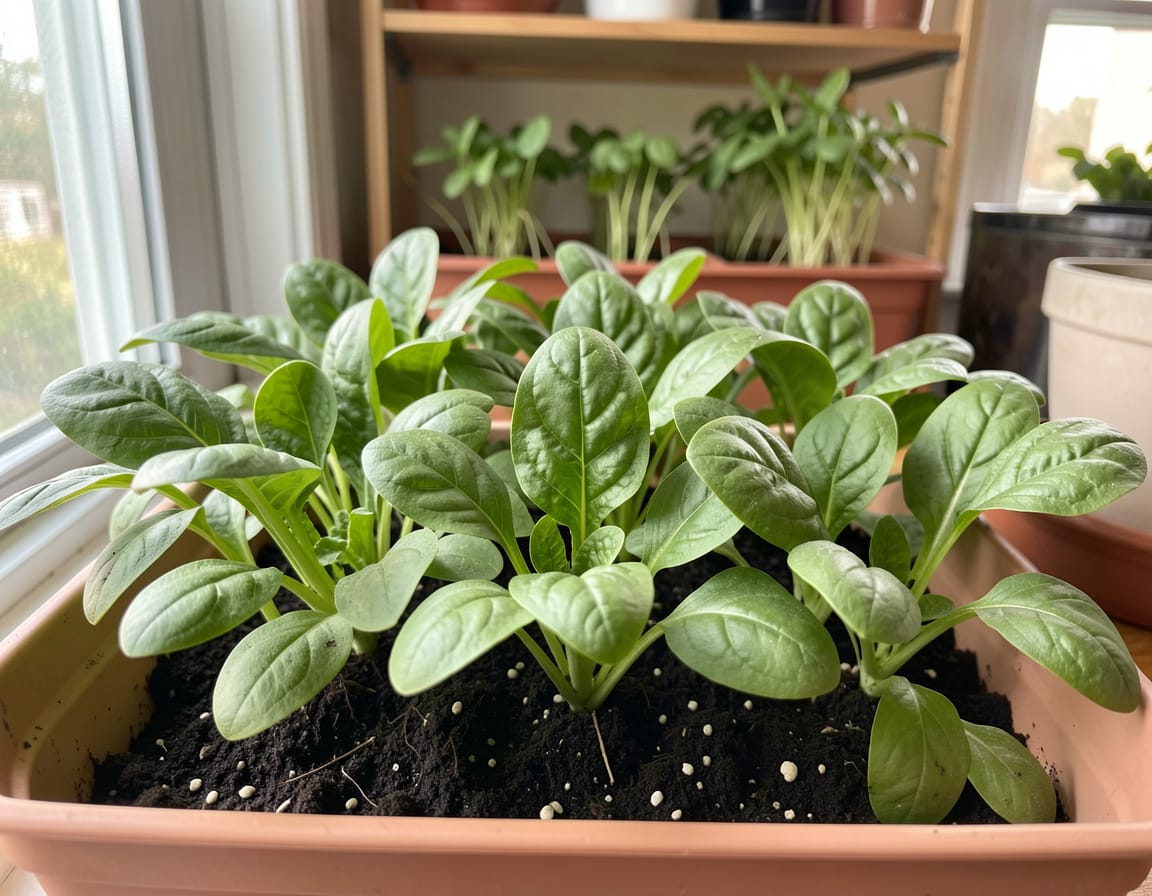
In most indoor environments, spinach takes 30 to 45 days to reach harvestable size, depending on how you grow it and what you consider “ready.”
Here’s how that breaks down in real indoor conditions:
Day 1–7: Germination
- Seeds sprout in 5–7 days
- Cooler indoor temperatures (60–70°F) speed germination
- Consistent moisture is critical
Day 8–21: Early Leaf Development
- Small, tender leaves form
- Plants focus on root establishment
- Light quality becomes crucial
Day 22–30: Baby Spinach Stage
- Leaves are 3–4 inches long
- Ideal for baby spinach harvest
- Best flavor and tenderness
Day 31–45: Full Leaf Harvest
- Mature leaves develop
- Suitable for cooking and salads
- Regular harvesting encourages regrowth
In my experience, most indoor growers harvest too late or too early. Understanding this timeline helps you align care routines with realistic growth expectations.
Everyday Organic Styling & Care Routine for Indoor Spinach
Spinach thrives when care feels effortless and consistent not obsessive.
Daily (2 Minutes)
- Check soil moisture with your finger
- Observe leaf color and posture
- Rotate container slightly for even light
Weekly
- Water deeply if top inch of soil is dry
- Trim damaged or yellowing leaves
- Wipe nearby surfaces to reduce dust buildup
Biweekly
- Feed lightly with diluted organic fertilizer
- Thin overcrowded seedlings
In real homes, this routine blends seamlessly into sustainable home living and keeps spinach productive without stress.
What You’ll Need to Grow Spinach Indoors Successfully
Below is a practical, experience-based list of essentials, followed by a clear explanation table.
Essential Items
- Shallow container (6–8 inches deep)
- Organic potting mix
- Spinach seeds (slow-bolt varieties work best)
- Natural light or LED grow light
- Organic liquid fertilizer
Indoor Spinach Essentials Explained
| Item | What It Is | Why It’s Used | Organic / Health Benefits | Sustainability Considerations |
| Shallow Container | Wide, low pot | Supports shallow roots | No plastic leaching | Long-lasting, reusable |
| Organic Soil Mix | Chemical-free medium | Prevents residue buildup | Safe for indoor air | Renewable ingredients |
| Spinach Seeds | Leafy green seeds | Fast indoor growth | Nutrient-dense food | Minimal resource use |
| LED Grow Light | Full-spectrum light | Ensures consistent growth | Low heat, energy efficient | Long lifespan |
| Organic Fertilizer | Plant-based nutrients | Supports leaf production | Non-toxic living | Reduces chemical runoff |
Each item supports both plant health and eco-friendly home styling.
How Long Does Spinach Take to Grow Indoors Depending on Light Conditions
Light is the single most important factor affecting growth speed.
Bright Window Light
- South- or east-facing windows
- 35–45 days to harvest
- Rotate plants regularly
Grow Lights
- 12–14 hours daily
- 30–35 days to harvest
- Most consistent results
Low Light Conditions
- Growth slows significantly
- Leaves may stretch or pale
- Harvest may take 45–55 days
In apartments with limited natural light, I almost always recommend a simple LED grow light. It shortens growth time and improves leaf quality dramatically.
Soil, Water, and Temperature: Hidden Factors That Affect Growth Time
Soil Quality
Loose, well-draining soil speeds root development. Compacted soil delays growth and increases disease risk.
Watering Habits
Spinach prefers evenly moist soil:
- Too dry = slow growth
- Too wet = root stress
Ideal Indoor Temperature
- Best range: 60–70°F
- Above 75°F: growth slows, bolting risk increases
In many U.S. homes, spinach grows best in cooler rooms or near windows during winter months.
Deep Organic Setup or Seasonal Refresh
Every few weeks, spinach benefits from a reset especially if grown continuously.
Seasonal Refresh Steps
- Remove spent plants after final harvest
- Refresh soil with compost
- Clean containers with vinegar and water
- Replant in staggered batches
Reorganizing Indoor Plants
Group spinach with other cool-season greens. This:
- Maintains humidity balance
- Creates cohesive natural interior decoration
- Simplifies watering routines
This approach supports long-term plant health and keeps your space visually calm.
Prevention & Sustainability Tips for Long-Term Success
- Avoid synthetic fertilizers labeled “fast growth”
- Use untreated clay or ceramic containers
- Compost old spinach roots
- Reuse soil by refreshing with organic matter
These habits reduce waste and maintain long-lasting organic beauty indoors.
Common Mistakes That Slow Spinach Growth Indoors
Falling for Fake “Eco-Friendly” Products
Many soils and containers labeled eco-friendly contain chemical binders. Always check materials.
Overcrowding Seedlings
Too many plants compete for light and nutrients, slowing growth.
Poor Air Circulation
Stagnant air encourages fungal issues. A small fan on low helps immensely.
Overwatering
Constantly wet soil delays growth and damages roots.
Each mistake affects not only growth time but overall plant health and indoor air quality.
Local U.S. Home Context: Real Indoor Growing Scenarios
Small Apartments
Spinach thrives in shallow containers on windowsills or shelves with grow lights.
Rental Homes
No drilling needed use clamp lights and movable trays.
Seasonal Climate Variations
Spinach grows faster indoors during fall and winter when homes are cooler.
Urban vs Suburban Homes
Urban growers rely more on artificial light; suburban homes often manage temperature better but face fluctuating sunlight.
Extra Expert Tips from Real Homes
- Harvest outer leaves first to extend growth
- Grow spinach in succession every 2 weeks
- Use light-colored containers to prevent overheating
- Choose slow-bolt varieties for indoor consistency
These strategies reduce effort while maximizing yield especially valuable for busy households.
FAQ: Indoor Spinach Growth & Care
1. How long does spinach take to grow indoors from seed?
Typically 30–45 days, depending on light and temperature.
2. Can I harvest spinach multiple times indoors?
Yes. Cut outer leaves and allow inner growth to continue.
3. Does spinach need full sun indoors?
Bright light or grow lights are ideal, but direct sun isn’t mandatory.
4. How long does spinach take to grow indoors during winter?
Often faster around 30–40 days due to cooler indoor temperatures.
5. Why is my indoor spinach growing slowly?
Common causes include low light, overcrowding, or warm temperatures.
6. Is indoor spinach safe for homes with pets?
Yes, spinach is non-toxic and safe for most households.
Conclusion:
Understanding how long does spinach take to grow indoors allows you to plan realistically, care confidently, and design your home with intention. In my experience working with real U.S. homes, spinach succeeds indoors when grown organically, given adequate light, and integrated into everyday routines rather than treated as a separate project.
Indoor spinach isn’t just food it’s a living element of eco-friendly home styling, sustainable home design, and toxin-free living. With the guidance in this article, you can grow fresh greens year-round while creating a calmer, healthier, and more resilient living space.