Every product is independently reviewed and selected by our editors. If you buy something through our links, we may earn an affiliate commission at no extra cost to you.
Growing a lemon tree from seed is one of those projects that feels like it should be quick because the seed sprouts fast then surprises beginners with how long the “tree” part takes. In real home gardens (pots on balconies, terrace planters, sunny windowsills), the biggest frustration is this: you get a cute seedling in weeks, but fruit can take years and sometimes never matches the lemon you ate.
This guide gives you a realistic, practical timeline for how long a lemon tree takes to grow from seed, plus the exact steps and tricks that help seedlings grow stronger and reach flowering sooner (without unrealistic promises).
Why Growing Lemon From Seed Takes So Long (And Why It Still Works)
Lemon seeds sprout quickly because they’re programmed to germinate as soon as conditions are warm and moist. But fruiting is a separate phase. Citrus trees need time to:
- Build enough roots and wood (branches) to support flowers and fruit
- Mature physiologically (think “teenager to adult,” not just “bigger”)
- Experience the right light intensity and seasonal cues
In containers typical for balcony/terrace gardeners growth is slower because:
- Roots are confined
- Potting mixes dry out faster
- Light indoors is rarely strong enough long-term
Hands-on observation: seedlings grown on a bright windowsill often look fine for months, then stall thin stems, long internodes, pale leaves. It’s nearly always light intensity + nutrition + pot size timing.
How Long Does a Lemon Tree Take to Grow From Seed? (Timeline You Can Expect)
Here’s the realistic timeline most home gardeners see:
Stage 1: Germination
2–6 weeks
- Faster (often 10–21 days) in warm conditions (24–30°C / 75–86°F)
- Slower in cool rooms or if the seed dries out
Visual cue: a white root appears first, then a green shoot.
Stage 2: Seedling Establishment
2–6 months
- Expect 2–6 true leaves and a thin stem
- Growth is steady if kept warm, bright, and evenly moist
Visual cue: leaves become thicker, darker green, and less “floppy.”
Stage 3: Young Tree (Potted Sapling)
6 months–2 years
- Can reach 30–90 cm (1–3 ft) depending on sun, feeding, and pot upgrades
- Branching starts if you pinch/prune correctly
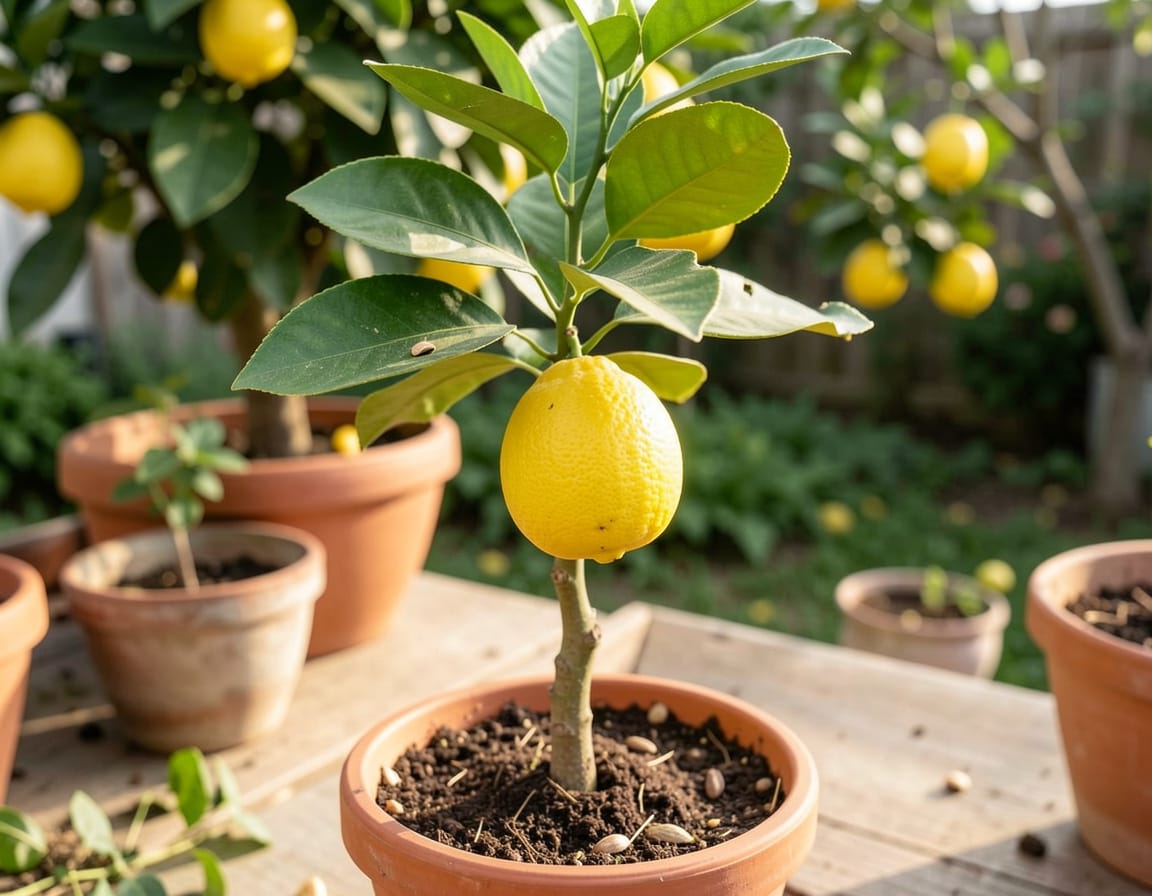
Visual cue: stem begins to look woody; side shoots form.
Stage 4: First Flowers (If Everything Goes Right)
3–5 years (best-case) More commonly: 5–7 years in container culture.
Stage 5: Fruit From a Seed-Grown Lemon
5–10 years is common And some seed-grown lemons:
- flower very late
- flower but drop blooms
- produce fruit that’s different from the parent (more sour, more bitter, thicker rind, lots of seeds)
Important reality check: lemons grown from seed are not always “true to type.” For reliable fruit sooner, a grafted lemon tree wins every time.
What You’ll Need (Beginner-Friendly + Budget Alternatives)
- Fresh lemon seeds (from a ripe lemon)
- Small pots (7–10 cm / 3–4 in) with drainage holes
- Alternative: recycled yogurt cups (poke holes)
- Seed-starting mix (light, fast-draining)
- Eco option: coco coir + perlite instead of peat-heavy mixes
- Perlite/pumice/sand (for drainage)
- Clear plastic bag or humidity dome (optional but helpful)
- Warm spot (top of fridge, warm shelf) not hot direct sun
- Bright light after sprouting
- Best: outdoor sun (when warm enough)
- Indoor backup: grow light (a real one, not a dim “plant lamp”)
- Balanced citrus fertilizer (or a balanced liquid feed)
- Gloves + clean scissors for pruning
Safety note: wash hands after handling soil and compost (especially with kids around). Keep fertilizers and soil amendments away from pets; some citrus essential oils and plant parts can irritate sensitive animals.
Step-by-Step: How to Grow Lemon From Seed Successfully (And Not Stall Out)
1) Start With the Right Seeds (Day 1)
- Use fresh seeds from a ripe lemon (older, dried seeds germinate less reliably).
- Rinse off pulp thoroughly (pulp encourages mold).
Optional but useful: soak seeds 4–12 hours in water to hydrate.
2) Plant Shallow in a Light Mix (Day 1)
- Fill pot with moist (not soggy) seed mix.
- Plant seed 1–1.5 cm (½ inch) deep.
- Firm gently.
Visual cue: the mix should clump if squeezed, but no water should drip out.
3) Warmth + Even Moisture (Weeks 1–6)
- Keep at 24–30°C (75–86°F) if possible.
- Cover with a clear bag/dome to hold humidity (vent daily to prevent mold).
- Water lightly when the surface begins to dry.
Beginner mistake I see a lot: keeping soil constantly wet “so it doesn’t dry out.” Citrus seeds rot easily. Moist is good; wet is trouble.
4) Give Strong Light Immediately After Sprouting
Once you see green:
- Move to the brightest spot you have.
- Outdoors is best once nights stay above ~12–15°C (54–59°F).
- Indoors: aim for 12–14 hours under a proper grow light.
Visual cue of not enough light: thin stem, leaning, big gaps between leaves.
5) Pot Up at the Right Time (Months 2–12)
Don’t rush into a huge pot, but don’t leave it root-bound either.
- First pot-up when roots circle the bottom or growth slows despite good care.
- Move up one size at a time (e.g., from 4″ to 6″, then 8–10″).
Container soil tip from real pots: use a chunky, free-draining mix so roots get oxygen. Lemon roots hate staying waterlogged.
6) Feed Lightly but Consistently (After 6–8 Weeks)
- Use a balanced liquid fertilizer at ½ strength every 2–4 weeks in the growing season.
- If leaves go pale or yellow between veins, you may need micronutrients (iron/magnesium), common in pots and hard-water areas.
Visual cue of good nutrition: new leaves emerge smaller at first, then expand glossy and medium-dark green.
7) Pinch for Branching (Year 1–2)
If your seedling becomes a single stick:
- When it’s 20–30 cm (8–12 in) tall, pinch the top growth tip.
- This encourages side branches (which later carry flowers).
Practical warning: don’t prune heavily in winter or when the plant is stressed/dry citrus sulks.
8) Manage Winter (Cold Climates)
If you can’t keep it outdoors year-round:
- Bring inside before cold nights.
- Put it in the brightest window + supplemental light if possible.
- Water less in winter, but don’t let it bone-dry.
Indoor reality: most slow growth indoors comes from low light, not “bad luck.”
Pro Tips & Best Practices (What Beginners Often Miss)
Give it “real sun,” not just “bright room”
A lemon seedling might survive indoors, but it won’t thrive. For fast growth:
- Aim for 6–8+ hours of direct sun outdoors in warm months.
Use drainage like it’s non-negotiable
In small pots, one soggy week can set citrus back months.
- Always use pots with drainage holes.
- Avoid saucers full of standing water.
Don’t chase fruit too early
In years 1–2, focus on:
- roots
- branching
- leaf health Fruit comes later.
Watch for pests early (especially indoors)
Common: spider mites, scale, fungus gnats.
- Rinse leaves in the shower.
- Use insecticidal soap if needed (test on a few leaves first).
If you want fruit sooner: consider grafting
Seed-grown lemon takes longer because it’s juvenile. Grafting a piece of mature lemon wood (scion) onto a healthy seedling rootstock can dramatically shorten time to flowering often to 2–3 years depending on conditions and skill.
FAQ
1) How long does a lemon tree take to grow from seed and produce lemons?
Typically 5–10 years for fruit in home container conditions. Some may fruit in 3–5 years if grown hard (strong sun, proper feeding, ideal warmth), but many take longer.
2) Why is my lemon seedling growing tall and thin?
Almost always insufficient light. Move it to stronger sun or use a real grow light. Rotate the pot weekly so it doesn’t lean.
3) Can I grow a lemon tree from seed indoors year-round?
You can grow it as foliage, but for strong growth you usually need:
- a bright south-facing window plus grow light
- careful watering (indoor soils dry unevenly) Fruit indoors is possible but harder due to low light and low humidity.
4) Do I need to dry the lemon seeds before planting?
No. Fresh seeds generally germinate better. Drying can reduce viability.
5) Why are the leaves turning yellow on my young lemon tree?
Common causes in pots:
- overwatering (roots lose oxygen)
- underfeeding (nitrogen + micronutrients)
- hard water/high pH causing iron lockout Fix by improving drainage, feeding lightly, and checking watering rhythm.
6) Will my seed-grown lemon tree be the same as the lemon I ate?
Not guaranteed. Seed-grown citrus can vary in fruit quality. If you want predictable fruit, buy a grafted named variety.
When NOT to Use This Method And What to Do Instead
Growing from seed is great for learning and for a decorative citrus plant, but skip it if:
- You want lemons quickly (within 1–3 years)
- You have very low light indoors and no grow light
- You live in a cold climate and can’t overwinter citrus properly
- You want a specific variety (Meyer, Lisbon, Eureka, etc.) with reliable fruit
Safer alternative for beginners: buy a small grafted lemon tree suited to containers. You’ll get earlier fruit and fewer surprises.
Alternative Methods (Faster or More Reliable Than Seed)
1) Buy a Grafted Lemon Tree (Best for Fruit)
Pros: fruits sooner (often 1–3 years), true-to-type, predictable Cons: costs more upfront, needs careful acclimation
2) Root a Cutting (Sometimes Works, Not Always Easy)
Pros: clone of the parent plant Cons: citrus cuttings can be slow and finicky; rooting success varies by variety and conditions
3) Air Layering (Good Skill-Building Method)
Pros: higher success than cuttings for some gardeners, clone of parent Cons: takes time and patience; not as beginner-simple as buying grafted
4) Grow From Seed + Graft Later (Best “Hybrid” Approach)
Pros: you get a strong root system and can add a fruiting variety later Cons: requires grafting skills and access to scion wood
Conclusion
If you’re asking how long a lemon tree takes to grow from seed, here’s the practical takeaway:
- Sprout: 2–6 weeks
- Look like a small tree: 1–2 years (in a pot)
- Flower: often 3–7 years
- Fruit: commonly 5–10 years
Growing lemon from seed is absolutely worth doing if you enjoy the process and want a hardy, home-grown plant to learn with. Just treat it like a long-term project: prioritize sunlight, drainage, steady feeding, and gradual pot upgrades and consider grafting or buying a grafted plant if your main goal is harvesting lemons sooner.
If you tell me your climate (approx. winter lows), whether it’ll live outdoors or indoors, and how much sun you get, I can give you a more accurate timeline and a simple care plan for your setup.