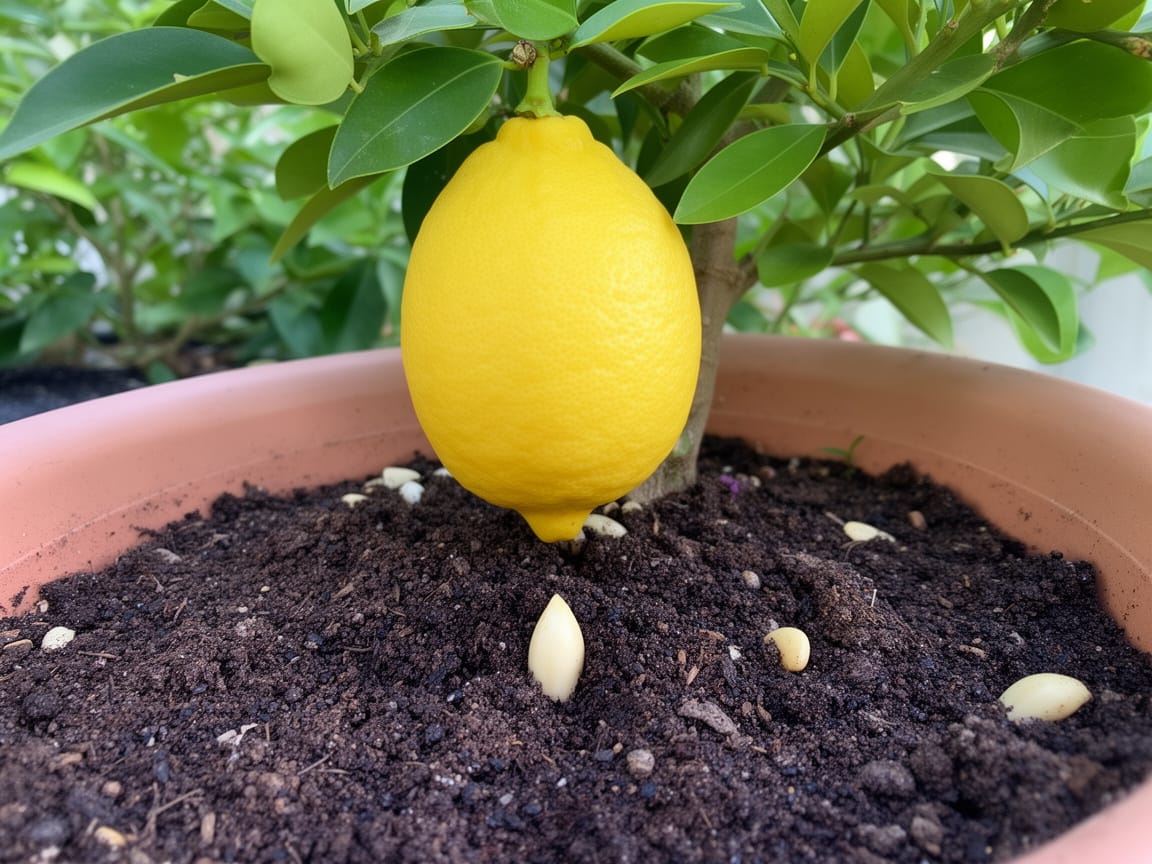
let’s walk through a step-by-step organic indoor lemon seed propagation guide, written from the perspective of someone who’s actually started and maintained lemon trees in U.S. homes and small apartment spaces. These steps work well whether you’re growing Meyer, Eureka, or Lisbon lemons.
Stages of Growing a Lemon Tree from Seed
The stages of growing a lemon tree from seed show how the plant develops over time. From germination to early growth, each phase requires patience, proper sunlight, watering, and care to support healthy development and long-term fruit potential. Now stepwise process i describe below:
Step-by-Step Organic Indoor Lemon Seed Propagation Guide
1. Choose and Prepare Your Lemon Seeds
Select a ripe, organic lemon. Organic fruit ensures the seeds haven’t been treated with growth inhibitors or chemicals that can prevent germination. Slice the lemon gently to avoid damaging the seeds inside.
Extract and clean the seeds. Rinse each seed under lukewarm water to remove all pulp and juice—any remaining sugar can encourage mold. Then soak them for 1–2 hours in room-temperature water to soften the protective seed coat.
Optional (but helpful): pre-sprout them. Wrap the seeds in a moist paper towel, place them in a breathable plastic bag (like a sandwich bag with small holes or left slightly open), and keep them in a warm spot (70–80°F). Check daily to make sure the towel stays damp but not dripping. Most seeds begin to sprout within 2–4 weeks.
2. Prepare an Organic Growing Medium
Lemons need an airy, well-draining medium. I’ve tested several mixes; this combination gives the best root development for indoor trees:
| Ingredient | Purpose | Organic / Sustainability Notes |
| 2 parts organic citrus or potting mix | Base medium | Choose a certified organic blend free of synthetic fertilizers and wetting agents. |
| 1 part perlite or coarse sand | Improves drainage | Avoid mined sand from beaches; horticultural perlite is fine. |
| 1 part finished compost or worm castings | Nutrient support | Adds beneficial microbes and mild nutrients. |
Mix these thoroughly in a clean container before potting.
3. Choose the Right Container
Start with small 3–4 inch biodegradable pots or nursery cells that drain well. If you’re growing in an apartment, I recommend natural fiber or bamboo pots they breathe better and reduce transplant shock later.
Each pot should have:
- Drainage holes
- A small saucer to catch excess water
- A top layer of fine mulch (like shredded coconut coir or pine bark) to retain moisture
4. Plant the Seeds
If you’ve pre-sprouted the seeds:
- Place one sprouted seed per pot, root tip facing downward, about ½ inch deep. If you’re planting unsprouted seeds:
- Plant two seeds per pot to improve your odds thin out weaker seedlings later.
Water gently to settle the soil, keeping it evenly moist but never waterlogged.
5. Warmth and Light: The Two Essentials
Temperature: Keep seedlings in a spot that stays between 70–80°F. Citrus seeds need warmth more than intense light at first. I often place trays on top of a refrigerator or use a seedling heat mat set to low.
Light: Once sprouts appear, move them to a south-facing window or under a full-spectrum LED grow light (12–14 hours per day). Light is critical leggy, pale seedlings are a sign of insufficient light.
6. Watering and Humidity
- Keep the soil slightly moist, never soggy.
- Use room-temperature, filtered, or rainwater whenever possible. Chlorinated tap water can stress young citrus roots.
- Maintain humidity around 50–60%. Indoors, you can set pots on a shallow tray filled with pebbles and water (the pots should rest above the water line).
7. Transplanting to Larger Pots
Once seedlings reach 4–6 inches tall and have several sets of leaves, transplant them into 6–8 inch containers. Use the same organic soil mix, and gently tease apart the roots if you’ve grown more than one seed per pot.
Over time, move up to 12–16 inch containers with drainage holes as the tree matures.
8. Feeding and Care
Fertilize organically beginning about 6 months after germination. Use a citrus-specific organic fertilizer, compost tea, or diluted fish emulsion every 4–6 weeks during spring and summer. Reduce feeding during fall and winter.
Rotate your pot every week or two to keep the growth even. Wipe the leaves occasionally with a damp cloth to remove dust and allow the plant to breathe.
9. Overwintering Indoors
In colder U.S. regions (Zones 5–8), lemon trees must stay indoors once nighttime temps drop below 50°F. Place them near a bright window away from cold drafts or heating vents. Supplemental lighting is often necessary between November and March.
If you live in a warm climate (Zones 9–11), you can move the pot outdoors during the growing season just acclimate gradually to prevent sunburn.
10. Long-Term Support and Patience
Your lemon tree will need:
- Consistent sunlight (8+ hours/day)
- Good airflow around leaves
- Regular organic feeding
- Pruning once a year to shape and encourage branching
And most importantly patience. A seed-grown lemon tree takes years to reach maturity, but each stage is rewarding. You’ll enjoy glossy foliage, fragrant blossoms (eventually), and a living piece of your own organic garden right in your home.
Pro Tip: Boosting Success with Partial Grafting
If your goal is fruit production but you still want the experience of growing from seed, you can graft a cutting of a mature lemon tree onto your seedling when it’s about 1 year old. It keeps the organic process intact but dramatically shortens the fruiting timeline to 2–3 years.
My Real-World Setup Example
In my own small home workspace in Massachusetts, I keep two Meyer lemon trees grown from seed in 14-inch terracotta pots. Each has a layer of pine bark mulch and sits on a humidity tray near a south-facing window. I supplement with a full-spectrum light for 12 hours a day during winter. They’re now four years old vigorous, beautifully scented, and just starting to produce flower buds this year.