Every product is independently reviewed and selected by our editors. If you buy something through our links, we may earn an affiliate commission at no extra cost to you.
Growing your own carrots sounds simple until you actually plant them and start wondering when anything is supposed to happen. If you’ve ever stared at a patch of soil asking how long do carrots take to grow at home, you’re definitely not alone. The answer isn’t just a number of days; it depends on variety, weather, soil, and a bit of patience. In this post, we’ll break down the carrot growing timeline so you know what to expect from seed to harvest without the guesswork
How to Grow Carrots at Home (Expert Organic Gardening Guide)
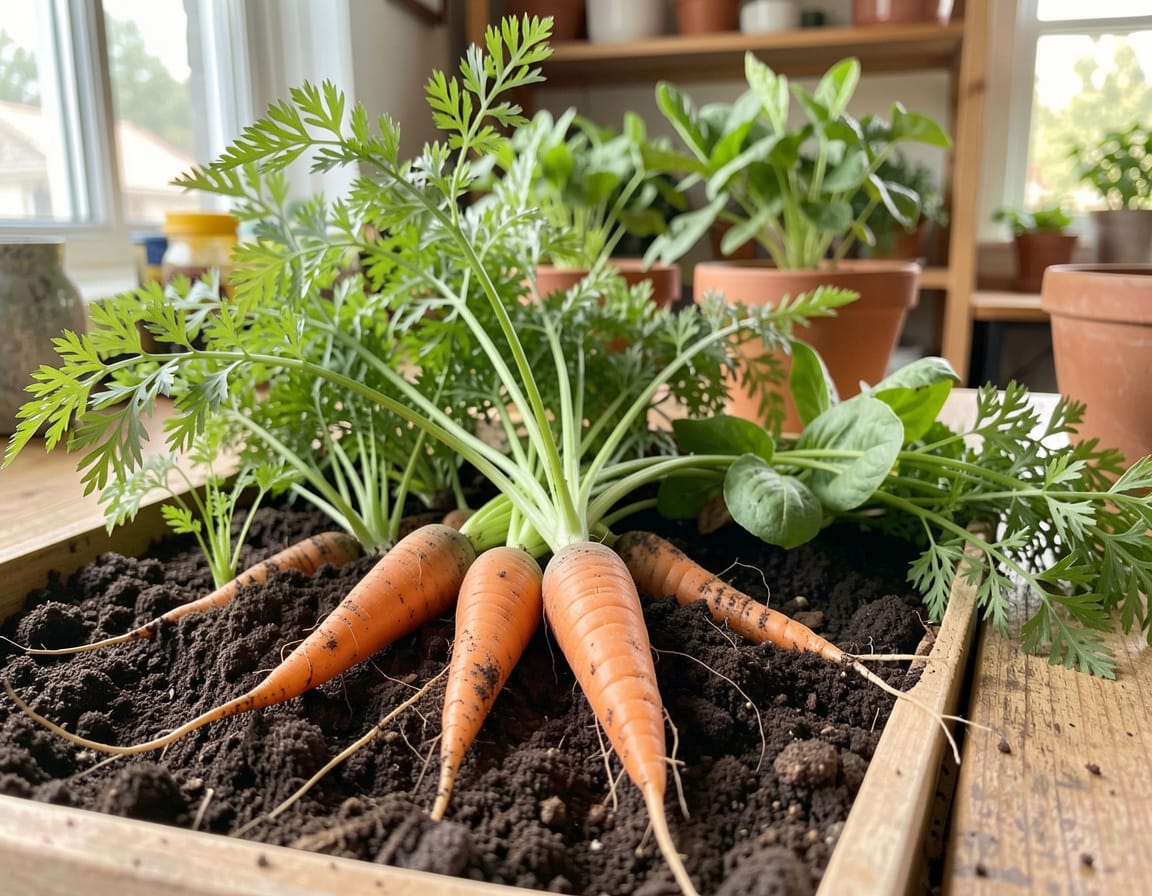
Growing carrots at home is one of the most satisfying organic gardening projects, especially for anyone who values fresh flavor and chemical-free produce. Carrots don’t need much space, but they do need the right soil structure, consistent moisture, and patience. Over the past decade, I’ve helped many homeowners and renters from suburban gardeners to apartment dwellers with balcony planters grow crisp, sweet carrots without synthetic inputs or complicated setups.
Let’s walk through how to do it right, step by step.
Why Grow Carrots at Home?
Carrots grown in healthy, living soil taste remarkably different from store-bought ones. When you grow them yourself:
- You control what goes into the soil no synthetic fertilizers or chemical residues.
- You can choose heirloom or organic varieties with real flavor.
- You reduce packaging waste and transport emissions.
- You reconnect with the growing process something deeply grounding for both adults and kids.
And because carrots store well, they’re a practical addition to any home garden rotation.
Step 1: Choose the Right Carrot Variety
Different carrot types suit different spaces:
| Type | Description | Best For |
| Nantes | Cylindrical, tender, sweet flavor | Raised beds, deep containers |
| Chantenay | Shorter, broad-ended roots | Heavy or clay soils |
| Danvers | Classic tapered carrot | In-ground gardens with loose soil |
| Paris Market / Thumbelina | Small, round roots | Shallow containers, balconies |
If you’re growing in containers or clay-heavy soil, short or round varieties are easier and more reliable.
Step 2: Prepare the Soil (or Container Mix)
Carrots need loose, stone-free, well-draining soil. Compacted or rocky soil causes forked or twisted roots. In my experience, the most common mistake is planting carrots in soil that’s too heavy or rich in undecomposed compost.
For in-ground beds:
- Loosen soil at least 10–12 inches deep.
- Mix in fine compost and a bit of sand if your soil tends to clump.
- Avoid adding high-nitrogen fertilizer it promotes leafy growth, not roots.
For containers:
- Use a deep pot (at least 10–12 inches).
- Fill with an organic potting mix: equal parts compost, peat-free coir, and sand or perlite.
- Make sure the container has good drainage.
Step 3: Sow Seeds Properly
Carrot seeds are tiny and slow to germinate. Patience is key.
How to sow:
- Moisten the soil evenly before sowing.
- Sow seeds thinly, about ¼ inch deep, in rows 6–8 inches apart.
- Cover lightly with fine soil or compost.
- Mist gently with a spray bottle don’t flood the area.
- Keep soil consistently moist until seeds sprout (10–21 days).
Pro tip: Mix carrot seeds with sand before sowing. This helps distribute them evenly and reduces overcrowding later.
Step 4: Thin and Maintain Growth
Once seedlings reach 2 inches tall:
- Thin them to about 2 inches apart (more for larger varieties).
- Mulch lightly with straw or shredded leaves to keep moisture consistent.
- Water evenly never let the soil dry out completely or stay soggy.
Carrots prefer cooler weather, ideally between 55°F–75°F. In hot regions, I often advise homeowners to plant in early spring or late summer for a fall harvest.
Step 5: Watering and Feeding
Carrots need steady moisture but not saturation.
- Water deeply about 1 inch per week.
- Use a soaker hose or drip irrigation to avoid disturbing the soil surface.
- Avoid high-nitrogen organic fertilizers (like fresh manure). Instead, use a mild compost tea or seaweed emulsion once or twice during growth.
Step 6: Pest and Disease Prevention
Common issues and organic solutions:
| Problem | Likely Cause | Organic Solution |
| Carrot rust fly | Lays eggs near roots | Cover with floating row covers; rotate crops yearly |
| Forked roots | Rocks, clay, fresh manure | Use loose, stone-free soil |
| Poor germination | Dry or crusted soil | Keep soil surface moist; cover with burlap until sprouting |
| Cracked roots | Uneven watering | Maintain consistent moisture |
Encourage beneficial insects like ladybugs and lacewings by planting nearby herbs (dill, cilantro, or chives).
Step 7: Harvesting
Carrots are ready 60–80 days after sowing, depending on variety.
How to harvest:
- Loosen the soil gently with a fork (don’t pull hard).
- Pull by the base of the greens once the crown is about ¾ inch wide.
- Twist off tops right after harvesting to prevent moisture loss.
Store in a cool, dark place or in the refrigerator, layered in damp sand or sawdust.
Step 8: Seasonal Tips for U.S. Climates
- Northern states: Sow in early spring and again in mid-summer for fall harvest.
- Southern states: Best planted in fall and winter when temperatures are mild.
- Western regions: Use shade cloth during hot spells.
- Urban apartments: Grow in deep containers on sunny balconies or patios (at least 6 hours of light).
If you’re in a rental, carrots are excellent for portable gardens you can move containers as light shifts seasonally.
Bonus Tips from Experience
- Seed tape can help if you have trouble spacing seeds evenly.
- Companion planting: Grow carrots alongside onions or leeks to deter pests.
- Intercropping: Plant radishes between carrot rows. They sprout quickly, mark the rows, and loosen soil as they grow.
- Soil reuse: After harvest, refresh the soil by mixing in aged compost and letting it rest a few weeks before replanting.
Common Mistakes to Avoid
- Overwatering: Leads to rot and cracking.
- Hard soil: Causes deformed roots.
- Too much fertilizer: Promotes leafy tops, not roots.
- Neglecting thinning: Crowded carrots stay stunted.
- Planting too late: Carrots dislike hot midsummer soil.
Frequently Asked Questions
1. Can I grow carrots indoors? Yes, if you have a sunny window or grow light. Use a deep pot (10–12 inches) and maintain cool temperatures. Indoor-grown carrots are smaller but flavorful.
2. How long does it take to grow carrots at home? Most varieties take about 2 to 2½ months from seed to harvest. Baby carrots can be harvested sooner.
3. What’s the best organic fertilizer for carrots? A balanced, low-nitrogen organic fertilizer (like composted leaf mold or seaweed extract). Avoid manure\ it causes forked roots.
4. How much sunlight do carrots need? Ideally 6–8 hours of direct light daily. In hotter regions, partial afternoon shade can prevent stress.
5. Are homegrown carrots really more nutritious? Yes freshly harvested carrots retain more nutrients and natural sweetness, without chemical residues or long storage times.
6. Can I reuse soil after growing carrots? Yes, but mix in fresh compost and rotate with non-root crops to maintain soil balance
Final Takeaway
Learning how to grow carrots at home isn’t complicated it’s about starting with good soil, staying consistent, and letting nature do most of the work. Whether you’re gardening in a backyard bed or a balcony container, carrots reward patience with honest flavor and freshness no store can match.
In every U.S. climate and home size, there’s a way to grow them organically and once you taste your first harvest, you’ll understand why so many of my clients make them a yearly tradition.