Every product is independently reviewed and selected by our editors. If you buy something through our links, we may earn an affiliate commission at no extra cost to you.
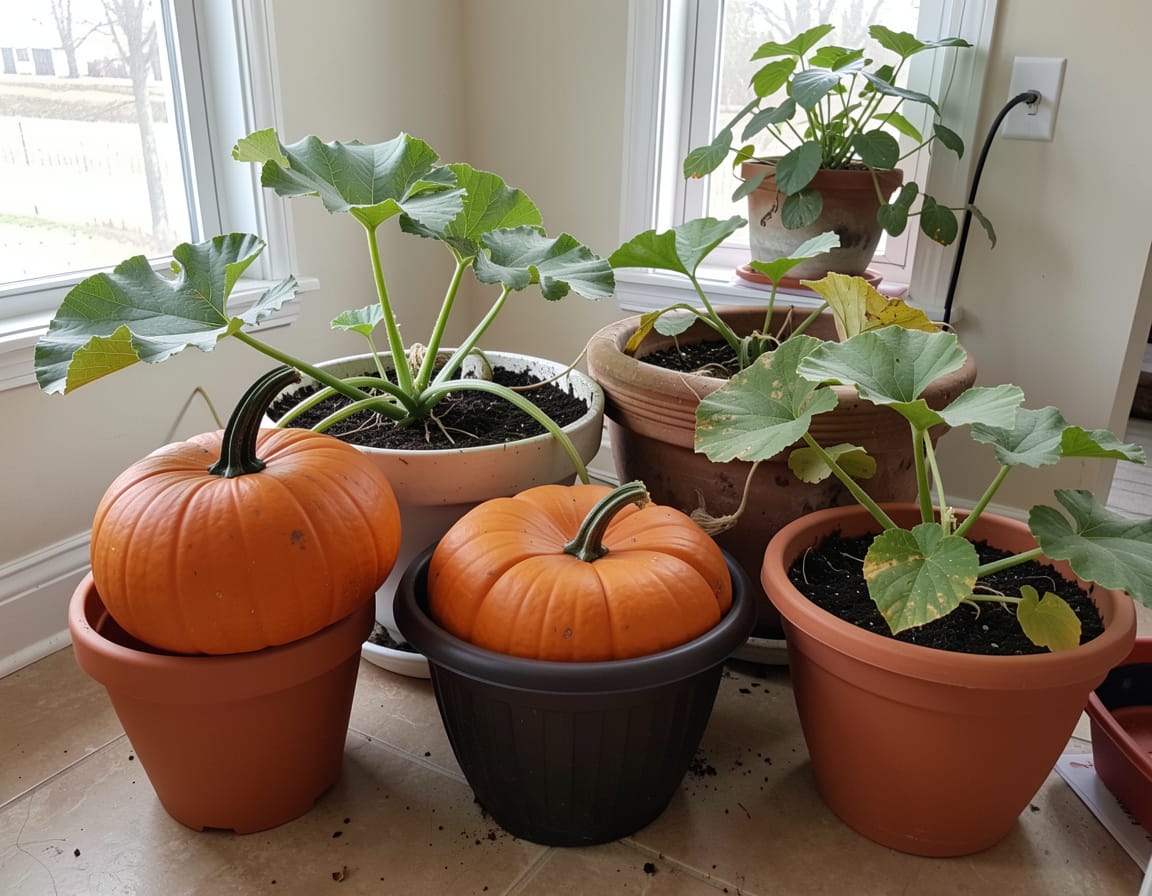
Growing pumpkins indoors especially in containers sounds ambitious, but it’s absolutely doable with the right setup. I started experimenting with indoor pumpkin growing a few winters ago when I didn’t have outdoor space, and I quickly learned that pumpkins behave differently indoors: they grow fast, need strong support, and depend entirely on you for pollination and light.
If your indoor pumpkin seedlings keep getting leggy, if vines tangle around furniture, or if flowers appear but never turn into fruit, you’re not alone. These are the classic challenges of indoor pumpkin growing, and they all have simple solutions.
This guide gives you a practical, experience-based method to grow healthy, productive pumpkins in containers inside whether you’re using a sunny window, a grow-light setup, or a small indoor garden corner.
Why Growing Pumpkins in container Indoors Works (When Done Correctly)
Pumpkins thrive indoors when you re-create the outdoor conditions they need:
- Consistent warmth (70–80°F)
- Strong, direct light
- Deep, rich soil
- Good airflow
- Proper pollination
- Vertical support for the vines
Indoors, you control the environment, which means:
- No pests like squash vine borers
- No powdery mildew from humid outdoor mornings
- No sudden cold snaps
- Faster growth with stable temperatures
The trick is giving pumpkins enough light, space, and root room the three things indoor gardeners often underestimate
What You’ll Need
These are the tools and materials I use when growing pumpkins indoors:
- Large container (15–25 gallons, minimum 12 inches deep)
- High-intensity grow light (LED full-spectrum preferred)
- Rich, well-draining potting mix
- Tomato cage, trellis, or vertical support
- Slow-release organic fertilizer
- Small paintbrush or cotton swab (for hand pollination)
- Self-watering tray or saucer
- Mulch (wood chips or shredded straw)
Budget-friendly alternatives:
- Repurposed storage tubs with drainage holes
- DIY bamboo trellis
- South-facing window + supplemental desk lamp
Eco-friendly considerations:
- Use peat-free potting soil
- Choose organic fertilizers and neem oil if pests appear
- Avoid chemical pesticides indoors (unsafe for people and pets)
How to Grow Pumpkins in Containers Indoors
Step 1: Choose the Right Pumpkin Variety
Not all pumpkins suit indoor cultivation. Choose compact or bush types.
Best indoor varieties:
- Baby Boo
- Jack Be Little
- Sugar Pie
- Baby Bear
- Small Kabocha varieties
- Bushkin
Avoid giant varieties indoors they become unmanageable quickly.
Step 2: Use a Large Container with Perfect Drainage
Pumpkins need space for roots to anchor and absorb nutrients.
Minimum container size:
- 15 gallons for miniature pumpkins
- 20–25 gallons for pie-sized pumpkins
Use containers with:
- Drainage holes
- A saucer or tray
- At least 12–16 inches depth
Tip: I once tried growing a pumpkin in a 5‑gallon bucket it survived, but the fruit stayed small and the plant stressed constantly. More soil equals healthier vines.
Step 3: Fill with High-Quality Potting Mix
Avoid garden soil too dense and full of pests.
Use:
- Potting mix with perlite
- A handful of compost
- A slow-release organic fertilizer mixed in
Soil should feel light and airy when squeezed, not clumpy.
Step 4: Provide Strong Indoor Lighting
Pumpkins are heavy feeders and heavy light users.
Indoors, they need:
- 12–16 hours of light per day
- A grow light positioned 6–10 inches above leaves
- Even light distribution as vines grow
Signs your plant needs more light:
- Long, stretched stems
- Small leaves
- Pale foliage
- Slow vine development
In my indoor setup, pumpkins only thrived once I moved them under a high-output LED panel.
Step 5: Train the Vines Vertically
Indoors, horizontal pumpkin vines will take over your whole room.
Use:
- A trellis
- Tomato cage
- Vertical garden frame
Tie vines loosely with:
- Garden tape
- Soft twine
- Fabric strips
Indoor vines grow softer than outdoor vines they need extra support but gentle handling.
Step 6: Hand Pollinate the Flowers
Indoors, you don’t have bees to do the work.
Here’s how to pollinate:
- Identify male flowers (thin stems) and female flowers (tiny pumpkin behind petals).
- Use a cotton swab or small brush.
- Dab the inside of the male flower.
- Transfer pollen to the center of the female flower.
Best done in the morning when flowers first open.
If female flowers shrivel and fall off, lack of pollination is usually the cause.
Step 7: Water Consistently but Never Overwater
Pumpkins like evenly moist not soggy soil.
Watering guidelines:
- Water deeply when the top inch feels dry
- Drain excess water immediately
- Use a self-watering tray to avoid waterlogging
- Mulch the soil to reduce evaporation
Indoors, overwatering is the most common mistake. Pumpkin roots need oxygen just as much as moisture.
Step 8: Feed Regularly
Pumpkins in containers burn through nutrients fast.
Use:
- Slow-release organic fertilizer (every 4–6 weeks)
- Liquid seaweed or fish emulsion for foliage (every 2 weeks)
- Additional potassium when flowers start forming
If leaves go pale or vines slow down, add nutrients.
Step 9: Support Developing Fruit
Indoor fruits need extra support.
Use:
- Slings made from fabric or mesh
- Hammocks attached to the trellis
- Soft cotton material to cradle the fruit
This prevents the fruit from snapping off the vine prematurely.
Pro Tips & Best Practices
- Use a fan to improve airflow and strengthen stems
- Rotate the container weekly so vines grow evenly
- Trim excessive side shoots to keep growth manageable
- Keep temperature stable pumpkins hate cold drafts
- Expect more frequent watering during active fruiting
Common beginner mistakes:
- Choosing a pumpkin variety too large for indoor growing
- Using insufficient light
- Skipping hand pollination
- Growing in containers that are too small
- Allowing vines to sprawl without support
FAQ
Can pumpkins really grow indoors to full size?
Yes, as long as you choose a small/bush variety and provide strong lighting plus proper pollination.
How long does it take to grow pumpkins indoors?
Miniature pumpkins: 85–100 days Pie-sized pumpkins: 95–120 days
Why are my pumpkin vines long but no fruit is forming?
Likely due to insufficient light or missed pollination.
Can I grow pumpkins indoors without grow lights?
Only if you have a very bright south-facing window, and even then fruiting may be limited. Grow lights produce much better results.
Will pumpkins indoors attract pests?
Less often than outdoors, but spider mites and aphids can appear. Neem oil and good airflow help.
When NOT to Grow Pumpkins Indoors
Avoid this project if:
- You can’t provide strong artificial lighting
- You don’t have at least 15–20 gallons of soil space
- You’re trying to grow giant pumpkin varieties
- Your indoor space is very dry or cold
Pumpkins need warmth, space, and consistent care.
Alternative Methods
Grow on a Heated Balcony or Patio
Adds more natural light. Works well with partial grow-light supplementation.
Start Pumpkins Indoors, Finish Outdoors
Begin inside for early growth, then transplant. Great for cold climates.
Use Dwarf or Micro Pumpkin Varieties
Some breeders are developing ultra-compact pumpkins that grow well indoors.
Conclusion
Growing pumpkins in containers indoors is absolutely possible when you choose the right variety, give the plant enough light, and hand pollinate the flowers. The primary keyword “growing pumpkins in containers indoors” comes down to three things: proper lighting, large containers, and deliberate pollination.
With patient training and a little daily attention, you can harvest adorable tabletop-sized pumpkins or flavorful sugar pies right from your indoor garden. Start small, stay consistent, and enjoy the process indoor pumpkin growing is one of the most rewarding small-space gardening projects you can try.