Every product is independently reviewed and selected by our editors. If you buy something through our links, we may earn an affiliate commission at no extra cost to you.
Planting up a vibrant garden is always exciting whether you’re filling balcony pots, tending a small backyard, or expanding your terrace beds. But one question stumps many beginners: Do I need to loosen roots before planting?
From hands-on experience in my own varied home garden setups, I’ve learned that how you handle those roots can have a real, visible impact on your plants’ health and growth. Let’s look at when (and how) to loosen roots before planting, why it works, and what to watch out for so you can plant with confidence and see strong results, starting day one.
Why Loosening Roots Works: The Science and Common-Sense Reality
When plants are grown in containers whether they’re nursery transplants, seedling trays, or leftovers from your last garden they tend to develop roots that circle around the edges or bottom of the pot. This results in what’s called being “root-bound” or “pot-bound.”
Why is this a problem? From direct experience, root-bound plants often:
- Struggle to absorb water or nutrients once transplanted
- Remain stunted, produce fewer flowers/fruits
- Are more likely to flop over or dry out
Loosening the roots gently teasing or untangling them encourages the plant to expand its root system into the surrounding soil. This is especially true for robust home-garden staples like tomatoes, peppers, herbs, and perennials.
But not every plant or situation needs root loosening. That’s why knowing what to look for is crucial for happy, thriving plants.
What You’ll Need
- Your transplants or seedlings
- Gloves (optional, but keeps your hands clean)
- Small trowel
- Watering can or spray bottle
- Clean garden shears (only if trimming dead or rotten roots)
- Compost or quality potting soil
Eco-friendly tip: Homemade compost or worm castings can help roots recover from handling.
Step-by-Step: How to Loosen Roots Before Planting
1. Timing & Conditions
Best timing:
- Transplant in the morning/evening to avoid midday heat.
- Soil should be moist, not soggy or bone-dry.
2. Remove the Plant Carefully
- Gently slide the plant (with its root ball) out of its pot.
- Tap or squeeze the pot if roots are stuck.
3. Inspect the Roots
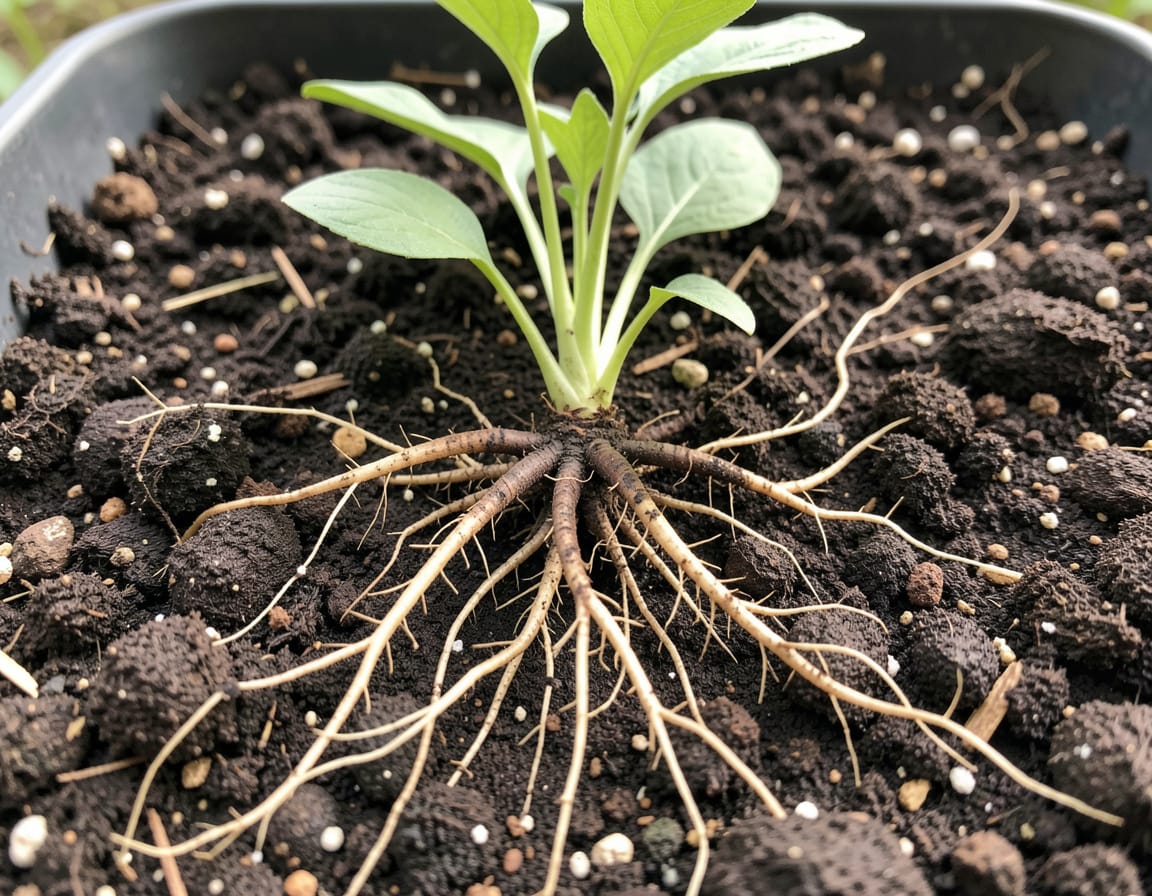
- Are roots circling thickly? Long white strands coiled around the bottom or sides?
- Are roots sparse and loose, just barely holding the soil together?
- Any signs of rot? (Brown, mushy roots)
4. Loosen If Needed
If roots are tightly circling (“root-bound”):
- Use your fingers to lightly tease roots outward all around.
- For very thick mats, use a garden fork or make 2-3 shallow vertical cuts with clean shears don’t overdo it!
- Try to splay the bottom roots out, even if a few break (most garden plants recover well).
If roots are not circling/mycelium is visible:
- Minimal or no loosening needed. Just place as-is and plant gently.
5. Plant and Water In
- Plant at the correct depth for your plant species.
- Backfill with compost/soil, press gently, and water thoroughly.
Pro Tips & Best Practices
- Don’t be scared by minor root damage. In real gardens, small breaks rarely kill healthy plants.
- For very young or delicate seedlings: Avoid rough handling. Only loosen if roots have started to circle.
- Compost in the planting hole: Helps roots recover and encourages fast new growth.
- Mulch after planting to conserve moisture and reduce transplant stress.
- Check the plant tag: Some species dislike root disturbance (see exceptions below).
FAQ
Why is my transplant wilting or not growing?
If you didn’t loosen circling or tangled roots, they may never “take off” into the new soil. Roots that stay balled up can limit the plant’s ability to absorb water and nutrients.
Can I skip loosening for perennial or shrub plants?
Most strong nursery plants benefit from at least gentle loosening unless the label suggests otherwise. For fragile or tap-rooted species (like poppies or some wildflowers), minimal disturbance is better.
How gentle should I be? What if roots break?
Be firm enough to untangle don’t shred the root ball, but don’t be afraid of breaking a few fine roots. Most home garden plants, especially tomatoes, peppers, and annuals, recover quickly.
Is it safe for container or raised bed gardening?
Absolutely. In fact, root binding is more common in containers, so this step is often even more important there.
Can loosening roots hurt my plant?
For most common garden vegetables and ornamentals, gentle loosening helps more than it harms. Avoid rough treatment on seedlings with very fine or underdeveloped roots.
When NOT to Loosen Roots
- Very young plugs or seedlings: If roots just hold the soil together and aren’t circling, don’t disturb them.
- Plants with taproots: Some plants (e.g., carrots, poppies, lupines) dislike root disturbance and can fail if handled roughly.
- Unpotting in extreme heat or wind: Delay handling if possible, or provide some shade and extra water after transplanting.
- Sick or weak plants: Focus on recovery in the pot before disturbing further.
Alternative Methods
1. Bare-rooting (washing away all soil):
- Useful for some trees or roses but risky for most annual veggies can cause more shock.
2. Leave as-is, water heavily:
- Easiest, but not effective for tightly bound roots.
3. Scoring with a knife:
- Fast, but can be overdone. Use only if roots are truly matted.
Best method for beginners: Gently teasing/tickling roots with fingers gives the most successful results and minimal risk.
Conclusion
So, do you need to loosen roots before planting? Yes if your transplant is root-bound or heavily circled, gently loosen before planting. For seedlings with normal, loose root balls, you can plant them directly.
From years of trial and error in real gardens:
- Loosening roots is one of the simplest ways to help your new plants “hit the ground running,” especially in pots, balcony planters, or heavy backyard soils.
- Treat roots like you’d treat the plant itself firm, but gentle and you’ll be rewarded with sturdier, more flourishing growth.
Take it slow, observe your plants, and adjust as needed. Healthy roots lead to happy plants, and with a little hands-on care at planting time, you’ll set up your garden for a season packed with color, produce, and satisfaction.
Plant with confidence knowing your roots are truly ready to grow!