Every product is independently reviewed and selected by our editors. If you buy something through our links, we may earn an affiliate commission at no extra cost to you.
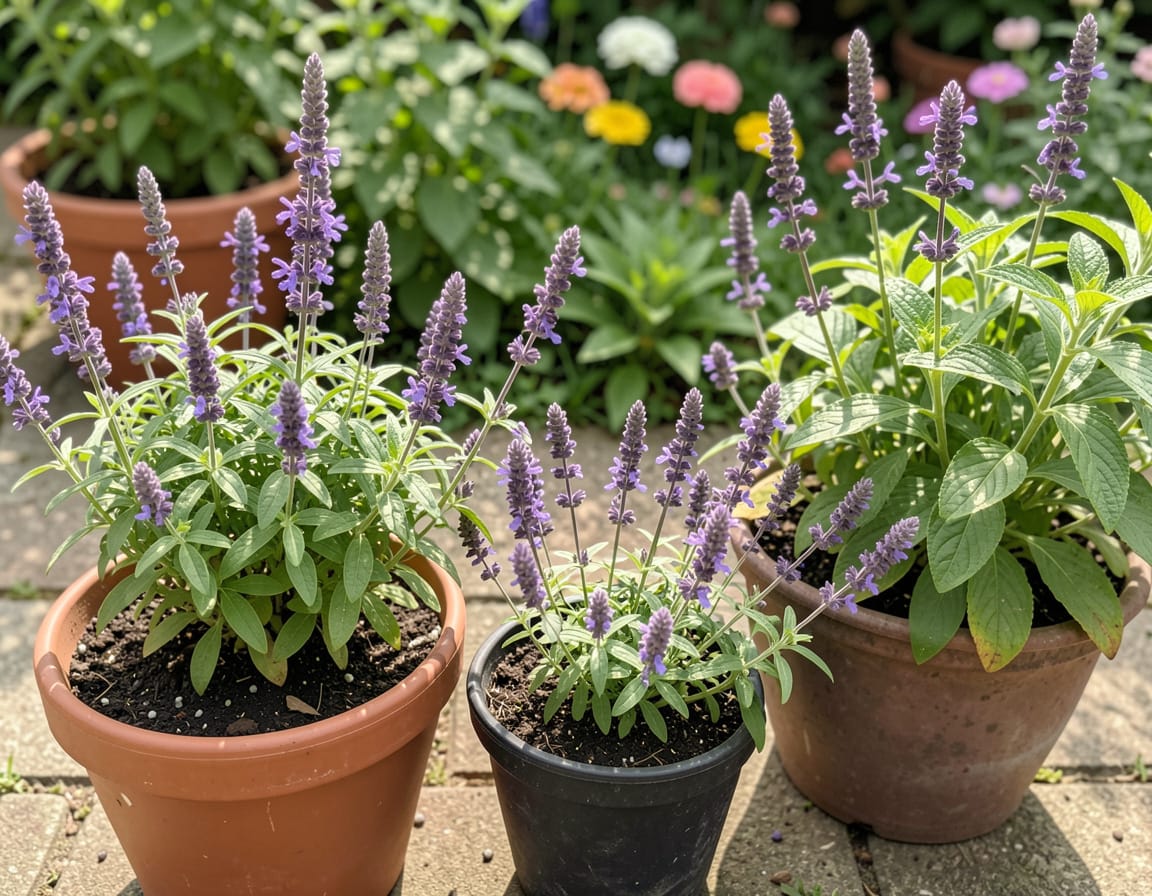
Salvias are some of the most rewarding container plants you can grow long blooms, pollinator-friendly, and surprisingly drought‑tolerant once established. But in pots, they behave differently than they do in garden beds, and several issues show up more quickly.
Below is a practical, experience‑based guide to the most common problems with salvias in pots, why they happen, and exactly how to fix them. Everything here comes from real container growing on sunny balconies, terraces, and small patios.
Why Salvias Act Differently in Pots
Potted salvias experience: • Faster soil drying • Temperature swings (pots heat up far more than ground soil) • Limited root space • Salt and fertilizer buildup • Water stress from inconsistent watering
Because salvias respond strongly to root conditions, most problems originate below the soil line.
1. Wilting or Drooping (Even After Watering)
What causes it
• Heat stress • Very dry soil • Compacted potting mix • Rootbound plant • Overwatering leading to root rot (the trickiest one to spot)
From experience: Salvias droop dramatically when thirsty but perk up again quickly with water. If yours stays wilted even after watering, it’s likely rootbound or waterlogged.
How to fix it
• Water deeply until water reaches all of the root ball • If soil stays wet for too long, repot into a looser mix • Move the plant to morning sun + light afternoon shade • Check drainage holes to make sure they’re not blocked
2. Yellowing Leaves at the Bottom
What causes it
• Overwatering • Poor drainage • Old foliage naturally dying back (normal) • Fertilizer imbalance
In pots, yellowing almost always ties back to moisture levels.
How to fix it
• Let soil dry between waterings • Add perlite to improve drainage at the next repotting • Remove old yellow leaves to improve airflow • Use a diluted, balanced fertilizer once a month
3. Leggy, Sparse, or Floppy Growth
What causes it
• Too little sunlight • Too much nitrogen fertilizer • Lack of pruning • Pot too small for root development
How to fix it
• Provide 6+ hours of direct sunlight • Pinch tips regularly to encourage branching • Use slow‑release fertilizer • Move the plant into a slightly larger pot if roots circle the bottom
Real‑world note: Salvias grown in less than 6 hours of sun get floppy no matter how well you water or feed them.
4. Brown, Crispy Leaf Edges
What causes it
• Heat stress • Pot overheating on concrete or metal surfaces • Underwatering • Hot, drying winds (very common on balconies)
How to fix it
• Water deeply but not too frequently • Mulch lightly with bark or compost to stabilize moisture • Move pots off hot surfaces use a plant stand • Give afternoon shade in very hot climates
5. Powdery Mildew
What causes it
• Crowded plants • High humidity + poor airflow • Watering late in the day • Shade + damp conditions
Even drought-tolerant salvias can get mildew if airflow is poor.
How to fix it
• Remove affected leaves • Increase airflow around the pot • Water only in the morning • Apply neem oil weekly until new growth is clean
6. Stunted Growth or No Blooms
What causes it
• Not enough sunlight • Pot too small • Excessive nitrogen (too leafy, no flowers) • Poor soil quality • Lack of deadheading
How to fix it
• Move to full sun • Upgrade to a pot at least 12–14 inches wide • Use a bloom‑boosting fertilizer (low nitrogen) • Deadhead regularly to trigger more flowers
7. Root Rot
What causes it
• Overwatering • Heavy or compacted potting mix • Pot without drainage holes • Saucers that stay full of water
Signs: wilting, black stems at the base, soil that never dries, sour smell.
How to fix it
• Remove the plant from the pot and trim black mushy roots • Repot into fresh, well‑drained potting mix • Water only when the top 2–3 inches are dry • Elevate the pot so excess water drains freely
8. Pests (Aphids, Spider Mites, Whiteflies)
What causes pest outbreaks
• Plants kept too dry or stressed • Low humidity • Nearby infested plants • Overfertilized, tender new growth
Real experience: Spider mites show up on my terrace salvias during very hot, dry weeks. Mist the air (not leaves) around plants and water adequately to discourage them.
How to fix it
• Rinse the plant thoroughly with water • Spray neem oil every 4–7 days for 3 cycles • Increase watering consistency • Keep salvias away from severely infested plants
9. Soil Drying Out Too Fast
Why it happens
• Terracotta pots • Small containers • Full sun on balconies • Potting mix with too much bark or sand
How to fix it
• Move to a slightly larger pot • Mix in compost to improve moisture retention • Add 1–2 inches of mulch • Water early in the morning
Pro Tips for Growing Salvias in Pots (From Hands-On Use)
• Salvias prefer deep watering less often, not light daily watering. • Container salvias need more pruning than garden salvias. • Deadheading every week keeps them blooming nonstop. • In windy areas, choose heavier pots so tall varieties don’t topple. • Most salvias do best when pots warm in the morning sun and cool in afternoon shade.
FAQ (Beginner-Friendly Answers)
Why is my potted salvia wilting even though I watered it?
If it doesn’t bounce back within a few hours, the plant is either rootbound or the soil is staying too wet.
How often should I water salvias in pots?
Usually every 2–4 days in warm weather, but only when the top few inches are dry.
Why are my salvia leaves turning brown at the tips?
Heat stress or underwatering. Container salvias dry out quickly, especially in terracotta pots.
Do salvias need full sun?
Yes at least 5–6 hours. Less light causes leggy growth and fewer blooms.
Should you cut back salvias in pots?
Yes. Cutting back by one-third encourages fuller, healthier growth.
Conclusion
Most common problems with salvias in pots come down to light, water, and root space. Salvias are tough plants, and once you stabilize the basics sunlight, well‑drained soil, and consistent watering they usually bounce back quickly and bloom for months.
If you’d like, I can help you diagnose your specific salvia just tell me which variety you’re growing or send a photo.