Every product is independently reviewed and selected by our editors. If you buy something through our links, we may earn an affiliate commission at no extra cost to you.
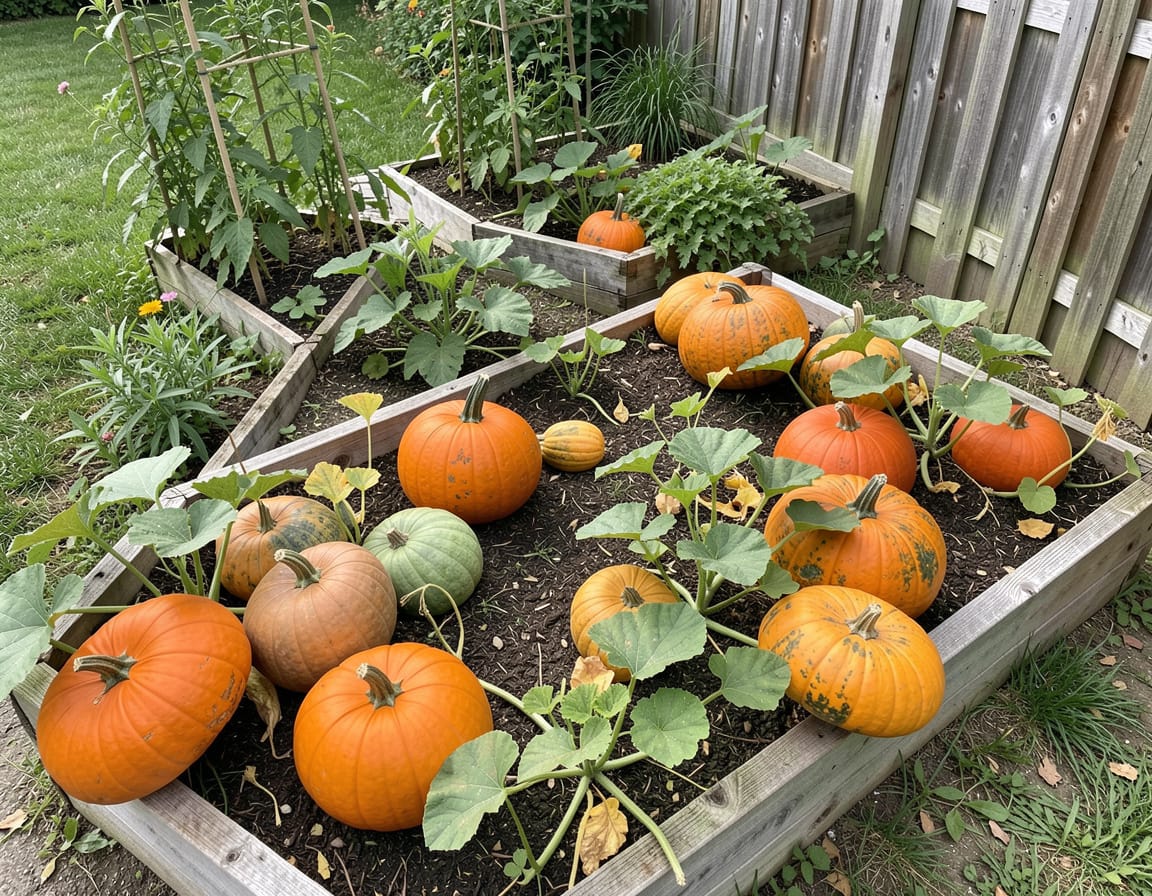
Pumpkins have a reputation for needing a huge garden, but with the right approach, they grow surprisingly well in patios, balconies, side yards, and compact raised beds. I’ve grown pumpkins in tight corners of my small backyard, in 15‑gallon containers on a terrace, and even up a makeshift trellis against a fence. What matters most is choosing the right variety and managing the vines before they decide to take over.
Below are practical, experience-tested tips that make pumpkin growing in small spaces not just possible, but productive.
1. Choose Compact or Mini Pumpkin Varieties
If you only change one thing, make it this. Variety choice determines 90% of your success in small spaces.
Best space-friendly varieties I’ve grown: • Baby Boo • Jack Be Little • Small Sugar Pie • Baby Bear • Bushkin • Bush-type kabochas
These produce full-sized flavor in much smaller plants.
2. Start Training Vines Vertically From Day One
Pumpkins naturally sprawl, but you can easily encourage them to climb.
Use what you have: • A fence or railing • A trellis or tomato cage • Bamboo canes tied into a teepee • Strong nylon netting
If you wait too long, the vines toughen and resist training. Guide them early with soft ties.
3. Use Containers to Control Spread
Growing in pots naturally limits root growth, which keeps the plant compact.
Container guidelines: • 10–15 gallons for mini pumpkins • 20 gallons for pie-sized pumpkins • At least 12–16 inches deep • Good drainage is essential
My most manageable pumpkins have always been container-grown they’re easier to prune, feed, and direct.
4. Prune Purposefully to Manage Vine Length
Pruning is a must in small spaces.
What works well: • Keep the main vine to a reasonable length (6–10 ft). • Remove side shoots that aren’t producing fruit. • Once 1–2 pumpkins are developing, pinch the tip of the main vine.
This stops the plant from trying to produce a patch-worth of vines.
5. Use Slings to Support Fruit on Vertical Vines
If pumpkins grow vertically, fruit needs support so the vine doesn’t snap.
DIY sling options I’ve used: • Old T-shirts • Mesh produce bags • Soft cloth tied into a hammock
It looks odd but works perfectly.
6. Maximize Sunlight in Small Spaces
Pumpkins need full sun 6 hours minimum, 8+ is ideal.
If light is limited: • Place containers at the brightest edge of the balcony or patio. • Use reflective surfaces like light walls or light-colored pots. • Rotate containers weekly for even light exposure.
Shaded pumpkins stretch excessively and fruit poorly.
7. Feed Regularly Especially in Containers
Pumpkins are heavy feeders, and limited soil means limited nutrients.
What I’ve found effective: • Start with rich potting mix and compost. • Use a slow-release organic fertilizer. • Supplement with liquid seaweed or fish emulsion every 1–2 weeks. • Increase potassium when flowers appear.
Healthy, well-fed vines stay compact and fruit early.
8. Hand Pollinate in Tight Urban Gardens
If pollinators rarely visit your balcony or courtyard, pumpkins may flower without setting fruit.
Hand pollination method: • Use a small brush or cotton swab. • Transfer pollen from a male flower (thin stem) to a female flower (tiny pumpkin behind petals). • Do this early morning for best results.
In my patio garden, hand pollination doubled my fruit set.
9. Mulch to Reduce Water Stress and Vine Rooting
Mulch helps small-space pumpkins by: • Reducing evaporation • Keeping soil temperatures stable • Preventing vines from rooting in unwanted spots
Good mulch options: • Shredded leaves • Straw • Wood chips (in containers, a thin layer is best)
10. Use Creative Vertical Spaces
Pumpkins grow well when you think vertically especially in tight gardens.
Ideas that have worked for me: • Training vines along a balcony railing • Growing a container pumpkin at the base of a fence • Letting vines climb a pergola for shade • Using an A-frame trellis in a raised bed
Pumpkin vines are flexible and surprisingly cooperative when guided early.
Conclusion
Growing pumpkins in small spaces is completely achievable if you choose compact varieties, train vines vertically, prune regularly, and give the plant consistent sun and nutrients. With these clever tips for growing pumpkins in small spaces, you can enjoy homegrown pumpkins without needing a big garden just a bit of planning and some gentle vine training.
If you’d like, I can turn this into a full SEO‑optimized long-form article with headings, troubleshooting, and step-by-step instructions just let me know.