Every product is independently reviewed and selected by our editors. If you buy something through our links, we may earn an affiliate commission at no extra cost to you.
That’s a question I hear often from both homeowners and renters who want their outdoor space to feel like a retreat rather than another project to manage. A calming garden doesn’t have to be large or expensive it’s about crafting atmosphere through natural materials, balanced design, and subtle sensory cues.
Below is a comprehensive, experience-based guide built on years of designing sustainable, non-toxic, low-maintenance gardens for real U.S. homes.
Key Elements of a Calming Garden Design
A calming garden design focuses on balance, simplicity, and natural flow. Soft plant textures, soothing colors, and gentle fragrances help reduce visual noise. Thoughtful pathways, quiet seating areas, and natural materials create harmony, encouraging mindfulness, relaxation, and a deeper connection with nature in your outdoor space. Let’s have a look which factor you will consider for it:-
1. Start With the Feeling You Want to Create
Before you touch a shovel, define what “calm” means to you. For some, it’s the sound of moving water; for others, soft textures and quiet color. Ask yourself:
- Do I want a space for reflection and stillness, or gentle social gatherings?
- Do I prefer dappled shade or open sunlight?
- What sounds or scents relax me most?
This clarity shapes every decision that follows from layout to plant selection.
2. Choose the Right Location and Layout
Prioritize Privacy and Flow
A calming garden thrives in a space that feels protected, even if it’s small. Look for a corner shielded from noise or heavy foot traffic. Natural fences or planted screens help create an intimate enclosure without closing you off entirely.
Layout Principles I Use Professionally:
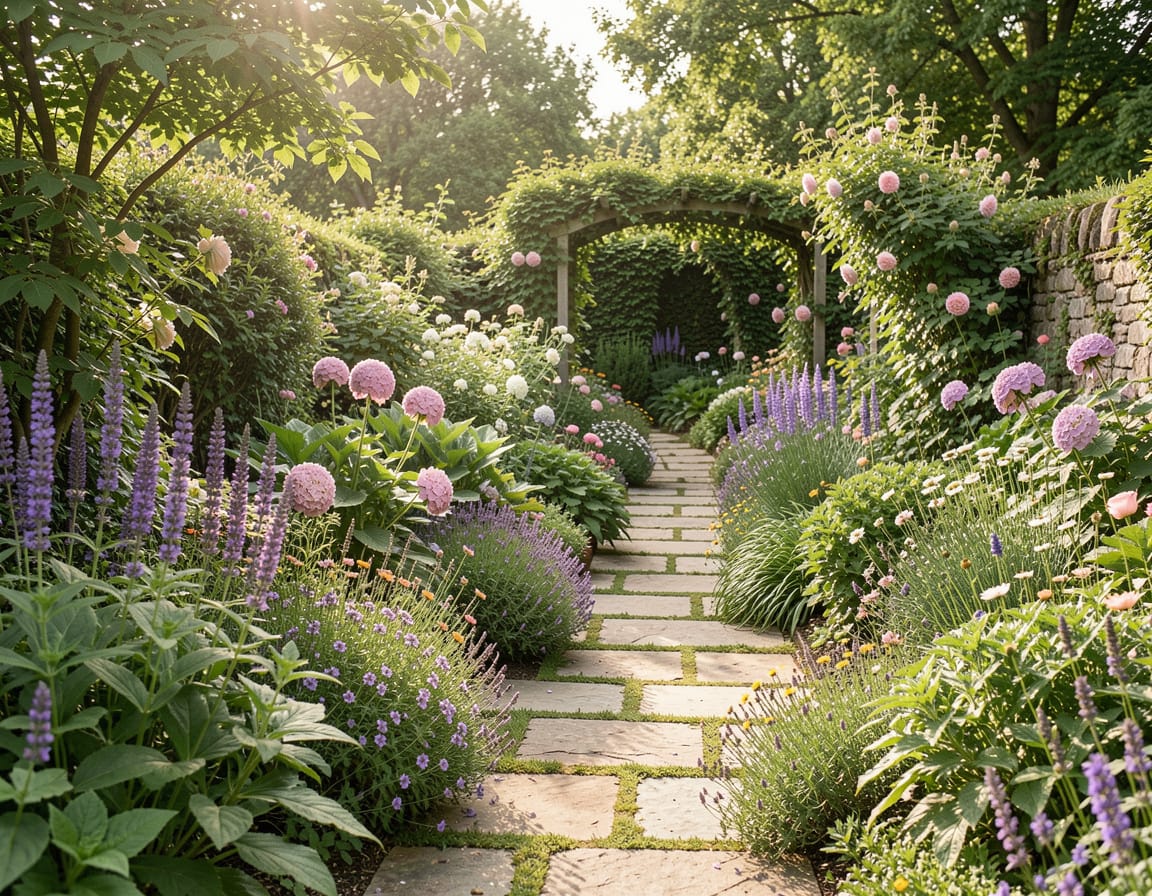
- Curving paths encourage slow walking and visual softness.
- Defined edges (like stone borders or low hedges) provide structure and mental ease.
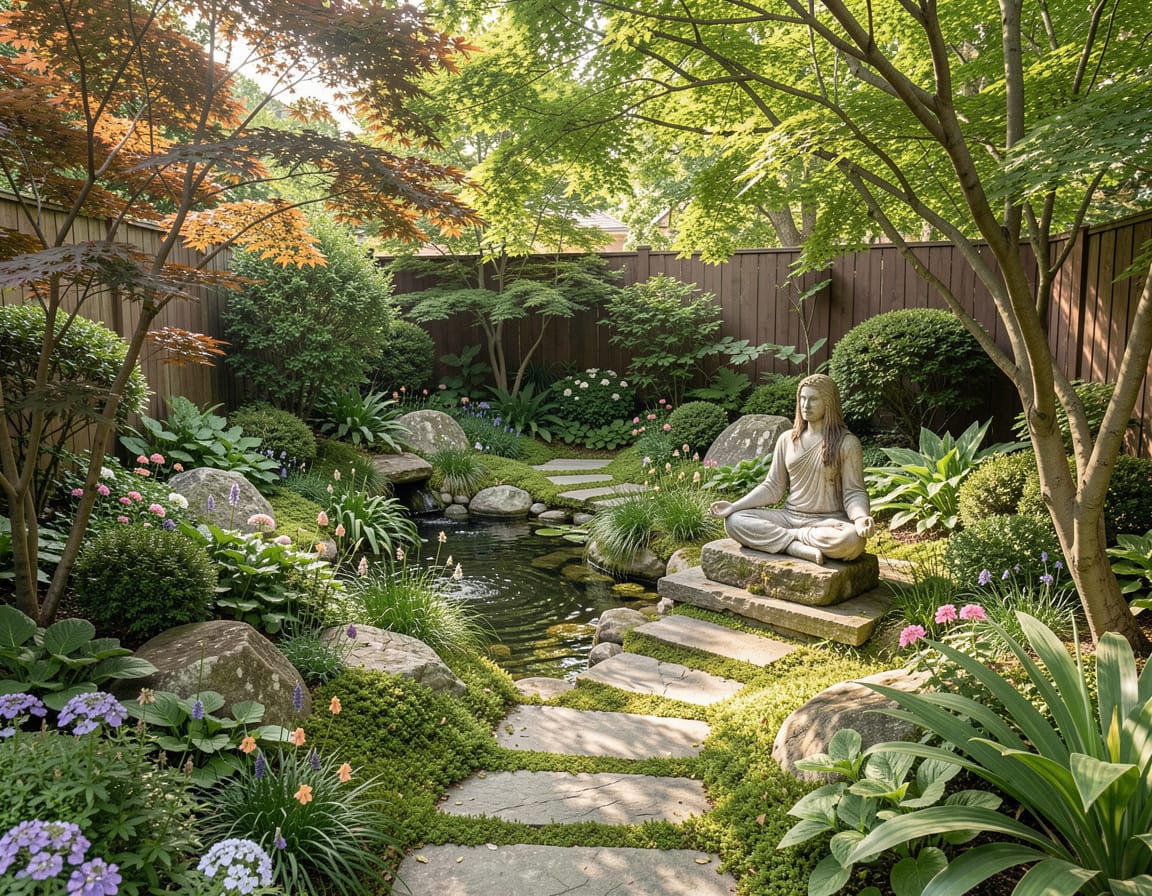
- A clear focal point such as a tree, sculpture, or water bowl anchors the design and draws attention gently inward.
- Balanced symmetry works in formal gardens; organic flow suits relaxed spaces.
If you’re in a small urban lot, think vertically trellises, hanging planters, or climbing vines can surround you with greenery without taking up floor space.
3. Use Natural, Non-Toxic Materials
| Material | Function | Calming Benefit | Sustainability Tip |
| Stone (local river rock, flagstone) | Paths, borders | Stable feel underfoot, natural tones | Source locally to reduce emissions |
| Untreated wood (cedar, cypress, redwood) | Seating, decking | Warm texture, low off-gassing | Choose FSC-certified lumber |
| Gravel or decomposed granite | Ground cover | Creates quiet crunch, good drainage | Reusable and permeable |
| Clay or terracotta | Containers, accents | Earthy feel, natural patina | Long lifespan, no plastics |
| Natural textiles | Cushions, hammocks | Softens hardscapes | Organic cotton or linen avoids VOCs |
Avoid plastic décor, synthetic turf, or chemically stained wood they disrupt the sensory calm and off-gas heat-holding compounds.
4. Choose Plants That Evoke Stillness
When I design calming gardens, I rely on texture, movement, and muted color, not floral drama.
Reliable Plant Palette by Region
For Most of the U.S. (Temperate Zones):
- Ornamental grasses (blue fescue, fountain grass, little bluestem)
- Ferns and hostas in shaded corners
- Lavender, catmint, or sage for subtle scent
- Native wildflowers in soft tones (coneflower, yarrow, rudbeckia)
- Evergreens or boxwoods for year-round structure
For Drier Western Climates:
- Silver-toned plants like artemisia, santolina, or lavender cotton
- Desert marigold or agave for sculptural calm
- Mulched gravel beds with drought-tolerant herbs
For Humid Southern Climates:
- Camellia, azalea, or sweet olive for gentle fragrance
- Palmettos, ferns, and native grasses for lush texture
- Moss or creeping thyme for living groundcover
Color and Texture Rules
- Stick to greens, silvers, and soft whites they rest the eyes.
- Limit bright reds and yellows to small focal points only.
- Mix fine and coarse textures for depth without clutter.
- Design for movement grasses that sway or leaves that flutter create natural rhythm.
5. Add Gentle Sound and Motion
Sound is one of the most overlooked design tools for calm.
Sustainable, Natural Sound Sources:
- Water features: Small pondless waterfalls, bubbling stones, or recirculating birdbaths.
- Plants that rustle: Bamboo, ornamental grasses, or cottonwood trees.
- Wildlife-friendly additions: Bird feeders and baths attract songbirds nature’s own soundtrack.
- Wind chimes: Use bamboo or ceramic rather than metal for a softer tone.
If you’re in an urban area where external noise is unavoidable, a constant low water sound can mask ambient city noise effectively.
6. Include Comfortable, Organic Seating
Comfort encourages you to stay and unwind.
My go-to choices:
- A smooth stone bench under a tree
- A low wooden deck with organic-fabric cushions
- A hammock or swing chair in shaded corners
- Portable stools or yoga benches for flexibility
Avoid bright, synthetic fabrics they fade quickly and feel hot. Natural fibers breathe and blend with surroundings better.
7. Manage Light With Intention
Light shapes mood as much as color.
- Use soft solar or LED lights along paths for nighttime safety.
- Highlight focal plants with warm white (not cold white) uplighting.
- Hang string lights with amber bulbs for gentle glow during evenings.
- For renters, solar lanterns or candles can achieve the same feel without wiring.
If sunlight is harsh, add shade sails, pergolas, or vine-covered trellises rather than treating shade as a limitation filtered light feels naturally tranquil.
8. Incorporate Meaningful or Reflective Elements
Personal touches ground your garden emotionally.
Examples from client projects:
- A small stone stack symbolizing balance
- A weathered wood plaque with an inspirational quote
- A reflective water bowl that mirrors the sky
- A single sculpture or heirloom garden bell
Limit these to one or two too many “features” compete for attention and interrupt visual calm.
9. Maintain the Garden Mindfully
A calming garden should be easy to keep up.
- Weed lightly and often cluttered beds create tension.
- Use organic mulch to retain moisture and suppress weeds.
- Prune with intention shape plants naturally instead of harsh clipping.
- Compost trimmings and use them as soil amendment.
- Avoid synthetic fertilizers or pesticides they disrupt soil ecology and introduce unwanted odors.
Even maintenance can become a meditative act when done slowly and attentively raking gravel, sweeping a path, or deadheading spent blooms.
10. Adapting for Small Spaces or Renters
In apartments or condos, you can still create a calming pocket garden:
- Use planters grouped by height to mimic garden layering.
- Add a tabletop fountain or simple bowl of water with floating leaves for sound and reflection.
- Lay a natural fiber rug or stone tiles to define your “garden room.”
- Include potted herbs like lavender or basil for scent.
- Use bamboo screens for privacy and gentle movement.
Even a 4×6 ft balcony can evoke calm when it’s cohesive and intentional.
11. Common Mistakes to Avoid
- Too many contrasting colors or plant types it overwhelms the eye.
- Overly geometric or rigid lines nature’s softness relaxes the mind.
- Synthetic materials or bright plastics they break the connection to nature.
- Ignoring scale keep furniture and plants proportional to your space.
- Neglecting sensory balance balance sight, scent, touch, and sound evenly.
12. Extra Expert Tips for Sustainable Calm
- Use native plants they attract pollinators and require less care.
- Collect rainwater for irrigation; the slower ritual of watering is calming itself.
- Add moss or creeping plants between stones for organic softness.
- Leave a small open soil area for grounding walking barefoot on natural earth reduces stress and static buildup.
- Rotate seasonal accents spring blossoms, summer herbs, autumn grasses to maintain quiet visual change.
FAQ: Creating a Calming Garden
1. What’s the most important element for calm? Consistency. Keep materials, colors, and plant forms cohesive so your space feels unified and intentional.
2. Can I have a calming garden in full sun? Yes. Use drought-tolerant plants with silvery foliage and add a small shade feature (like a pergola or umbrella) for comfort.
3. How can I reduce noise in my garden? Layer plantings, add water features, or install bamboo fencing they absorb and diffuse sound naturally.
4. Is lighting necessary for calm? Only if you use the space at twilight. Keep it soft, amber-toned, and indirect.
5. What’s the simplest way to start if I’m overwhelmed? Begin with one calming zone a chair surrounded by three pots of soothing plants. Expand gradually as you find your rhythm.
6. How can I make it eco-friendly? Use organic soil, native plants, compost mulch, and solar-powered lights. Avoid chemicals entirely.
7. How do I keep it low-maintenance? Choose perennials, mulch generously, and use drip irrigation or self-watering containers to reduce daily tasks.
Final Thought
A calming garden isn’t a luxury it’s a form of everyday therapy you can step into. In my experience, the most peaceful spaces share three traits: simplicity, natural materials, and sensory balance. When the air moves, light filters through leaves, and every texture feels intentional, your garden becomes more than a landscape it becomes a living sanctuary that helps your mind exhale.