Every product is independently reviewed and selected by our editors. If you buy something through our links, we may earn an affiliate commission at no extra cost to you.
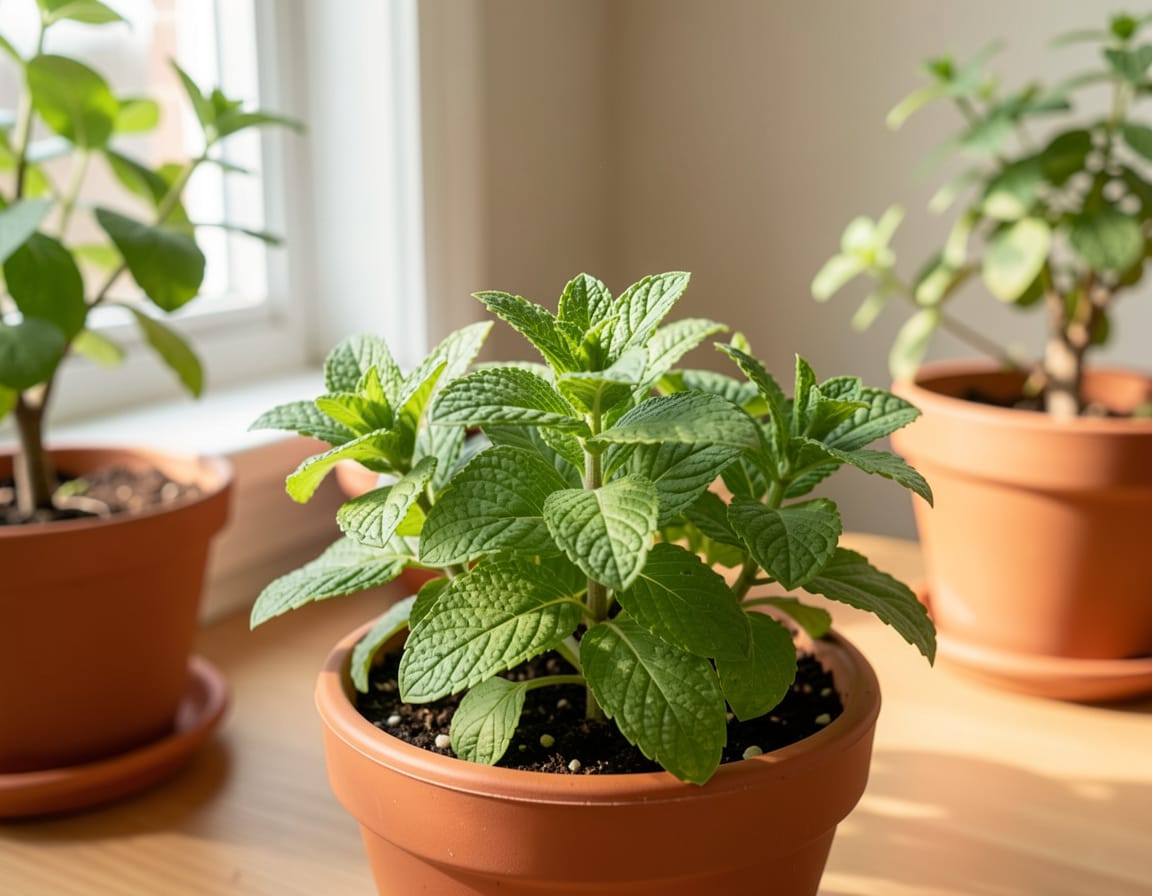
If you’ve ever tried growing herbs indoors, you already know mint is one of the toughest, most forgiving plants you can keep. But the big question beginners often ask is: Can mint grow indoors without sunlight?
Short answer: Yes but only if you give it the right type of artificial light and proper indoor conditions. From my own indoor herb setups on a shaded apartment balcony, mint will survive low light, but it won’t thrive unless you replace sunlight with a good-quality grow light and adjust watering carefully.
Below is the exact method I use when growing mint indoors in spaces with almost zero natural light.
Why Mint Can Grow Indoors Without Sunlight (If You Replace It Properly)
Mint is naturally tolerant of shade. In the garden, I often find it spreading under taller plants or along walls that only get indirect light. It’s not as sun-hungry as basil or rosemary.
Here’s why mint tolerates low light:
- Large leaf surface: The broad leaves can capture light efficiently, even when the light is weak.
- Fast growth habit: Mint has vigorous roots and stems that recover quickly if conditions improve.
- Adaptable metabolism: It can photosynthesize under lower light compared to many herbs.
But here’s what beginners often miss: Indoors, typical room lighting is nowhere near enough for photosynthesis. Even a bright indoor bulb is only a fraction of what mint gets outdoors. So if there’s no sunlight at all, mint must have a grow light.
What You’ll Need
- A healthy mint plant or cuttings
- A grow light (LED full-spectrum preferred; even a small 20–40W panel works)
- A pot with drainage holes
- Well-draining potting mix (not heavy garden soil)
- A saucer to catch excess water
- Optional: organic fertilizer (slow-release pellets or liquid seaweed)
Budget alternatives:
- A simple clamp-on LED grow bulb
- Recycled container with homemade drainage holes
- DIY soil mix: potting soil + a handful of perlite or coco coir
Eco-friendly options:
- Coconut coir instead of peat
- Organic, fish-based or seaweed-based fertilizer
How to Grow Mint Indoors Without Sunlight: Step-by-Step
1. Choose the Right Grow Light
Mint doesn’t need an intense grow light. In my indoor setups, even a small LED grow bulb works if it’s placed close enough.
What to look for:
- “Full spectrum” or “balanced white” LED
- 20–40W power range
- Adjustable arm or clamp for positioning
Distance: 6–12 inches above the mint.
Duration: 10–12 hours per day (I use a timer to make this foolproof).
2. Use the Right Pot and Soil
Mint hates soggy roots. Indoors, where air circulation is low, overwatering can kill it fast.
- Use a pot with at least one drainage hole.
- Use a light, airy potting mix.
- Avoid compacted soil; mint roots need oxygen.
Visual cue: Soil should feel slightly springy, not dense or muddy.
3. Water Correctly (This Is Where Most Indoor Growers Slip)
Indoors, mint needs less water because the soil doesn’t dry as quickly as it does outdoors.
My rule:
- Water only when the top inch feels dry.
- Always empty the saucer mint roots rot quickly.
Signs you’re watering too much:
- Yellowing lower leaves
- Mushy or brown stems
- Fungus gnats hovering around the pot
4. Keep the Temperature Stable
Mint does best at:
- 18–24°C (65–75°F)
Keep it away from:
- Heating vents
- Radiators
- AC units blowing cold air
Sudden temperature changes stunt growth.
5. Feed the Plant Lightly
Indoors, mint needs only gentle feeding.
Options:
- Half-strength liquid seaweed every 3–4 weeks
- A small pinch of slow-release organic pellets every 2–3 months
Avoid strong fertilizers mint gets leggy fast indoors.
6. Trim Regularly for Bushier Growth
Mint grown indoors tends to stretch toward the light. Trimming prevents legginess.
How to trim:
- Snip just above a pair of leaves.
- Don’t harvest more than one-third at a time.
Trimming encourages mint to produce new, fuller shoots.
Pro Tips & Best Practices
- Rotate the pot weekly so growth stays even.
- Keep leaves dry when watering; wet leaves indoors encourage fungus.
- Use a fan occasionally if the air is stagnant mint appreciates gentle airflow.
- If stems get too leggy, cut them back hard; mint rebounds quickly.
- Use a warm-colored LED if you want faster leaf production; mint loves the red spectrum for foliage growth.
Common Mistakes Beginners Make
- Using a decorative pot with no drainage.
- Watering on a schedule instead of checking soil moisture.
- Placing the grow light too far away (stretchy, weak growth).
- Growing mint near ethylene-producing fruits (mint hates stored fruit gases).
- Expecting “kitchen ceiling light” to be enough it’s not.
FAQ: Indoor Mint Growing Without Sunlight
1. Can mint grow with just a regular LED bulb? It might survive, but it won’t thrive. Regular bulbs lack the correct spectrum and intensity. A cheap grow bulb works far better.
2. How many hours of artificial light does mint need? Usually 10–12 hours. If growth is slow or leaves are small, increase to 14 hours.
3. Why is my indoor mint turning yellow? Often due to overwatering or poor drainage. Adjust watering and check the potting mix.
4. Can mint grow in a small pot indoors? Yes, but it prefers wider pots. Mint spreads horizontally more than vertically.
5. Is it safe to grow mint indoors with pets? Mint leaves are non-toxic to dogs and cats, but some pets dislike the scent. Keep pots stable so they aren’t knocked over.
6. Does mint grow slower indoors than outdoors? Yes lower airflow, less light intensity, and stable indoor temperatures all slow growth slightly.
When NOT to Grow Mint Indoors Without Sunlight
Avoid this method if:
- Your indoor space is cold (below 10°C/50°F)
- You cannot use a grow light at all
- You prefer “set and forget” plants mint needs frequent trimming indoors
- You struggle with high humidity (mint gets fungal problems in damp rooms)
In these cases, place mint near a bright window or grow it outdoors instead.
Alternative Ways to Grow Mint Indoors
1. Near a bright east or south-facing window Pros: No equipment needed Cons: Not possible in windowless rooms
2. Hydroponic mint under LED lights Pros: Fastest growth, self-watering Cons: Requires a small system, slightly higher cost
3. Grow mint on a balcony with partial shade Pros: Stronger aroma and flavor Cons: Needs some outdoor light access
For beginners, a pot + small grow light is the simplest and most forgiving option.
Conclusion: Can Mint Really Grow Indoors Without Sunlight?
Yes, mint can grow indoors without sunlight but only if you provide enough artificial light and treat it like the shade-tolerant herb it is. With a basic grow bulb, good drainage, careful watering, and regular trimming, mint grows reliably indoors even in windowless spaces.
Mint is one of my favorite “confidence-building” herbs for new indoor gardeners. Once you understand its lighting and watering needs, it becomes almost effortless.
If you set it up right, you’ll have fresh mint leaves for tea, cooking, and cuttings all year long no sunlight required.