Every product is independently reviewed and selected by our editors. If you buy something through our links, we may earn an affiliate commission at no extra cost to you.
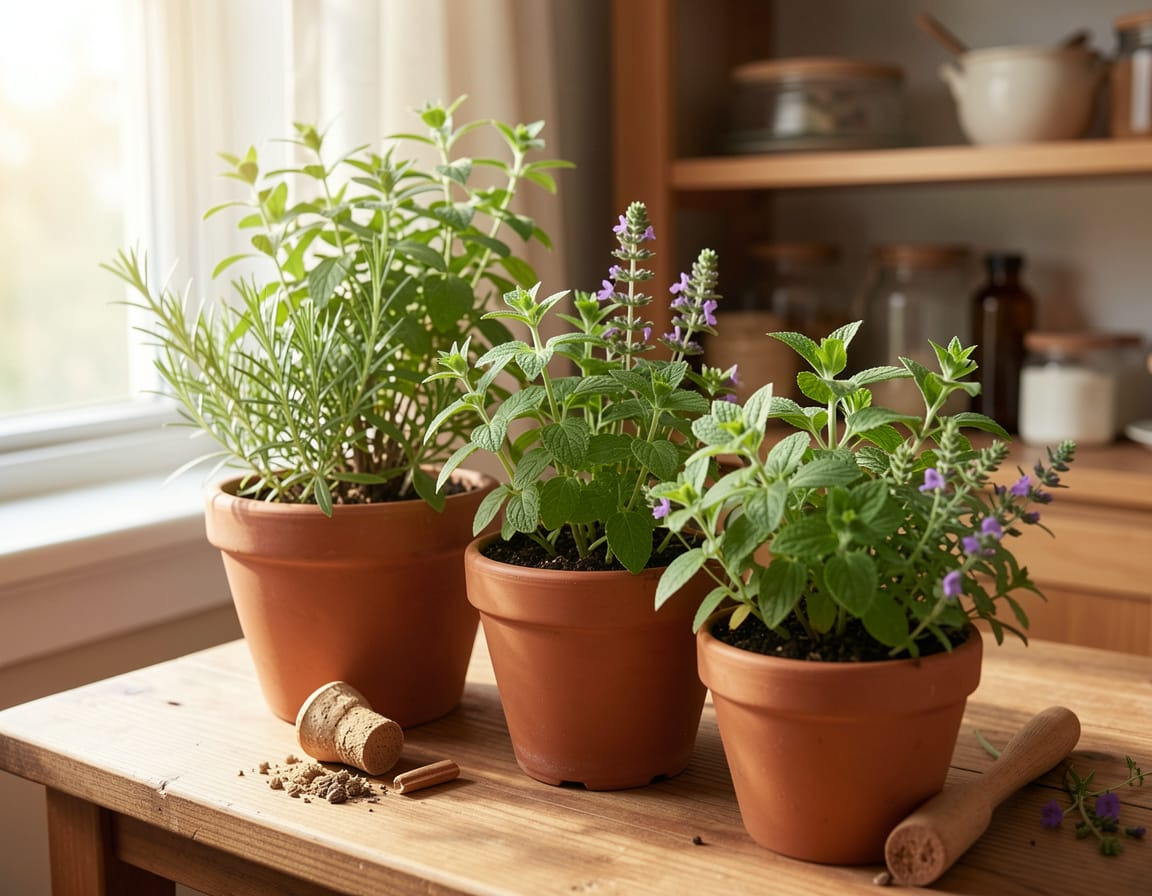
If you’ve ever bought fresh medicinal herbs only to watch them wilt in the fridge or lose potency, growing them indoors is a much more rewarding option. But not all herbs adapt well to indoor conditions limited sunlight, dry air, and small pots can make some species struggle. After years of raising herbs on a sunny kitchen windowsill and later on a tiny indoor shelf garden, I’ve learned which ones stay healthy, productive, and genuinely useful for home remedies.
This guide shares practical, experience-based advice on the best herbs to grow for medicinal use indoors, with simple setups even beginners can follow.
Why Growing Medicinal Herbs Indoors Works So Well
Indoor herb growing succeeds when:
• You use herbs naturally suited to containers • Plants get consistent light (a bright window or grow light) • You harvest lightly and regularly • Soil drains well and never stays soggy
Many medicinal herbs thrive indoors because they’re compact, aromatic, and naturally adapted to drier, controlled environments. Indoors also protects them from pests, heavy rains, and temperature swings that can reduce potency.
From personal experience, even a small windowsill garden can provide reliable supplies of aloe, mint, and basil all of which regenerate quickly after harvest.
What Items You’ll Need
• Pots with drainage holes (10–15 cm for small herbs; 15–20 cm for larger) • High-quality potting mix (not garden soil) • Optional: 4–6 hour/day LED grow light • Organic fertilizer (slow-release or liquid kelp) • Spray bottle (for humidity-sensitive herbs) • Small pruning scissors
Budget-friendly options: upcycled jars with drainage added, recycled yogurt containers, used nursery pots.
The 10 Best Herbs to Grow for Medicinal Use Indoors (Tested in Real Home Gardens)
1. Aloe Vera
One of the most forgiving medicinal plants indoors.
Medicinal uses • Burns and cuts • Skin hydration • Minor inflammation
Why it thrives indoors Aloe prefers bright light and infrequent watering. Indoors, I’ve found it grows more slowly but stays healthier than when exposed to cold nights outdoors.
Care tip Let soil dry 100% before watering overwatering kills aloe faster than anything.
2. Mint (Peppermint or Spearmint)
Excellent for teas, digestion, and headaches.
Medicinal uses • Nausea • Indigestion • Congestion relief
Why it thrives indoors Mint grows aggressively outdoors, but indoors it stays compact and manageable while still giving plenty of leaves.
Care tip Keep soil moist but not wet; dry indoor air can stress mint, so mist lightly.
3. Lemon Balm
A calming herb that’s perfect for indoor tea gardens.
Medicinal uses • Anxiety • Insomnia • Cold sore support
Why it thrives indoors It prefers gentle morning light ideal for indoor growing. On my shaded windowsill, it stays lush even in winter.
Care tip Pinch often to prevent legginess.
4. Chamomile (German or Roman)
Beautiful, delicate, and surprisingly hardy indoors.
Medicinal uses • Sleep support • Digestive relief • Anti-inflammatory tea
Why it thrives indoors Chamomile can’t handle strong sun or wind outdoors; indoors it stays evenly hydrated and produces steady blooms.
Care tip Give chamomile 4–6 hours of bright light and avoid soggy soil.
5. Basil (Especially Holy Basil/Tulsi)
Used for immune and stress support.
Medicinal uses • Respiratory support • Anti-inflammatory • Stress balancing (holy basil)
Why it thrives indoors Basil loves warmth and even moisture both of which are easier to control indoors. In my own kitchen garden, basil lasts longest under a small LED light.
Care tip Harvest from the top to encourage bushier growth.
6. Thyme
Tiny leaves, powerful medicinal value.
Medicinal uses • Cough relief • Antimicrobial tea or steam • Cold + flu support
Why it thrives indoors Thyme stays compact and aromatic with minimal watering. Indoors, it avoids root rot caused by heavy winter rains.
Care tip Let top 2–3 cm of soil dry between waterings.
7. Oregano
A strong immune-support herb with robust indoor growth.
Medicinal uses • Antiviral • Antibacterial • Sore throat gargle
Why it thrives indoors Oregano tolerates dry air and grows slowly but steadily in small pots.
Care tip Provide bright light or use a small grow lamp.
8. Rosemary
Harder than mint but still achievable indoors.
Medicinal uses • Memory support • Circulation • Respiratory steam
Why it can thrive indoors It prefers dry soil and strong light. I’ve had best results with rosemary near a bright south-facing window.
Care tip Avoid overwatering; rosemary hates “wet feet.”
9. Sage
A medicinal powerhouse that stays compact indoors.
Medicinal uses • Sore throat relief (tea or gargle) • Anti-inflammatory uses • Digestive aid
Why it thrives indoors Sage grows well in a warm, dry indoor space that mimics its natural Mediterranean habitat.
Care tip Prune lightly to maintain shape and encourage new growth.
10. Catnip
Not just for cats very useful medicinally.
Medicinal uses • Mild sedative • Anxiety relief • Digestive support
Why it thrives indoors Catnip grows reliably with moderate light and regular pruning.
Care tip If you have cats, keep the pot out of reach!
Pro Tips & Best Practices for Growing Medicinal Herbs Indoors
• Use grow lights during winter herbs respond quickly to even cheap LED panels. • Rotate pots weekly for even growth. • Never use garden soil poor drainage causes root disease indoors. • Harvest small amounts regularly to keep plants productive. • Avoid placing herbs near heat vents; they dry out faster. • Use saucers but avoid letting water sit in them.
Common mistakes: • Overwatering aloe, rosemary, thyme, or sage • Underwatering mint or lemon balm • Using tiny pots that dry out every few hours • Expecting outdoor-level growth indoors
FAQ
Which medicinal herbs are easiest for beginners to grow indoors? Mint, aloe vera, lemon balm, basil, and oregano are the most forgiving.
How much light do indoor medicinal herbs need? Most need 4–6 hours of bright light or a small grow light.
Why are my indoor herbs getting leggy? Usually not enough sunlight. Move them to a brighter spot or add a grow lamp.
Can I grow medicinal herbs indoors without a sunny window? Yes, but you’ll need a low-cost LED light for best results.
Which herbs help purify indoor air as well? Basil, rosemary, and mint produce strong essential oils that freshen the space.
How often should I fertilize indoor herbs? Every 3–4 weeks with a diluted organic liquid fertilizer.
When NOT to Grow Certain Medicinal Herbs Indoors
Avoid growing these indoors if:
• Your home is very dark and you cannot use grow lights (basil, rosemary will struggle) • You tend to overwater (rosemary, aloe, sage are sensitive) • You have curious pets (catnip, aloe, and mint may be too tempting) • Air is extremely dry (mint and lemon balm may get crispy)
Alternative Options
If indoor herb growing isn’t ideal for your space, consider:
A small outdoor container garden Most herbs thrive better outdoors, even in partial shade.
Hydroponic herb kits Fantastic for low-light homes; extremely beginner-friendly.
Dried herbs or frozen homegrown herbs Harvest outdoors in summer and use indoors through winter.
Conclusion
Growing the best herbs for medicinal use indoors doesn’t require a large space or complicated setup. A few well-chosen plants, a bright windowsill, and consistent care can give you a steady supply of healing herbs year-round. Start with the easy ones mint, aloe, lemon balm, basil and expand as you learn how each herb responds to your home’s light, humidity, and temperature.
With patience and small, regular harvests, your indoor herb garden can become one of the most useful and soothing parts of your home.