Every product is independently reviewed and selected by our editors. If you buy something through our links, we may earn an affiliate commission at no extra cost to you.
Imagine stepping onto your balcony or garden every few days and picking fresh, ruby-red strawberries sweet, fragrant, and still warm from the sun. No waiting for a single seasonal harvest. No empty months. Just steady, ongoing fruiting from spring through fall.Yet many gardeners plant strawberries expecting this “continuous harvest” experience and end up with disappointing results. The issue is rarely care it’s choosing the wrong variety. Not all strawberries are everbearing, and even among them, performance varies dramatically depending on climate, soil, and setup. This guide breaks down the best everbearing strawberry varieties and shows you exactly how to grow them for consistent, high-quality yields in small spaces and home gardens.Everbearing strawberries are often misunderstood. Many gardeners assume they produce fruit endlessly like magic but in reality, they follow two or three distinct fruiting cycles depending on temperature, daylight, and plant health.If your strawberries only fruited once or gave inconsistent yields, it’s likely because the variety wasn’t truly suited for everbearing performance or the growing environment wasn’t optimized.This guide solves that problem. You’ll discover the best everbearing strawberry varieties, how they behave in real-world conditions, and how to set up soil, containers, watering systems, and pest control strategies that maximize continuous harvest potential.
Whether you’re growing in a balcony container, raised bed, or indoor setup, this is your complete blueprint for reliable strawberry production.
Understanding Everbearing Strawberries (Before Choosing Varieties)
Before selecting specific cultivars, it’s essential to understand what “everbearing” actually means in horticulture.
What “everbearing” really means
Everbearing strawberries typically produce:
- One early summer crop
- One late summer crop
- Sometimes a smaller fall flush
Why this works:
These varieties are genetically programmed to flower multiple times when temperatures remain moderate and nutrients are available.
How to maximize it:
- Avoid nutrient stress
- Maintain consistent watering
- Remove old leaves to encourage new blooms
Cost considerations:
Moderate requires for ongoing fertilization but reduces need for replanting.
Best Everbearing Strawberry Varieties (Expert Picks)
Below are the most reliable and widely grown everbearing varieties used by home gardeners and small-scale growers worldwide.
1. ‘Ozark Beauty’ – The Classic Everbearing Workhorse
Why it works:
‘Ozark Beauty’ is one of the most widely grown everbearing strawberries due to its adaptability and consistent dual harvests.
How to grow it:
- USDA zones: 4–8
- Full sun (south-facing exposure ideal)
- Soil: loamy, rich in organic matter
- Container depth: 25 cm minimum
Why it performs well:
It balances vegetative growth with repeated flowering cycles.
How to implement:
Plant in raised beds or large containers with compost-rich soil. Remove runners if you want stronger fruiting.
Cost considerations:
Low-cost plants and widely available starter packs.
Maintenance impact:
Medium requires feeding every 2–3 weeks during active growth.
2. ‘Quinault’ – Soft, Sweet, Balcony-Friendly Variety
Why it works:
‘Quinault’ is prized for its soft texture and high sugar content when grown in mild conditions.
How to grow it:
- USDA zones: 4–8
- Prefers cooler summers
- Ideal for containers and hanging baskets
- Soil: slightly acidic (pH 5.5–6.5)
Why it performs well:
It produces fruit on both old and new growth, extending harvest windows.
How to implement:
Use self-watering containers or drip irrigation to avoid stress fluctuations.
Cost considerations:
Moderate; slightly more expensive than basic varieties.
Maintenance impact:
Medium-high due to sensitivity to heat and inconsistent watering.
3. ‘Tristar’ – Compact, High-Yield Day-Neutral Performer
Why it works:
Although often categorized as day-neutral, ‘Tristar’ behaves similarly to everbearing in many climates.
How to grow it:
- USDA zones: 4–8
- Full sun for maximum sweetness
- Excellent for indoor grow lights
- Container depth: 20–25 cm
Why it performs well:
It continuously produces flowers when temperatures remain stable.
How to implement:
Use full-spectrum grow lights if growing indoors and maintain steady feeding.
Cost considerations:
Moderate plant cost, high yield per square foot.
Maintenance impact:
Low-medium; very forgiving for beginners.
4. ‘Seascape’ – Heat-Tolerant Everbearing Favorite
Why it works:
‘Seascape’ thrives where many everbearing varieties fail in warm climates.
How to grow it:
- USDA zones: 4–9
- Full sun with afternoon shade in extreme heat
- Drip irrigation strongly recommended
- Soil: well-draining sandy loam
Why it performs well:
It maintains fruit production even during summer heat spikes.
How to implement:
Mulch heavily to stabilize soil temperature and moisture.
Cost considerations:
Moderate; excellent return due to extended fruiting season.
Maintenance impact:
Medium; requires consistent watering discipline.
5. ‘Fort Laramie’ – Cold-Hardy Everbearing Champion
Why it works:
One of the most reliable varieties for colder climates with long fruiting windows.
How to grow it:
- USDA zones: 3–7
- Full sun exposure
- Raised beds recommended for drainage
- Soil: rich compost mix
Why it performs well:
It withstands cold stress while continuing to produce multiple harvests.
How to implement:
Protect crowns in winter with straw mulch.
Cost considerations:
Low cost and widely available.
Maintenance impact:
Low-medium; highly resilient.
Soil Requirements for Maximum Everbearing Performance
Strawberries are shallow-rooted but extremely nutrient-sensitive.
Ideal soil composition:
- 50–60% loamy soil
- 20–25% compost
- 10–15% coco peat or peat moss
- 10% perlite or coarse sand
Why it works:
This structure ensures aeration, moisture retention, and nutrient flow without waterlogging.
How to implement:
Mix thoroughly before planting and refresh compost every 6–8 weeks.
Cost considerations:
Budget mixes are cheaper but degrade faster. Premium mixes improve long-term yield stability.
Drainage & Root Health (Critical for Continuous Fruiting)
Key requirement:
Water must drain within seconds not pool.
Why it works:
Everbearing strawberries stop fruiting when roots become oxygen-starved.
How to implement:
- Use raised beds or fabric grow bags
- Ensure drainage holes in all containers
- Add perlite for airflow
Cost considerations:
Fabric pots cost more initially but reduce root disease risk significantly.
Container Depth & Small-Space Setup
Minimum standards:
- Depth: 20–25 cm
- Width: 25–30 cm per plant cluster
- Airflow spacing: essential
Why it works:
Healthy root expansion directly correlates with fruit size and frequency.
How to implement:
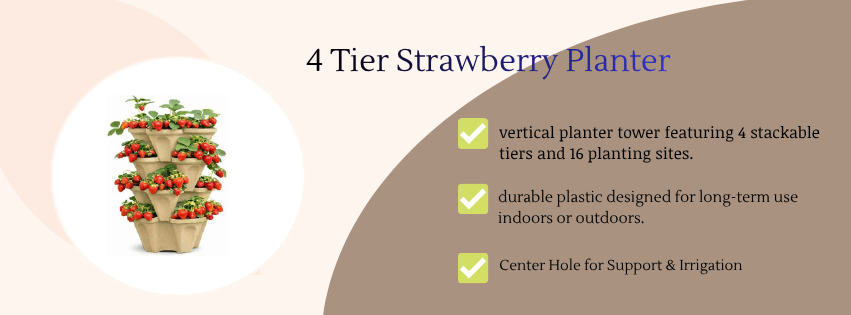
Use vertical planters, balcony rails, or stacked systems.
Cost considerations:
- Budget: plastic containers
- Premium: fabric pots, self-watering towers
Light Requirements (The Sweetness Factor)
- Minimum: 6 hours direct sun
- Ideal: 8–10 hours
- Best direction: south-facing exposure
Why it works:
Sunlight drives sugar accumulation in berries.
How to implement:
In low-light spaces, supplement with LED grow lights positioned 20–30 cm above plants.
Cost considerations:
Grow lights increase setup cost but dramatically improve indoor yields.
Watering Strategy for Continuous Harvests
Frequency:
- Summer: daily or every other day
- Cooler months: 2–3 times weekly
Why it works:
Fluctuating moisture causes fruit drop and poor flowering cycles.
How to implement:
Install drip irrigation or self-watering systems for stability.
Cost considerations:
Drip systems cost more upfront but reduce plant loss and labor long-term.
Pest Prevention & Disease Control
Common threats:
- Aphids
- Spider mites
- Powdery mildew
- Slugs
Why it works:
Healthy airflow and clean foliage reduce fungal spread.
How to implement:
- Neem oil spray every 7–10 days if needed
- Straw mulch to reduce soil splash
- Avoid overhead watering
Cost considerations:
Organic pest control is inexpensive and safer for edible crops.
Beginner Mistakes to Avoid
- Overfertilizing → leafy growth, fewer berries
- Poor drainage → root rot
- Wrong variety for climate → inconsistent harvest
- Irregular watering → fruit splitting
- Crowding plants → small berries
Why it matters:
Everbearing strawberries are responsive plants small mistakes compound quickly.
Budget vs Premium Setup Comparison
Budget setup:
- Plastic pots
- Basic potting soil
- Manual watering
Pros: Low cost
Cons: Less consistent yields
Premium setup:
- Fabric grow bags or raised beds
- High-quality soil blend with compost + perlite
- Drip irrigation system
- Full-spectrum grow lights (if indoor)
Pros: Stable production, higher yield
Cons: Higher upfront investment
FAQ
1. What is the best everbearing strawberry variety overall?
‘Ozark Beauty’ is the most widely recommended due to its adaptability and reliable dual harvest cycles.
2. Which everbearing strawberry is best for containers?
‘Tristar’ and ‘Quinault’ perform best in containers due to compact growth and steady fruiting.
3. Can everbearing strawberries produce fruit all year?
Not continuously year-round outdoors, but they can produce multiple harvests across warm months or year-round indoors with grow lights.
4. Which variety is best for hot climates?
‘Seascape’ is the most heat-tolerant everbearing option.
5. How long do everbearing strawberries produce fruit?
Typically 2–3 years before yield declines significantly.
6. Do everbearing strawberries need full sun?
Yes—at least 6 hours daily, ideally 8–10 hours.
7. What soil pH is best for everbearing strawberries?
Slightly acidic soil between 5.5 and 6.5 is ideal.
Conclusion
Choosing the best everbearing strawberry varieties is the foundation of achieving consistent, flavorful, and extended harvests in any home garden. When paired with proper soil structure, reliable watering systems, adequate sunlight, and climate-appropriate selection, these plants can transform even small balconies or compact raised beds into productive fruiting spaces.The real advantage of everbearing strawberries is stability they reward consistent care with repeated harvests throughout the growing season. With the right setup, you’re not just growing fruit; you’re building a sustainable, long-term supply of fresh strawberries right at home.
