Every product is independently reviewed and selected by our editors. If you buy something through our links, we may earn an affiliate commission at no extra cost to you.
Do indoor grow lights really work, or are they just another gardening myth ! For anyone struggling with low light at home, grow lights sound like the perfect solution promising lush leaves and healthy growth without sunshine. But how effective are they really? Understanding how grow lights work and when to use them can transform your indoor gardening results.
1. The science behind it
Plants use light energy for photosynthesis. Inside a home, even a bright window rarely provides the same intensity or duration as full sun outdoors, especially during short winter days. Grow lights supplement or replace that missing spectrum so plants can keep producing energy.
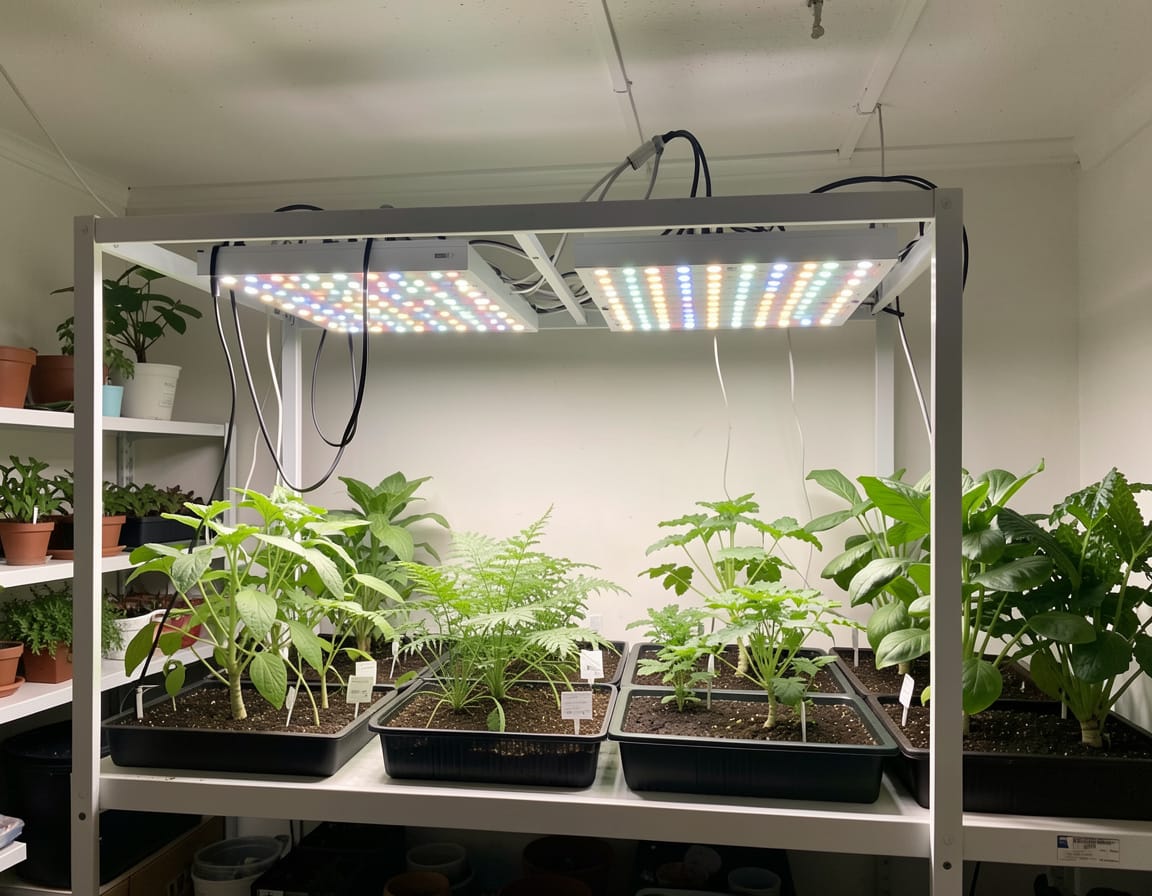
Modern LED grow lights are particularly effective because they emit the specific wavelengths plants use most mainly blue (for leaf growth) and red (for flowering) while producing little heat and using minimal electricity.
2. The right type of grow light
Not all bulbs sold as “grow lights” are equal. The best options for indoor home use are:
| Type | Pros | Cons | Typical Use |
| Full-spectrum LED | Energy-efficient, cool-running, long life | Quality models cost more upfront | Houseplants, tropicals, herbs |
| Fluorescent (T5/T8) | Affordable, good for seedlings | Bulky, need frequent bulb changes | Seed starting, leafy greens |
| Compact fluorescent (CFL) | Fits standard lamps | Less intense for large plants | Small spaces, supplemental light |
| High-intensity discharge (HID) | Very bright | Generates heat, high energy use | Large plant rooms or greenhouses |
For most indoor hibiscus, succulents, and general houseplants, full-spectrum LEDs are the sweet spot.
3. Distance and duration matter
In real homes, placement is what makes or breaks success.
- Distance: Keep lights 12–18 inches above foliage to mimic midday sun. Too close can scorch leaves; too far and growth will stretch.
- Duration: Run lights 12–14 hours per day for light-loving plants like hibiscus, herbs, or citrus; 8–10 hours for lower-light species like pothos or peace lily.
- Consistency: Use a simple timer so the photoperiod stays steady plants rely on that rhythm.
4. Color temperature and spectrum
Look for the term “full-spectrum” or bulbs rated around 5000–6500 Kelvin. This range provides a balanced white light close to natural daylight. You’ll get healthier foliage and more compact, sturdy growth than with older red/blue-only LEDs that cast a purple glow.
5. Realistic expectations
Grow lights don’t perform miracles, but they do prevent decline and leggy growth when sunlight is limited. Under well-chosen lighting, I’ve kept tropical hibiscus blooming through January in Boston, and bay laurel trees actively growing in Seattle apartments with minimal window light. They won’t be quite as vigorous as in full summer sun, but they’ll remain healthy and attractive year-round.
6. Common mistakes I see
- Too little intensity: Decorative “grow bulbs” in table lamps look nice but often provide only a fraction of the needed light.
- Wrong color range: Cheap red/blue panels can distort natural leaf color and strain your eyes.
- Inconsistent schedule: Turning lights on and off irregularly confuses plant rhythms.
- Neglecting other factors: Even perfect lighting won’t compensate for poor watering, cold drafts, or dry air.
7. Sustainable and safe use
Choose Energy Star–rated LEDs where possible; they draw little power and last tens of thousands of hours. Use fixtures made from metal or certified non-toxic plastics many off-brand imports can off-gas or overheat. Always follow ventilation and mounting guidelines, especially in small apartments.
8. Quick setup checklist
For most plant owners:
- Select a full-spectrum LED panel or bulb (~6500 K).
- Mount it 12–18 inches above the tallest leaves.
- Plug it into a timer for 12–14 hours/day.
- Monitor leaf color and growth after 2–3 weeks adjust distance or duration if plants stretch or bleach.
Conclusion
Grow lights absolutely work indoors when used thoughtfully. They don’t just “keep plants alive” they can maintain healthy, compact growth, encourage blooming, and let you grow light-hungry species like hibiscus, tomatoes, or herbs anywhere in your home.
Think of them as sunlight insurance: reliable, controllable, and with today’s efficient LEDs surprisingly affordable to run.
