Every product is independently reviewed and selected by our editors. If you buy something through our links, we may earn an affiliate commission at no extra cost to you.
Thyme is one of the easiest and most rewarding herbs to grow indoors if you respect its Mediterranean roots. In its natural habitat, thyme thrives on rocky hillsides with full sun, lean soil, and excellent drainage. Most indoor failures happen when we give it too much water, too little light, or overly rich soil.
Below is exactly how I advise clients to keep a thriving, fragrant thyme plant in the kitchen or on a sunny windowsill.
1. Start with the Right Variety
For indoor growing, English thyme (Thymus vulgaris) is usually best. It’s compact, flavorful, and adapts well to containers. Other good options:
- Lemon thyme – adds a citrus note; slightly more moisture‑tolerant.
- Creeping thyme – lovely for trailing planters if you have bright light.
Avoid woody, mature garden transplants they often struggle with the transition indoors.
2. Give It Strong Light
In real U.S. homes, most thyme losses happen from inadequate sunlight. Aim for 6–8 hours of direct sun daily.
- South- or west-facing windowsills are ideal.
- If you don’t have that light, use a full‑spectrum LED grow light for 12–14 hours a day.
- Keep lights about 6–12 inches above the plant tops.
Pro Tip: Rotate the pot weekly so all sides receive equal light this prevents lopsided, leggy growth.
3. Use the Right Soil and Pot
Thyme’s roots hate soggy conditions.
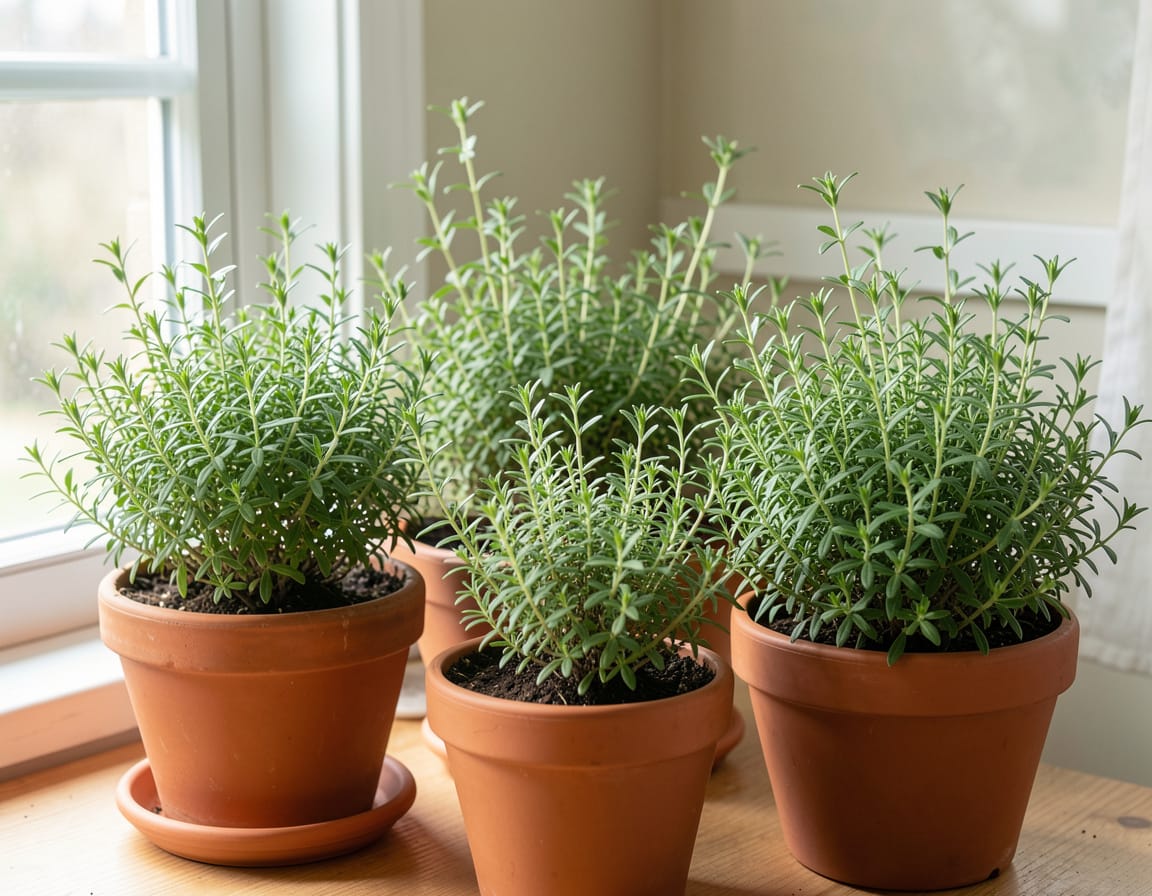
- Pot: Use an unglazed terracotta pot with drainage holes. Terracotta helps wick away excess moisture.
- Soil: Blend equal parts organic potting mix, coarse sand (or perlite), and a little compost. The goal is lean and well‑drained, not rich and heavy.
Avoid moisture‑retention additives like peat moss they hold too much water for Mediterranean herbs.
4. Water Wisely
This is where most people go wrong.
- Water only when the top inch of soil is dry.
- Always empty saucers so roots don’t sit in water.
- Expect to water every 7–10 days in winter; more often if your home is dry or warm.
If leaves start to shrivel, you’ve gone a bit too dry but thyme usually recovers quickly once watered.
5. Maintain Moderate Indoor Conditions
Thyme appreciates what humans like comfortable room temperature and good airflow.
- Temperature: 60–75°F is ideal. Avoid cold drafts or air vents.
- Humidity: Moderate to low humidity is fine. Unlike basil or mint, thyme doesn’t need misting.
- Air circulation: Place near a small fan or open window occasionally to discourage mildew.
6. Feed Sparingly
Thyme grows best in lean soil. Too much fertilizer produces weak, less flavorful growth.
- Feed once a month in spring and summer with a diluted organic liquid fertilizer or compost tea.
- Skip feeding in fall and winter when growth naturally slows.
7. Trim Regularly
Frequent harvesting keeps thyme compact and healthy.
- Snip sprigs just above a leaf node to encourage new branching.
- Never remove more than one‑third of the plant at a time.
- Every few months, lightly prune woody stems to stimulate fresh growth.
Tip from experience: Set a small pair of scissors next to your kitchen thyme so you remember to trim it often while cooking. That small habit keeps the plant vibrant.
8. Refresh the Soil Annually
Each spring, gently remove the top inch of soil and replace it with fresh organic mix plus a handful of compost. Over time, salts from water can build up and stress the roots this quick refresh corrects it without repotting the entire plant.
9. Prevent Common Problems
| Problem | Likely Cause | Expert Fix |
| Yellow, dropping leaves | Overwatering | Let soil dry thoroughly; ensure pot drains freely |
| Leggy, weak stems | Too little light | Move to brighter spot or add grow light |
| No scent or flavor | Too much fertilizer | Reduce feeding; allow soil to lean out |
| White fuzzy mold | Poor airflow or wet soil | Improve ventilation; trim crowded stems |
10. Seasonal Adjustments
- Winter: Move thyme as close to natural light as possible or use grow lights. Water less.
- Spring/Summer: It can spend time outdoors on a balcony or patio once nights stay above 50°F. Acclimate gradually by giving it partial shade for a few days before full sun.
After outdoor summering, inspect for pests (aphids, spider mites) before bringing it back indoors.
11. Organic, Sustainable Practices
- Reuse trimmings: Dry extra sprigs upside down in a paper bag for cooking or homemade cleaning blends.
- Avoid synthetic fertilizers or pesticides: A healthy thyme plant rarely needs them.
- Compost any dead leaves or old soil: Keeps the growing cycle sustainable.
12. When to Replace or Propagate
Even well‑cared‑for thyme becomes woody after two to three years. Refresh your supply by taking cuttings:
- Snip a 3–4‑inch soft stem.
- Remove lower leaves.
- Root in water or moist perlite‑based mix for 2–3 weeks.
- Transplant to a new pot.
That’s how I maintain continuous, organic thyme in my own kitchen without ever buying new starts.
Final Expert Thought
Keeping thyme alive indoors isn’t about pampering it’s about restraint: less water, more light, and moderate conditions. When you mimic the bright, dry hillside it evolved on, thyme rewards you with vigorous green growth and that unmistakable aroma that makes even a simple meal taste fresher.
