Every product is independently reviewed and selected by our editors. If you buy something through our links, we may earn an affiliate commission at no extra cost to you.
If you’ve ever planted tulip bulbs and wondered why nothing seems to happen for months, you’re not alone. Many beginners expect tulips to sprout quickly, but tulip growth is slow, seasonal, and highly temperature‑dependent. In my own small backyard beds and balcony containers, tulips have consistently followed the same pattern: almost nothing above the soil for months, then sudden growth as soon as temperatures warm.
This article breaks down how long a tulip takes to grow, why the timeline looks the way it does, and what you can do to keep the bulbs healthy while you wait. If you’re planting in a pot, terrace planter, or compact garden, the cues and troubleshooting steps here are especially helpful.
Why Tulips Take This Long to Grow
Tulips are cold‑climate bulbs. Their growth depends on three biological processes:
1. Cold Stratification (Chill Time)
Tulip bulbs need 12–16 weeks of cold temperatures (35–48°F / 1–9°C) before they can sprout. Without this chill period, they simply sit in the soil.
In warm climates (or indoors), I’ve seen bulbs refuse to bloom entirely unless pre‑chilled.
2. Root Establishment
Once planted in fall, tulips grow roots underground for several weeks. They won’t produce shoots until winter has fully passed.
3. Spring Temperature Trigger
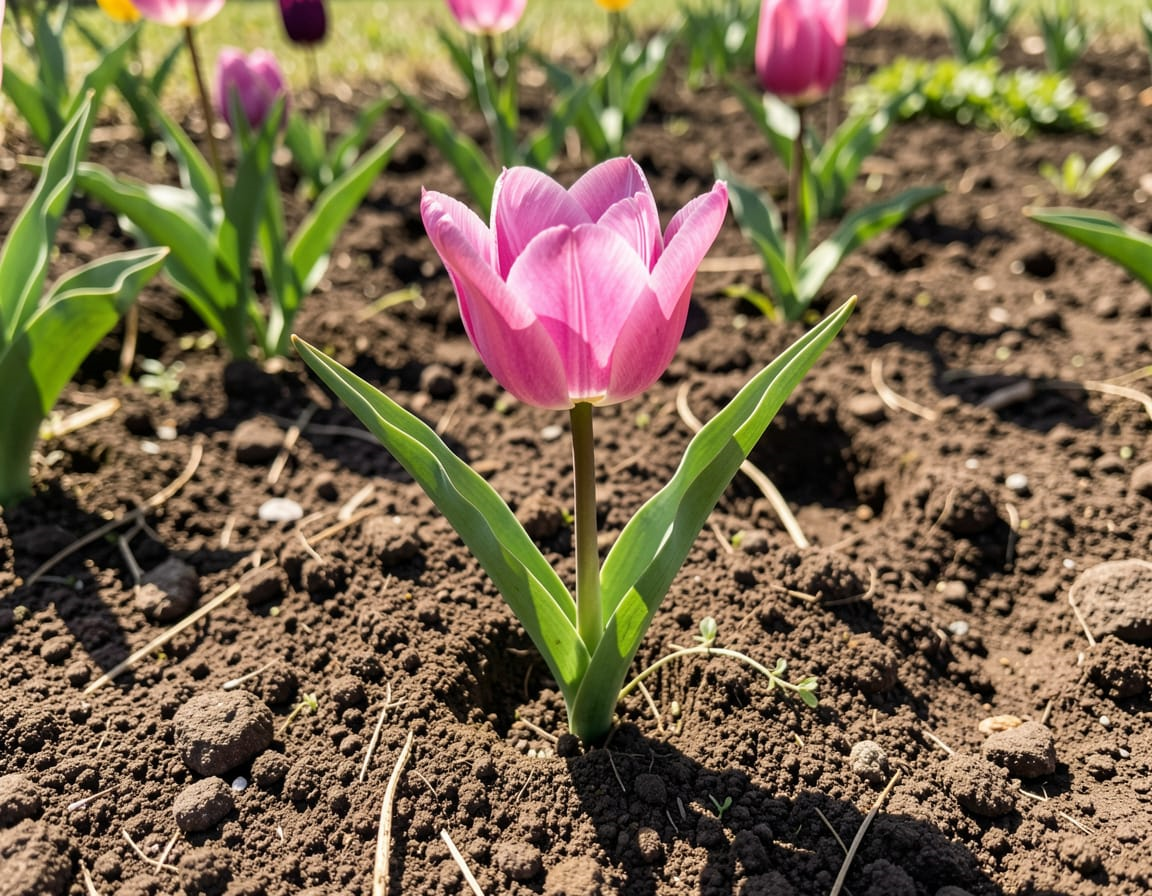
As soil warms above 50°F (10°C), the bulb “wakes up,” sending up green shoots almost overnight. This is why tulips seem slow for months, then grow incredibly fast in spring.
What Materials You’ll Need
- Healthy tulip bulbs (firm, not soft or moldy)
- Well‑draining soil (avoid heavy clay)
- Garden bed or pot with drainage holes
- Compost or organic bulb fertilizer
- Mulch (optional but helpful for winter insulation)
Eco-friendly tip: Use natural compost instead of synthetic fertilizers; tulips do well with gentle nutrition.
Step-by-Step: How Long Tulips Take to Grow from Planting to Bloom
1. Planting (Autumn)
Timeline: Early fall to mid fall
- Plant bulbs 6–8 inches deep.
- Water once after planting.
- No visible growth will occur above the soil.
Real‑garden note: In containers, I often see root growth faster because pots warm and cool quicker than ground soil.
2. Root Development (4–8 Weeks After Planting)
Timeline: Late fall Roots establish during cool weather. You won’t see shoots yet.
Visual sign: If you gently tug a planted bulb after 3–4 weeks, it should resist—this means roots have formed. (Don’t pull too hard.)
3. Winter Dormancy (8–16 Weeks After Planting)
Timeline: Winter Bulbs are underground, fully dormant but alive.
Environmental requirement: 12–16 weeks of cold temperatures. If you live in a warm climate (zones 8–11), buy pre-chilled bulbs.
4. Early Growth (Late Winter to Early Spring)
Timeline: Shoots appear 2–3 weeks after temperatures rise Once the soil warms, tulips emerge quickly.
Typical speed:
- 1–2 inches of growth in a few days
- Full leaves and stems in 2–3 weeks
My observation: Shoots in pots emerge slightly earlier than those planted in the ground because containers warm faster.
5. Blooming (Mid to Late Spring)
Timeline: 14–20+ weeks after planting Most tulips bloom March–May, depending on climate.
Bloom lasts: 1–3 weeks per flower Wind and heat shorten bloom time; partial shade in the afternoon can extend it.
Summary Timeline: How Long Tulips Take to Grow
- Rooting: 4–8 weeks
- Chill/dormancy: 12–16 weeks
- Spring growth to bloom: 2–5 weeks Total: 14–20+ weeks from planting to flowering
Pro Tips & Best Practices
- Plant early. Tulips planted too late may not bloom the first year.
- Use well‑draining soil. Tulip bulbs rot easily in soggy spots especially in pots.
- Mulch lightly. Helps stabilize winter temperatures.
- Avoid overwatering in winter. The bulb is dormant and doesn’t need moisture.
- Rotate tulip locations. Soil-borne diseases can accumulate.
Common Mistakes to Avoid
- Planting bulbs too shallow (they’ll flop or freeze)
- Using soil that stays wet
- Expecting tulips planted in spring to bloom (they almost never do)
- Digging up bulbs too early, thinking they failed
- Overfertilizing containers
FAQ: Real Questions Gardeners Ask
How long do tulip bulbs take to sprout after planting?
Usually 4–5 months because they need winter chill first. You won’t see sprouts until spring.
Why are my tulips not growing after winter?
Common causes include:
- Soil too wet and bulbs rotted
- Not enough winter chill
- Rodents ate the bulbs
- Bulbs planted too shallow or too deep
Can I speed up tulip growth?
Not significantly. The chill period and spring cues are required, but you can:
- Use pre-chilled bulbs
- Plant in full sun
- Use fast-draining soil
How long do tulips last once they bloom?
1–3 weeks depending on temperature. Cool, mild spring weather gives the longest blooms.
Do tulips grow faster in pots or in the ground?
In my experience, pots warm up sooner, so shoots appear earlier but potted tulips dry out faster.
When NOT to Use This Method
Avoid planting tulips directly in:
- Zones 8–11 without pre-chilled bulbs
- Waterlogged soil or heavy clay
- Locations with full shade
- Summer heat (bulbs will fail)
If you live in a warm climate, pre-chill bulbs for 10–12 weeks in the refrigerator.
Alternative Methods for Faster or More Reliable Tulip Growth
1. Pre-Chilled Bulbs
- Best for warm climates
- Guaranteed sprouting
2. Forcing Tulips Indoors
- Faster blooms (8–12 weeks)
- Requires controlled conditions
3. Planting in Bulb Crates or Baskets
- Easier drainage
- Protects from rodents
Each method suits different gardeners. Balcony gardeners often prefer pots or baskets because of drainage and mobility.
Conclusion
So, how long does a tulip take to grow? From planting to flowering, expect 14–20+ weeks, most of that spent underground developing roots and completing its winter chill.
Tulips reward patience once the soil warms, they grow rapidly and bloom beautifully. With the right planting depth, good drainage, and proper timing, even a beginner can enjoy reliable tulip blooms in a home garden, small yard, terrace planter, or balcony pot.
Take it slowly, plant thoughtfully, and let the bulbs follow their natural rhythm. Your spring display will be worth the wait.
