Every product is independently reviewed and selected by our editors. If you buy something through our links, we may earn an affiliate commission at no extra cost to you.
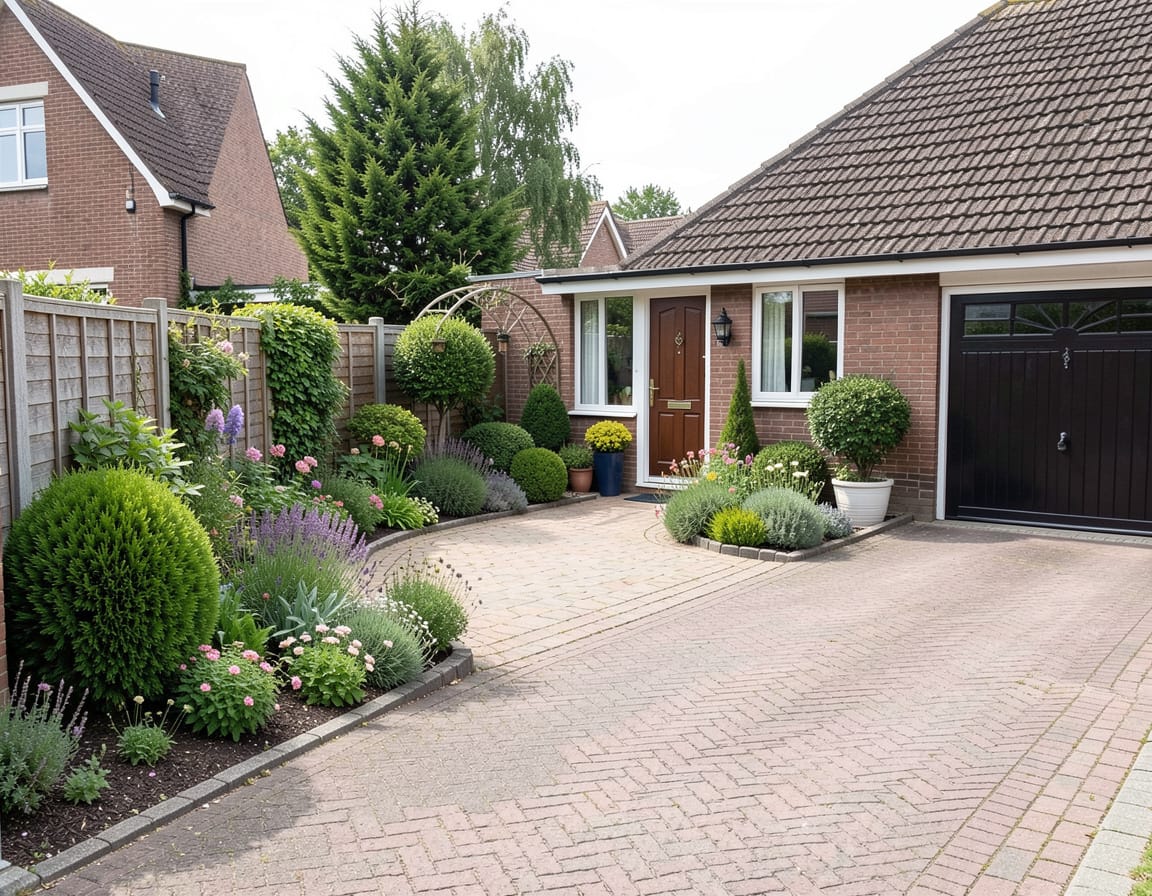
If you have a small front garden with a driveway, you’ve probably felt the common frustration: the car takes up most of the space, leaving little room for plants, privacy, or curb appeal. I’ve worked with several compact front gardens over the years some barely the size of a large rug and the challenge is always the same: how do you make a driveway look like part of a garden instead of a parking spot?
The good news is that even the smallest front garden can feel lush, tidy, and welcoming with smart layout choices. Most of the best solutions don’t require major construction just an understanding of plant behavior, traffic flow, and how to work with tight spaces.
Why These Small Front Garden Ideas Work
In compact front gardens, you’re balancing three things:
- Movement: cars, footpaths, bin access
- Plant survival: limited soil, heat from paving, road dust
- Aesthetics: enough greenery to soften all the hard surfaces
The ideas below work because they rely on:
- Vertical space instead of ground space
- Narrow, durable plantings that tolerate heat from driveways
- Low-maintenance designs that won’t interfere with car doors or visibility
- Smart soil preparation to counter poor, compacted ground often found beside driveways
In real gardens, this combination delivers the biggest impact with the least fuss.
What Materials You’ll Need
- Narrow planting containers or raised beds
- Gravel, mulch, or permeable groundcovers
- Hardy, drought-tolerant plants (lavender, grasses, rosemary, boxwood, hebe, etc.)
- Trellis panels or wall-mounted planters
- Simple edging (metal, brick, timber)
- Basic tools: hand trowel, pruners, watering can or hose
- Optional: solar lights, small boulders, or decorative pots
Step-by-Step Ideas for Transforming a Small Front Garden With a Driveway
1. Create a Slim Border Along the Driveway
Even a 20–30 cm strip can transform the whole entrance.
How to do it:
- Edge the driveway with metal or brick edging to define the planting line.
- Add premium compost to improve the typically compacted soil near driveways.
- Plant heat-tolerant species such as dwarf grasses, lavender, or compact hebes.
Best season: spring or early autumn for stress-free establishment.
2. Use Vertical Planting to Free Up Ground Space
When you can’t go wide, go up.
How to do it:
- Install a trellis on the house wall or fence beside the driveway.
- Plant climbers like star jasmine, clematis, or honeysuckle in a narrow bed.
- Water regularly during the first season; walls reflect heat and dry soil faster.
3. Add Statement Pots Without Blocking Car Doors
Large pots work well if placed intentionally.
Placement tips from real use:
- Put them where car doors don’t swing open.
- Use frost-proof containers to avoid cracking near paved areas.
- Choose structural plants such as dwarf olives, bay trees, or compact conifers.
4. Replace Hard Edges With Gravel or Permeable Groundcover
Gravel softens the look and improves drainage.
Steps:
- Remove a narrow strip of paving where practical.
- Add a weed membrane.
- Top with decorative gravel (warm-toned gravel suits most driveways).
5. Create a Clear, Attractive Path to the Front Door
A simple path adds flow and visually divides the space.
Options:
- Stepping stones set in gravel
- A slim paver walkway
- A low-maintenance groundcover like creeping thyme between stones
6. Hide Bins or Meters With Living Screens
Practical, but greenery makes it look intentional.
Options that I’ve used successfully:
- Bamboo in pots (choose clumping types only)
- Trellised evergreen climbers
- A narrow hedge of pittosporum or lonicera nitida
7. Add Subtle Solar Lighting
Small front gardens look bigger when the driveway edges and plants are softly lit.
Choose warm white lights rather than cool-toned for the most natural look.
Pro Tips & Best Practices
- Choose plants that can tolerate radiated heat from concrete or asphalt.
- Keep shrubs and climbers trimmed to prevent visibility issues while driving.
- Add mulch to reduce the watering needs of narrow borders.
- Use evergreen plants for year-round structure important in small spaces.
- Consider your parking habits; plant only where you’re sure tires won’t creep.
Common Beginner Mistakes to Avoid
- Planting too close to the driveway heat scorch is real.
- Using oversized shrubs that outgrow the space within a year.
- Forgetting to test car door clearance before placing pots.
- Watering shallowly; narrow borders dry out faster than typical beds.
FAQ
1. How can I make my small front garden with driveway look bigger? Use vertical planting, narrow borders, and large statement pots instead of many small ones. Keeping the ground layout simple helps the space feel open.
2. What plants survive best next to a driveway? Lavender, rosemary, boxwood, ornamental grasses, hebes, and compact conifers handle heat and reflected light extremely well.
3. How do I stop soil from drying out near the driveway? Add organic matter, mulch heavily, and choose drought-resistant plants. Driveway edges heat up more than you expect.
4. Can I plant climbers if my front garden has little soil? Yes use narrow raised beds or deep containers with a strong trellis. Many climbers thrive in confined root spaces.
5. How close to the driveway can I plant? Generally, keep shrubs 20–30 cm away from the edge to avoid heat damage and accidental tire contact.
When NOT to Use These Methods
- If your driveway is too narrow to safely open car doors
- If you live in extremely cold or extremely hot climates without selecting the right species
- If visibility is limited and tall plants could block sightlines
- If drainage is very poor plants will struggle beside hard surfaces unless soil is amended
Alternative Approaches
- Using only container gardening if soil is poor
- Installing artificial turf (low maintenance, but less eco-friendly)
- Creating a minimalist gravel front garden with sculptural plants
- Replacing part of the driveway with permeable pavers to expand planting zones
Each approach has pros and cons, but containers and narrow borders are usually the most beginner-friendly.
Conclusion
Even with limited space, you can transform a small front garden with a driveway into a green, welcoming entrance. The key is smart plant selection, vertical growth, and careful placement that works with your daily movements not against them. Start small, watch how the space behaves through the seasons, and adjust as you go. With a few intentional choices, your driveway can look far more like part of the garden than a parking spot.
