Every product is independently reviewed and selected by our editors. If you buy something through our links, we may earn an affiliate commission at no extra cost to you.
If you’ve ever tried planning landscaping budget small garden ideas, you’ve probably hit the same wall most small‑space gardeners face: everything looks beautiful on Pinterest, but the real price tag is far from “budget.” I’ve been there with my own tiny backyard and a narrow balcony garden limited space, limited money, and big hopes.
What I’ve learned through real trial and error is this: small gardens don’t need expensive landscaping to look intentional and lush. They need smart layout choices, the right plant combinations, and practical materials that stretch your budget without looking cheap.
The ideas below come from hands-on use in compact spaces projects I’ve tried myself or helped friends with. Everything is beginner-friendly, low-cost, and doable without heavy tools.
Why These Budget Landscaping Ideas Work
In small gardens, every feature has to pull double duty: beauty, function, and flow. Budget-friendly landscaping succeeds when it focuses on:
• Vertical use of space instead of spreading outward • Materials you can source locally (stone, mulch, containers, branches) • Plants that grow predictably in tight areas • Visual tricks layering, repeated plants, simple color palettes • Multi-purpose items that save money (e.g., timber planks as benches + edging)
Small gardens respond well to small adjustments. A bit of structure a border, a path, a raised planter makes the whole space feel designed rather than cluttered.
What Material’s You’ll Need
You don’t need everything on this list choose based on your design.
• Affordable containers (terracotta, recycled buckets, grow bags) • Mulch (wood chips, dry leaves, or compost) • Bags of compact soil mix or compost • Paving stones, gravel, or bricks (new or reclaimed) • Pruners and a hand trowel • Budget-friendly plants: herbs, dwarf shrubs, compact perennials • Reclaimed wood or pallets • Vertical garden racks or wall pots • Watering can or hose with a gentle setting
Eco-friendly alternatives: • Coconut coir instead of peat • Leaf mulch from your own yard • Reused containers from thrift stores • Native plants requiring less water and care
Step-by-Step: Landscaping a Small Garden on a Budget
1. Start With a Simple Layout
Before buying anything, stand in your garden and decide on two things: • A focal point • A walking line or flow
In tiny spaces, even a few pots can feel chaotic without a plan. Choose one main feature: a container grouping, a small raised bed, or a seating area.
Tip: Map it using chalk or rope you’ll avoid unnecessary purchases.
2. Build Height With Vertical Elements
This is the most cost-effective way to expand a small garden: • Use pallet walls for climbing plants • Install inexpensive brackets and shelf planks for pots • Add bamboo poles for beans, cucumbers, or jasmine
In my terrace garden, a single vertical rack doubled my planting space overnight.
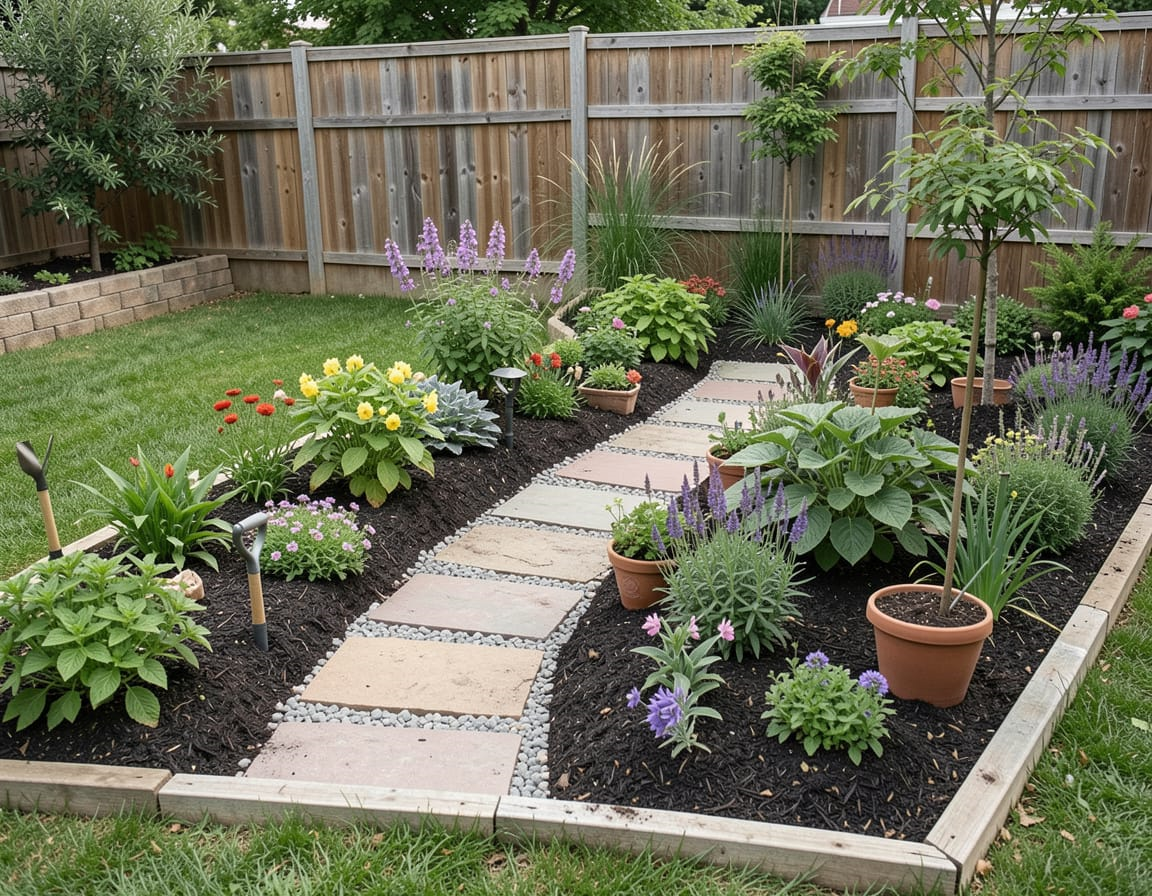
3. Use Mulch to Instantly Improve Appearance
Even a basic soil bed looks polished with mulch, and it helps retain moisture. Natural and cheap options: • Shredded leaves • Pine needles • Wood chips from a local arborist (often free)
Spread 2–3 cm to keep weeds down.
4. Create a Simple Garden Path
You can build a path with reclaimed materials: • Brick offcuts • Gravel • Stepping stones • Flat rocks from landscaping suppliers
A path makes any small garden feel larger because it creates structure.
5. Group Containers for Impact
Single pots look scattered. Instead: • Cluster 3–5 containers of varied heights • Place taller plants at the back • Use the group as your focal point
This trick works magic on balconies and patios.
6. Add Low-Cost Edging
Border the bed with: • Bricks laid on their sides • Timber offcuts • Rocks • Old roof tiles
This instantly defines the space and keeps soil from spilling during heavy watering.
7. Mix High-Impact, Low-Cost Plants
Budget landscaping succeeds when plant choices are smart. The most reliable small-garden plants include: • Herbs (rosemary, mint, basil, thyme) • Dwarf lemon or lime trees in containers • Compact grasses • Ferns for shade • Succulents for dry areas • Marigolds, zinnias, and calendula for easy color
Choose 3–4 types and repeat them this makes the space look unified.
8. Add a Seating Corner
A simple bench or stool transforms a small garden into a livable space. Budget options: • Cement blocks + a wooden plank • A single metal bistro chair • A pallet bench
Always check for wood splinters or loose nails if kids use the space.
9. Use Mirrors to Create Depth (Optional)
Outdoor-safe mirror tiles can make narrow spaces feel twice as wide. Use sparingly and always secure firmly to avoid falling hazards.
Pro Tips & Best Practices
• Keep your plant palette small; too many varieties make small gardens look messy. • Use lighter-colored gravel or pots to brighten shaded balconies. • In hot climates, group shade-loving plants under taller containers to prevent sunburn. • Check drainage small gardens often have compacted soil or cement surfaces. • Never overcrowd plants; airflow prevents mildew in tight areas. • Reuse pruned branches as plant stakes.
FAQ
1. How can I landscape a very small garden without it looking cluttered? Use vertical structures, limit plant varieties, and create one clear focal point.
2. What are the cheapest landscaping materials for small gardens? Mulch, reclaimed wood, gravel, secondhand pots, and pallet boards.
3. Can I make a small garden look bigger on a tight budget? Yes use mirrors, taller vertical plants, narrow paths, and repeated plant colors.
4. What plants are best for budget-friendly small gardens? Herbs, compact shrubs, succulents, and hardy perennials.
5. How often should I water a small garden? Usually every 2–3 days, but adjust based on pot size, weather, and soil moisture.
6. Can I landscape a rented home’s garden without permanent changes? Absolutely use pots, movable vertical racks, and loose gravel paths.
When NOT to Use These Ideas
Avoid heavy vertical installations or pallet walls if your balcony railings or surfaces can’t handle weight. Don’t mulch with pine needles if you’re growing plants that dislike acidic soil. Skip mirrors in areas with intense sunlight—they can scorch delicate foliage.
Alternative Approaches
• Minimalist zen garden Pros: calming, low-maintenance Cons: requires clean lines and discipline
• Raised-bed gardening Pros: great for vegetables Cons: initial setup cost higher
• All-container garden Pros: portable, renter-friendly Cons: needs more frequent watering
Choose the style that matches your space, sunlight, and time commitment.
Conclusion
Transforming a small space with landscaping budget small garden ideas isn’t about buying the fanciest materials it’s about thoughtful layout, vertical height, and plant choices that thrive in compact areas. With just a few well-planned moves, even a tight balcony or narrow backyard can feel intentional, relaxing, and surprisingly lush.
Start small, observe how your plants respond, and adjust slowly. Real gardens are always changing and that’s part of the joy.
