Every product is independently reviewed and selected by our editors. If you buy something through our links, we may earn an affiliate commission at no extra cost to you.
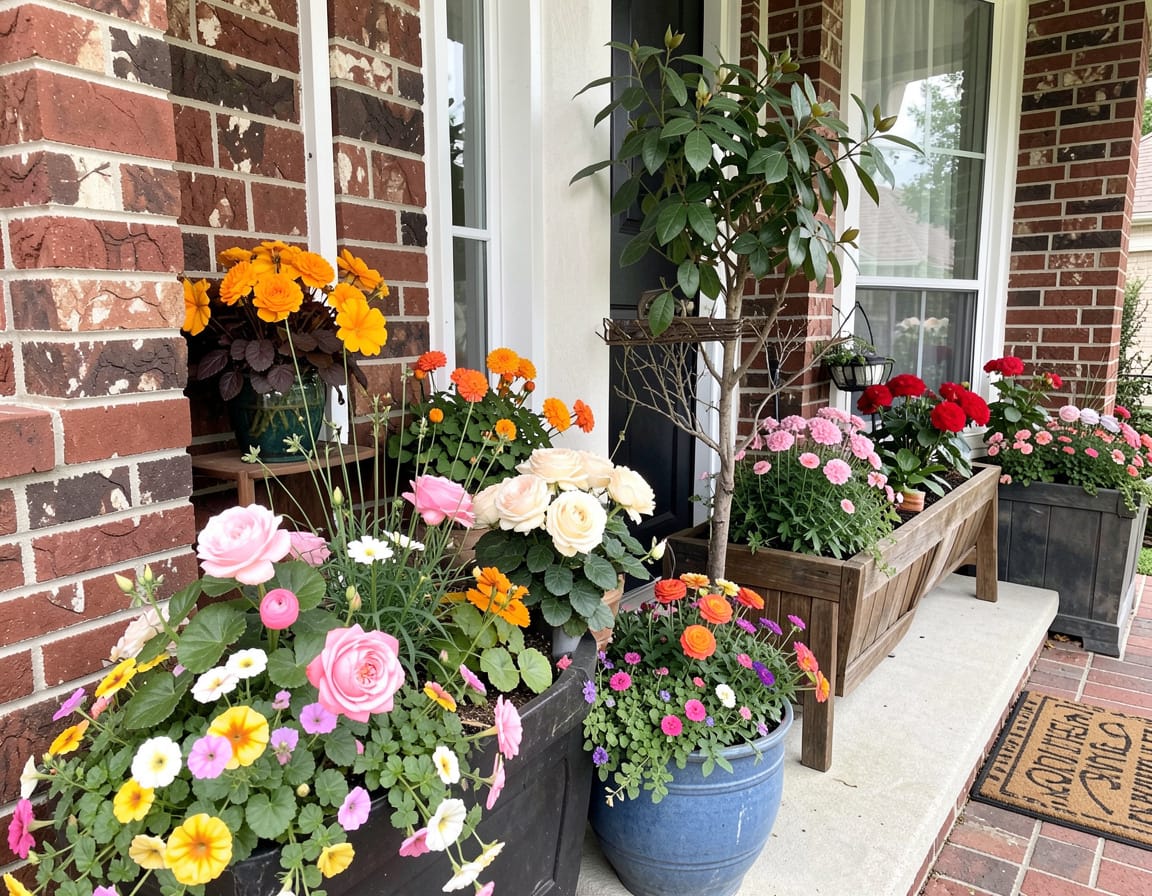
If your front porch feels a little plain, the fastest way to warm it up is with the right flower planters. But many gardeners especially beginners struggle with front porch planters that dry out too fast, topple in wind, or look sparse after a few weeks. I’ve dealt with all of these in my own small porch garden, and most problems come down to planter choice, placement, and plant combinations.
In this guide, I’ll walk you through practical, real-world flower planter ideas for a front porch—the kind that hold up to weather, stay full all season, and don’t require constant fussing.
Why These Front Porch Planter Ideas Work
Front porches usually create tricky growing conditions:
• Limited or uneven sunlight • Heat radiating from walls and steps • Wind tunnels near entryways • Shade pockets that stay damp
The planter ideas below are chosen because they solve these challenges with:
• The right pot sizes for long-lasting moisture • Resilient plant combinations suited to porch microclimates • Designs that stay stable in wind • Layered planting that keeps containers looking full from spring to fall
I’ve used variations of these designs on my own porch for over a decade they’re reliable, attractive, and low-maintenance.
What You’ll Need
• Sturdy outdoor planters (ceramic, heavy resin, or wood) • High-quality potting mix (not garden soil) • Slow-release organic fertilizer • A watering can with a narrow spout • Outdoor-safe saucers (if water drips are an issue) • Shade-tolerant or sun-loving flowers based on porch light • Optional: coco liners, gravel, or mulch for moisture retention
Budget-friendly alternatives:
• Upcycled buckets with drainage holes • Secondhand ceramic pots • Plastic pots placed inside decorative covers
Eco-friendly options:
• Coconut coir liners • Organic compost • Reused containers or reclaimed wood boxes
Step-by-Step Front Porch Planter Ideas That Always Look Good
1. The “Thriller, Filler, Spiller” Porch Planter (Most Reliable)
This classic combo works on almost any porch.
- Choose a pot at least 14–16 inches wide to avoid constant watering.
- Add a tall “thriller” plant in the center (e.g., decorative grasses, canna lilies, or dwarf shrubs).
- Surround with “filler” plants like petunias, begonias, or coleus.
- Add trailing “spiller” flowers such as sweet potato vine, ivy geraniums, or creeping jenny.
Works best for: Part sun to full sun porches.
Visual cues: • Aim for a full, mound-like look no empty soil visible once plants grow in.
2. Classic Symmetrical Planters for the Front Door
Perfect for a clean, welcoming entryway.
- Place matching tall planters on each side of the door.
- Use upright evergreens (dwarf arborvitae or boxwood) for year-round structure.
- Add seasonal flowers around the base pansies in spring, impatiens in summer, mums in fall.
Why it works: Evergreen anchors create stability, and you can refresh the flowers seasonally without redoing the whole planter.
3. Shady Porch Begonia + Fern Combo (Low Maintenance)
If your porch never gets full sun, use plants that thrive in dappled light.
Best mix: • Thriller: Kimberly Queen fern • Filler: Wax begonias or tuberous begonias • Spiller: English ivy or creeping jenny
Practical note: Ferns dry out at the tips quickly in wind, so place pots closer to the wall or a column for shelter.
4. Rustic Wooden Crate Garden (Great for Small Porches)
- Line a wooden crate with landscape fabric.
- Fill with lightweight potting mix.
- Plant compact flowers like marigolds, alyssum, or dwarf zinnias.
This works well because the shallow, wide container makes the display look instantly full.
5. Tiered Planters for Vertical Color
If space is tight, stack planters or use a stepped stand.
Tips from experience: • Put the thirstiest plants on the bottom tier because they collect runoff. • Trailing varieties like trailing verbena or bacopa soften hard edges beautifully.
6. Monochromatic Color Blocks (Simple but Striking)
Choose one color theme like all white or all purple and mix different flower shapes.
Easy combos: • White impatiens + white lobelia + dusty miller • Purple petunias + lavender + purple fountain grass
This technique makes even a small porch look intentional and elegant.
7. Hanging Porch Planters with Trailing Blooms
If your porch has overhead beams or a roof:
• Use coco-lined baskets for better drainage. • Choose plants like trailing petunias, calibrachoa, lobelia, or fuchsias (for shade).
Real-world note: Hanging planters dry out much faster water daily in summer or use a water-retaining additive like coconut coir.
8. Herb and Flower Combo Planters (Pretty + Useful)
Try mixing:
• Thyme or oregano (spillers) • Dwarf basil or parsley (fillers) • Marigolds or calendula (thrillers or accents)
These smell great at the entry and help repel insects naturally.
Pro Tips and Best Practices
• Choose larger containers small pots dry out too quickly on warm porches. • Always use potting mix, not garden soil, to prevent compaction. • Add mulch on top of the soil to slow moisture loss. • Water early in the morning so plants absorb moisture before heat builds. • Rotate pots every two weeks so all sides grow evenly. • If you use dark pots, watch for overheating roots can scorch in summer.
Common beginner mistakes: • Choosing sun-loving flowers for a shady porch (or vice versa). • Underestimating wind lightweight plastic pots tip over easily. • Overcrowding plants tightly from the start leave room for growth.
FAQ
Why do my front porch flowers wilt even though I water them?
Porch containers often dry out faster due to wind. Use larger pots, add mulch, and water deeply rather than frequently.
Can I grow flowers on a completely shaded porch?
Yes use begonias, impatiens, coleus, ferns, and ivy. These tolerate shade well.
How often should I water front porch planters?
Usually 3–4 times per week in warm months. Daily if you use hanging baskets or small pots.
What flowers last longest on a hot, sunny porch?
Petunias, lantana, vinca, marigolds, and dwarf grasses handle heat well.
Can I mix different flower types in one planter?
Absolutely. Use the thriller–filler–spiller method for a balanced look.
Why do my planters look sparse after a month?
Small-rooted plants may struggle if soil quality is poor. Refresh with compost and use slow-release fertilizer.
When NOT to Use These Front Porch Planter Ideas
Avoid large mixed planters if: • Your porch gets extreme midday sun with reflected heat (choose drought-tolerant plants only). • You can’t water often mixed containers need consistent moisture. • Your area has very strong winds (choose heavy ceramic pots or anchored boxes).
Alternative Approaches
• Self-watering planters: Great for busy gardeners, but plants can grow leggy if water reservoirs stay too full. • Artificial flower planters: Low-maintenance, but look less natural up close. • Single-species pots: Easier for beginners and still very attractive, especially with bold plants like geraniums or mandevilla.
Each method works you just choose based on time, climate, and watering ability.
Conclusion
Creating beautiful flower planter ideas for your front porch doesn’t require complicated designs just the right plants, pots, and placement. Start with a few solid planters, pick flowers that match your porch’s light levels, and build combinations that stay full and healthy through the season.
With patience, good soil, and a little observation, your porch can become one of the most welcoming parts of your home all with plants that truly thrive, not just survive.
If you’d like, I can also create plant lists tailored to your porch’s exact light and climate.
