Every product is independently reviewed and selected by our editors. If you buy something through our links, we may earn an affiliate commission at no extra cost to you.
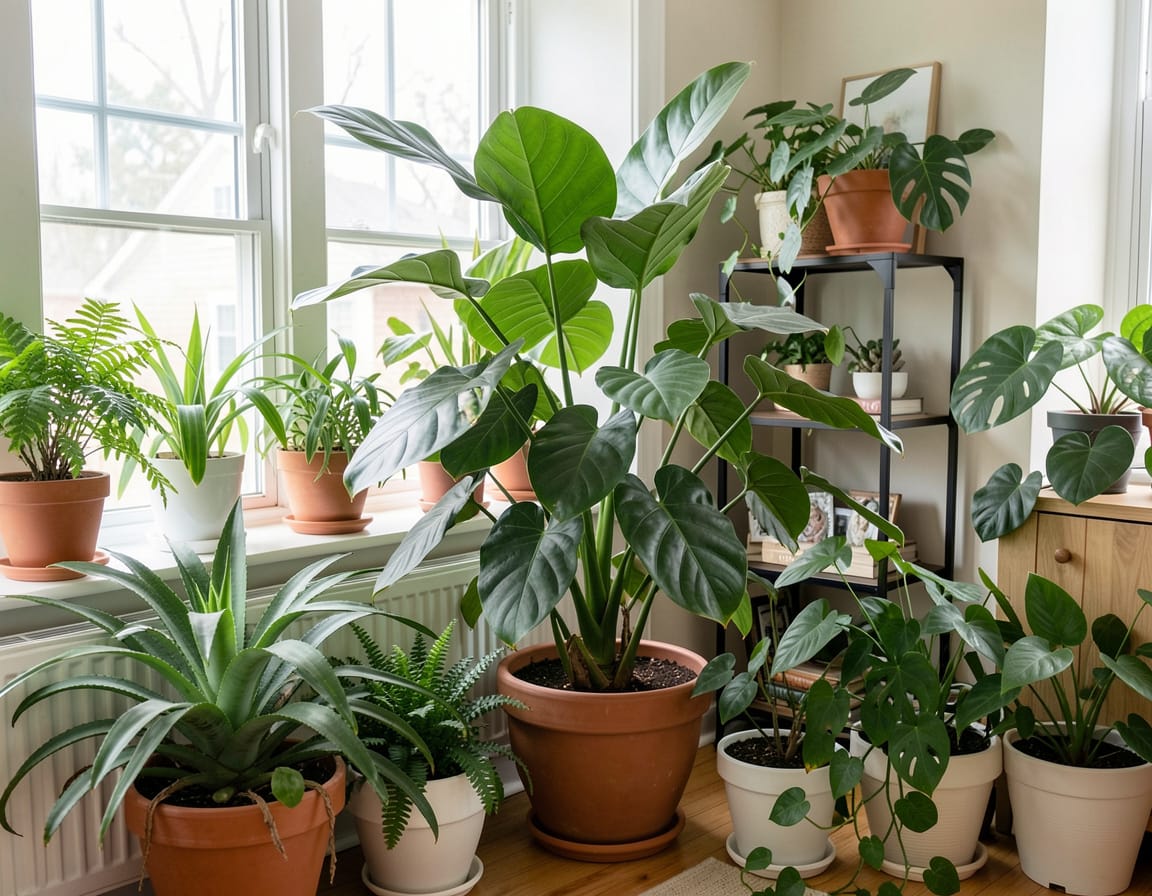
If you’ve ever dreamed of having a big, statement-making indoor plant but worry about keeping it alive, you’re not alone. Many beginners start with small pots because they assume large plants demand constant care. In reality, a few easiest large indoor plants to take care of are far more forgiving than tiny fussy houseplants.
Over the years in my own home and terrace setups, I’ve noticed that large, established plants bounce back from missed waterings, uneven light, and temperature swings better than small ones. The plants below are the ones that have survived my early mistakes overwatering, moving them around too much, inconsistent light and still look stunning today.
This guide walks you through the best beginner-safe large indoor plants, what makes them easy, and the exact care routine I use to keep them thriving.
Why Large Indoor Plants Can Actually Be Easier
Here’s something most beginners don’t realize: bigger plants usually have bigger root systems, and that gives them much more resilience.
In simple terms: • They hold more water in their soil, so they don’t dry out as quickly. • They tolerate small watering mistakes. • Their leaves show early warning signs, giving you time to correct issues. • They handle temperature and humidity fluctuations much better than small plants.
For example, my large snake plant on the balcony-turned indoor corner has survived a week-long trip with zero watering while the smaller herbs dried up. Big plants simply have more stored energy.
The 7 Easiest Large Indoor Plants to Take Care Of
All of these grow tall, look impressive, and require very little daily work.
1. Snake Plant (Sansevieria Laurentii or Zeylanica)
Why it’s beginner-safe: This is one of the most forgiving large plants you can grow. Mine sits in a low-light hallway corner and gets watered once every 2–3 weeks.
Growing conditions: • Light: Low to bright indirect • Water: Only when soil is completely dry • Key sign it needs water: Leaves wrinkle slightly or soil pulls away from pot edges • Height: 3–4 feet indoors
Hands-on tip: Use a tall, heavy pot large snake plants can get top-heavy and lean.
2. ZZ Plant (Zamioculcas zamiifolia)
Why it’s easy: This plant is practically unkillable. It stores water in tuber-like roots, so it tolerates neglect.
Growing conditions: • Light: Low to medium; avoid direct sun • Water: Every 2–4 weeks • Height: Up to 4 feet indoors
Hands-on tip: If the leaves get mushy, you’re overwatering. These prefer dry soil.
3. Monstera Deliciosa
Why it’s beginner-friendly: Known as the “Swiss cheese plant,” Monstera grows quickly even with minimal care. My Monstera doubled in size one year with only occasional feeding and consistent bright shade.
Growing conditions: • Light: Bright indirect • Water: Weekly or when top 2–3 inches of soil dry • Height: 4–8 feet indoors
Hands-on tip: Monsteras grow toward light rotate the pot monthly for even growth.
4. Corn Plant (Dracaena fragrans)
Why it’s easy: Tall, slim, and tolerant of dim living rooms. Great for renters or offices with inconsistent lighting.
Growing conditions: • Light: Low to medium • Water: Every 10–14 days • Height: 5–7 feet indoors
Hands-on tip: Tap water with fluoride can cause leaf tips to brown. If that happens, switch to filtered or let tap water sit overnight before using.
5. Rubber Plant (Ficus elastica)
Why it’s low-maintenance: This plant can handle bright light, dry air, and weeks without water. Once established, it grows upright and tall with minimal fuss.
Growing conditions: • Light: Medium to bright • Water: Every 1–2 weeks • Height: 6–10 feet indoors
Hands-on tip: Dust the leaves monthly. Clean leaves = faster growth.
6. Parlor Palm (Chamaedorea elegans)
Why it’s simple: Thrives even in low light and low humidity. My parlor palm has survived two winters near a drafty window.
Growing conditions: • Light: Low to bright indirect • Water: Weekly or when top inch dries • Height: 4–6 feet indoors
Hands-on tip: Avoid soggy soil. Yellow leaves usually mean overwatering.
7. Peace Lily ‘Sensation’ (Giant Peace Lily)
Why it’s great for beginners: The larger “Sensation” variety is far easier than smaller peace lilies because its soil holds moisture longer.
Growing conditions: • Light: Medium to low • Water: Weekly • Height: 3–5 feet indoors
Hands-on tip: This plant droops dramatically when thirsty it’s one of the best natural reminders.
What You’ll Need
• Well-draining potting mix • Large containers with drainage holes • A moisture meter (optional but very beginner-friendly) • Slow-release organic fertilizer • A watering can with a narrow spout • Soft cloth or microfiber for leaf cleaning
Budget alternatives: • A chopstick works instead of a moisture meter • Old cotton T-shirt works for cleaning leaves • Reuse nursery pots inside decorative covers
Step-by-Step: How to Care for Large Indoor Plants
These steps work for all plants listed above.
1. Choose the right location
• Avoid blasting sunlight, especially through hot windows. • Use bright indirect light for most large plants. • Corn plants, ZZ plants, and snake plants handle low light best.
2. Water correctly
• Check soil moisture before watering. • Water slowly until it drains from the bottom. • Never let pots sit in standing water root rot risk.
3. Maintain good airflow
• Large leaves trap humidity avoid tight corners. • A small fan on low nearby is helpful in humid climates.
4. Feed lightly
• Use slow-release fertilizer once in spring and once in mid-summer. • Avoid heavy feeding; beginners often overdo it.
5. Wipe leaves monthly
• Dust reduces photosynthesis. • This small step makes a big difference in growth.
6. Repot only when needed
Signs it’s time: • Roots circling pot • Water runs straight through • Plant becomes top-heavy
Usually every 2–3 years is enough.
Pro Tips & Best Practices
• Always choose a pot one size up not oversized to avoid soggy soil. • Grouping large plants improves humidity and reduces watering needs. • In winter, reduce watering by 30–40%. • Use a heavy-bottom pot for tall plants to prevent tipping. • If leaves curl or brown, check for heat spots near vents or radiators.
Common mistakes beginners make: • Overwatering (the #1 killer of indoor plants) • Placing plants too close to windows with harsh afternoon sun • Using outdoor soil indoors—always use potting mix • Fertilizing too often
FAQ
1. Which large indoor plant needs the least water? Snake plants and ZZ plants need the least. Watering once every 2–4 weeks is usually enough.
2. What large plant grows the fastest indoors? Monstera deliciosa grows quickly with bright indirect light and moderate watering.
3. Can I keep these plants in low light? Yes snake plants, ZZ plants, and corn plants do very well in low light conditions.
4. Why are my large plant’s leaves turning yellow? Usually overwatering. Check drainage and soil moisture first.
5. Are these plants safe for pets? Most listed plants are mildly toxic if eaten. Keep out of reach of pets and children.
6. How do I make large indoor plants grow fuller? Rotate monthly, feed lightly in growing season, and clean leaves regularly.
When NOT to Use These Plants
Avoid these large plants if: • You want 100% pet-safe options (most are mildly toxic). • Your home has extremely low winter light some mild stretching may occur. • You tend to overwater choose snake plant or ZZ if so.
Alternative Options for Beginners
If you want even lower-maintenance large plants: • Artificial large plants (zero care but less natural) • Hardy indoor trees like the umbrella plant (needs a bit more light) • Large pothos grown on a moss pole (slow but easy)
Each option has pros and cons, but the seven plants listed above remain the easiest overall.
Conclusion
Large plants don’t have to be intimidating. In fact, the easiest large indoor plants to take care of are some of the most resilient and rewarding beginner-friendly choices. Whether your home has low light, busy routines, or inconsistent watering habits, you can still create a lush indoor atmosphere.
Start with one or two from this list, give them steady light, avoid overwatering, and let them do the rest. With a little patience and simple routines, big plants can thrive in any home terrace, balcony, or living room.
If you’d like, I can also create: • A printable care chart • A personalized plant list based on your light levels • A shopping list with exact potting mixes an
