Every product is independently reviewed and selected by our editors. If you buy something through our links, we may earn an affiliate commission at no extra cost to you.
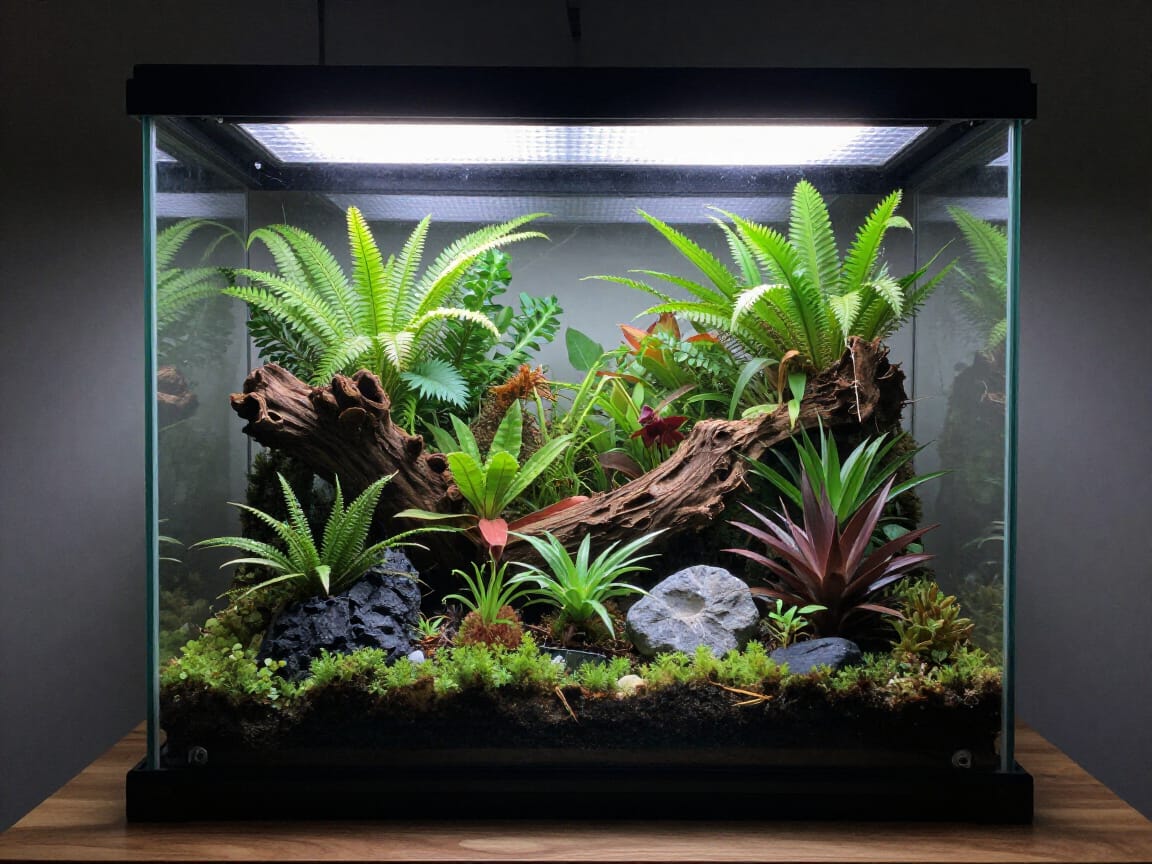
If you’ve ever tried building a closed terrarium indoors only to watch the plants turn yellow, rot, or get taken over by mold, you’re not alone. In real terrariums, the biggest issue is choosing plants that can handle constant humidity, limited airflow, and low to medium light. Most failures I’ve seen in beginners’ terrariums come from using plants that simply aren’t designed for that kind of environment.
The good news: once you choose the right species, a closed terrarium becomes almost self-sustaining. Below are the best plants for closed terrariums indoors, based on what I’ve tested in my own home setups over the years.
Why These Plants Work in Closed Terrariums
Closed terrariums create a mini rainforest. Inside, you’ll have:
- High humidity (often 80–100%)
- Consistently damp soil
- Recycled moisture through condensation
- Very slow air movement
- Moderate, indirect indoor light
So the plants that thrive best are:
- Shade-tolerant
- Moisture-loving
- Slow-growing
- Small-leaved or naturally miniature
- Able to handle low oxygen around the soil
Plants from tropical forest floors, mossy understories, and humid Asian jungles usually adapt perfectly.
What Actually You’ll Need
- Small terrarium‑friendly plants or cuttings
- Sterile potting mix (peat-free tropical mix works best)
- Activated charcoal (helps prevent sour smells and fungal bloom)
- Drainage layer materials (leca balls, aquarium gravel, or pumice)
- Long tweezers for placing plants
- Spray bottle with clean water
- Clean glass container with a tight seal
Eco-friendly alternatives:
- Coconut coir instead of peat
- Recycled glass jars instead of store-bought terrariums
Best Plants for Closed Terrariums Indoors
Below are the species I’ve seen perform consistently well in long-term sealed terrariums (6 months to 3+ years).
1. Fittonia (Nerve Plant)
Fittonia is one of the most reliable terrarium plants I’ve grown. It collapses if dry but thrives in terrarium humidity.
Why it works:
- Loves high humidity
- Stays naturally small
- Comes in red, pink, green, and white varieties
Beginner tip: Choose the smallest-leaf variety it stays compact.
2. Peperomia Species (Mini Varieties)
Not all Peperomias work, but these do exceptionally well:
- Peperomia prostrata
- Peperomia quadrangularis
- Mini watermelon peperomia
Why they work:
- Prefer steady moisture without drying out
- Slow, controlled growth inside glass
Avoid: Peperomia obtusifolia too big.
3. Fern Species
Mini ferns love the still, damp air. The best performers are:
- Lemon button fern
- Maidenhair fern (finicky outside terrariums but happy inside)
- Pteris ‘Silver Lace’
Why they work:
- Thrive in shade
- Appreciate constant moisture
- Graceful fronds fill space without taking over
Watch out: Overwatering is still possible use a light soil mix.
4. Mosses (Sheet Moss or Mood Moss)
Moss is practically the backbone of a good closed terrarium.
Why it works:
- Absorbs and releases moisture perfectly
- Helps stabilize humidity levels
- Suppresses algae and weeds
From real experience: Forest-collected moss is risky indoors it often brings pests or mold. Store-bought terrarium-safe moss is better.
5. Pilea Species
Great terrarium-friendly types:
- Pilea depressa
- Pilea glauca
- Pilea involucrata ‘Norfolk’
Why they work:
- Dense, tiny leaves
- Stay compact with low light
- Root easily and recover fast from trimming
6. Cryptanthus (Earth Star)
Bromeliads that stay miniature.
Why they work:
- Love humidity and warm indoor temperatures
- Provide bright color in a green terrarium
- Extremely slow-growing
Beginner note: Needs good airflow at soil level don’t bury the crown.
7. Selaginella (Club Moss)
Especially:
- Selaginella kraussiana
- Selaginella uncinata
Why it works:
- One of the most humidity-loving plants on earth
- Forms lush carpets
- Responds quickly to misting and warmth
However: It can grow fast prune lightly to keep it tidy.
8. Baby Tears (Soleirolia Soleirolii)
Perfect for ground cover.
Why it works:
- Tiny leaves suit terrarium scale
- Thrives at high humidity
- Builds dense, soft mats
Beginner warning: Can spread aggressively plant it only where you want dense cover.
9. Miniature Jewel Orchids
Unlike typical orchids, these are perfect for closed terrariums.
Best varieties:
- Ludisia discolor
- Macodes petola
Why they work:
- Prefer stale, warm, moist air
- Grow slowly and elegantly
- Stunning leaf veining adds texture
They do need:
- Even moisture (never waterlogged)
10. Small Tropical Vines
Good choices:
- Ficus pumila ‘Quercifolia’
- Philodendron micans (small cuttings only)
- Rhaphidophora species (mini forms)
Why they work:
- Slow growth in low light
- Great for creating “forest” height or climbing features
Prune regularly to avoid overgrowth.
Pro Tips & Best Practices (From Real Terrarium Use)
- Choose slow growers. Fast growers suffocate smaller plants.
- Avoid succulents closed terrariums are too humid.
- Keep the soil just barely moist soggy soil rots roots.
- Wipe condensation from glass if it’s dripping constantly.
- Use tweezers or chopsticks for gentle adjustments.
- Remove decaying leaves immediately to prevent mold spread.
What beginners often miss: Most terrarium failures start with too much light. Place your terrarium in bright indirect light, not in front of a south window.
FAQ
What plants should I avoid in a closed terrarium? Avoid succulents, cacti, herbs, and most houseplants they rot quickly in high humidity.
Why are my terrarium plants turning yellow? Usually too much water or too little light. The soil should feel damp, not wet.
Can I mix moss and plants together? Yes moss is excellent as a humidity stabilizer and ground cover.
How often should I water a closed terrarium? Often not for months. Water only when the soil looks dry or there’s no condensation at all.
Why is there mold in my terrarium? Excess moisture, poor ventilation, or decaying plant matter. Remove mold spots early and keep soil just moist.
Can I keep a terrarium in a dark room? Not advisable. Even low‑light plants need some ambient brightness.
When NOT to Use These Plants
These plants may fail if:
- Your home stays colder than 55°F (13°C)
- You place the terrarium in direct sun (leads to overheating)
- You use overly dense garden soil (causes anaerobic rot)
- You choose a container that cannot ventilate at all (no gas exchange)
In dry, desert climates, these plants may need extra misting.
Alternative Effective Methods
If closed terrariums feel too humid or high-maintenance, try:
Open Terrariums
- Better airflow
- More plant options (including semi-succulents)
- Lower mold risk
Paludariums
- Ideal if you want ferns or aquatic-friendly plants
- More complex setup but very stable
Windowsill Mini Planters
- Best for plants that dislike high humidity
Choose based on how much humidity you want to maintain long-term.
Conclusion
Choosing the best plants for closed terrariums indoors is the key to building a long-lasting, low-maintenance mini ecosystem. In my experience, moisture-loving, shade-tolerant tropicals Fittonia, mosses, miniature ferns, Selaginella, and tiny Pilea varieties give the most reliable results.
Start slow, focus on plants that truly enjoy humidity, and remember: terrariums reward patience. Once the environment stabilizes, you’ll have a thriving little green world that almost takes care of itself.
