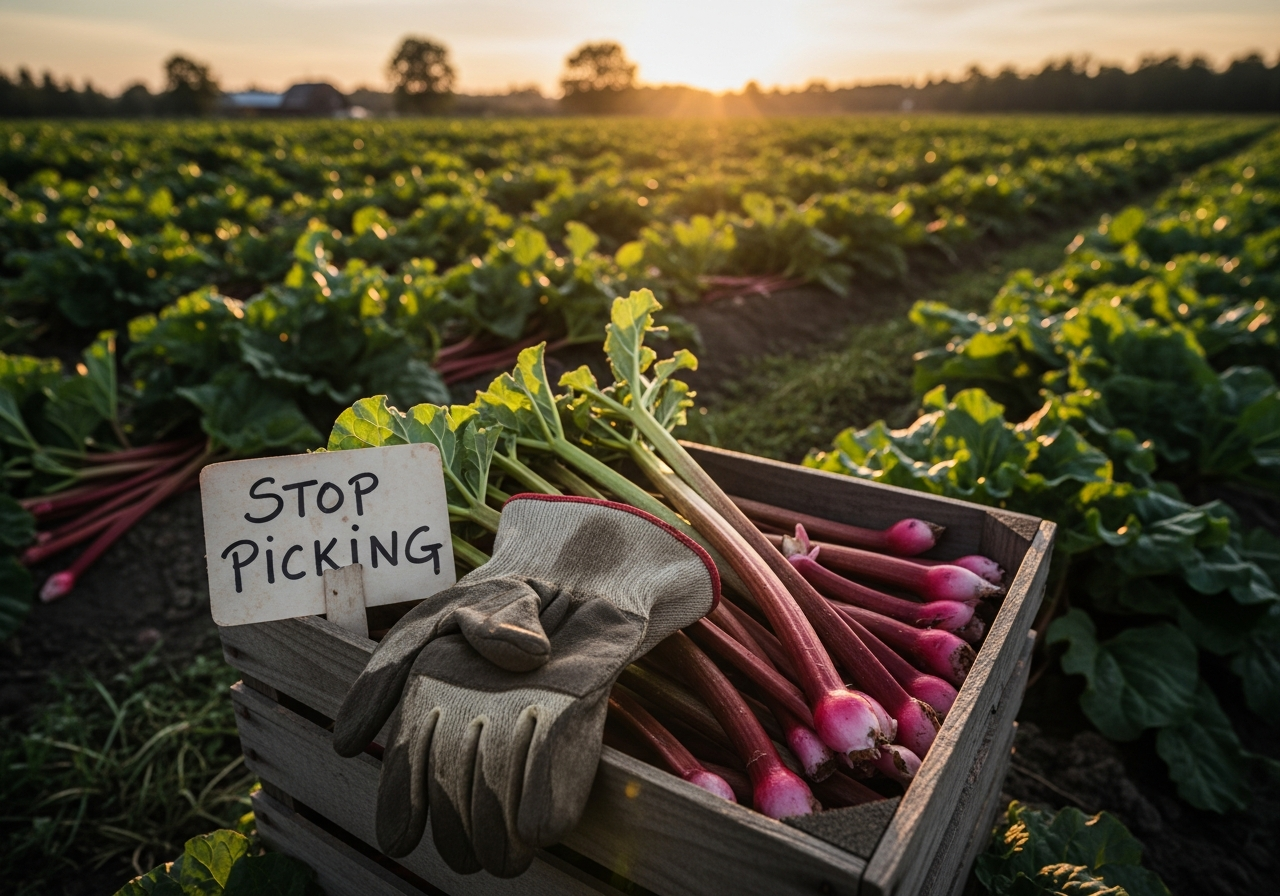
Every product is independently reviewed and selected by our editors. If you buy something through our links, we may earn an affiliate commission at no extra cost to you.
If you grow rhubarb for the first time, it’s tempting to keep harvesting those big red stalks as long as they appear. I made the same mistake in my early backyard garden kept pulling stalks deep into summer and wondered why my plant looked exhausted the next spring. Rhubarb is tough, but it needs enough leaf growth to recharge its roots.
Knowing when to stop picking rhubarb is the key to getting bigger, healthier stalks every year. The good news: once you understand the plant’s seasonal rhythm, it’s simple.
Why This Method Works
Rhubarb grows in flushes. In cool spring weather, it sends energy from its crown into thick, juicy stalks. But by early to midsummer, it shifts from “grow food for harvest” to “restore energy for next year.”
If you continue harvesting during this recovery period:
- stalks become thin and limp
- new growth slows dramatically
- crowns weaken (a serious long-term problem)
- plants become more vulnerable to summer stress and winter dieback
In real gardens especially small spaces where plants can’t spread respecting the rhubarb’s rest phase makes the biggest difference in long-term productivity.
What You’ll Need
Nothing complicated, but having the right basics helps you harvest cleanly and safely.
- Sharp garden knife or pruners (for clean removal if twisting doesn’t work)
- Gloves (the leaves contain oxalic acid; it can irritate skin for some people)
- Bucket or compost bin for leaves (never feed leaves to pets or livestock)
- Mulch or compost for post-harvest recovery
When to Stop Picking Rhubarb
Here’s the practical, hands-on guideline I follow in my own garden:
1. Stop harvesting by late June to early July (in most climates)
For temperate and cold climates, this is the standard cutoff. By this time:
- spring flush is complete
- stalks naturally become thinner
- heat slows growth
2. If stalks become thin (pencil-sized), stop immediately
Thin stalks are your plant saying: “I’m tired let me recover.”
3. If the plant produces multiple small leaves instead of tall stems
This is a sign the crown is rebuilding, not producing harvestable stalks.
4. For first-year plants: don’t harvest at all
Let the crown establish. You’ll be rewarded later.
5. For second-year plants: harvest lightly for 2–3 weeks only
Early establishment matters more than yield.
6. After your final harvest, let all new stalks grow
These feed the root system so next spring’s harvest is generous.
Step-by-Step: How to Time Your Rhubarb Harvest Safely
- Begin harvesting when stalks reach full size Usually mid to late spring. Look for firm, thick stalks 10–15 inches long.
- Pull or cut only the largest stalks Leave at least ⅓ of the plant intact to avoid stressing the crown.
- Harvest every 7–10 days, not daily This gives the plant time to regrow between pickings.
- Monitor stalk thickness Thick = harvestable Thin = stop harvesting
- Stop completely by early July Even if the plant still looks lush, give it its rest window.
- Mulch after harvesting ends A thin layer of compost or leaf mulch helps rhubarb recover through summer heat.
Best Practices
- Shade in hot climates: Afternoon shade helps prevent heat stress and bolting.
- Remove flower stalks early: Flowering drains energy fast. Snap off flower stalks as soon as they appear.
- Never eat the leaves: They contain high oxalic acid levels compost them instead.
- Water deeply once a week in summer: Especially important after your final harvest.
- Divide crowns every 4–6 years: This revitalizes sluggish plants.
Common Beginner Mistakes
- Harvesting past July
- Taking too many stalks at once
- Ignoring thin-stalk warnings
- Trying to harvest new transplants too soon
- Allowing plants to flower repeatedly
All of these reduce long-term productivity.
FAQ
1. Why is my rhubarb producing thin stalks already? Usually the plant is stressed heat, drought, overcrowding, or late harvesting can cause this. Stop picking and let it recover.
2. Can I pick rhubarb in August or September? No. By then, the plant is rebuilding its roots. Late harvesting weakens the crown.
3. What if my rhubarb keeps sending up new stalks after July? Leave them. This is normal summer regrowth that feeds next year’s harvest.
4. Can I harvest rhubarb in the first year? No. Let the plant fully establish.
5. Why are my rhubarb stalks green instead of red? Some cultivars naturally stay green. Color doesn’t indicate ripeness.
6. Can I harvest rhubarb after frost in fall? Only if the plant is young and still producing, but it’s generally not recommended. Frost can make stalks mushy or unsafe.
When NOT to Harvest Rhubarb
Skip harvesting if:
- It’s the first year of growth
- Your plant is heat-stressed or wilting
- Stalks are consistently thin
- Plants have been recently transplanted or divided
- You garden in extremely hot climates (harvest window may be very short)
In these cases, forcing a harvest can weaken or kill the crown.
Alternative Approaches
If you live somewhere hot (zones 8–10), try:
- Early spring-only harvests: Very short season, often 2–3 weeks
- Planting rhubarb in partial shade: Extends spring productivity
- Growing rhubarb as a “stem vegetable” rather than a regular crop: Occasional small harvests only
Or consider a heat-tolerant alternative crop like red-stemmed Swiss chard, which gives a similar look and feel without the temperature limitations.
Conclusion
Knowing when to stop picking rhubarb protects the crown, keeps your plant vigorous, and gives you those thick, ruby-red stalks every spring. As a rule of thumb: harvest generously in spring, lightly into early summer, and then let the plant recharge.
Rhubarb rewards patience give it time, and it will produce reliably for 10-15 years or more.
