Every product is independently reviewed and selected by our editors. If you buy something through our links, we may earn an affiliate commission at no extra cost to you.
If you’ve ever bought a bundle of rhubarb at the grocery store and wondered, “Can I grow rhubarb from a stalk?”, you’re not alone. I tried it myself years ago when I didn’t feel like ordering crowns online and I learned quickly that most guides online gloss over critical details.
Here’s the truth from real garden experience: You can grow rhubarb from a stalk, but only if that stalk still has a living “crown bud” or a small piece of rhizome attached. Grocery-store stalks without a base won’t root.
If you do have a stalk with a viable bud, the method below gives you the best chance of success. I’ve used it both in my backyard beds and large containers.
Why Growing Rhubarb From a Stalk Works (Sometimes)
Rhubarb grows from a rhizome, a thick underground stem that produces:
• New stalks • Leaf buds • Roots
A stalk alone just the red or green stem cannot grow roots. But if the stalk includes even a small section of crown/rhizome, it can sprout a new plant.
When this method works, it’s because:
• The crown bud wakes up when exposed to moisture • The rhizome base sends out new roots • The plant enters growth mode once placed in cool, moist soil
This is the same biological process nurseries rely on when dividing rhubarb crowns.
What You’ll Need
• A rhubarb stalk with a small rhizome piece OR a bud attached • Sharp, clean knife (if trimming any damaged tissue) • A container with drainage holes (1–3 gallons) or outdoor bed • Potting mix or garden soil with added compost • Watering can • Mulch (leaf mold, straw, or wood chips)
Optional: • Rooting hormone (helps, but not required) • Neem or mild soap spray if fungus gnats appear indoors
Eco-friendly options: • Compost-rich soil instead of synthetic fertilizers • Rainwater or distilled water for sensitive seedlings
Step-by-Step: How to Grow Rhubarb From a Stalk
1. Inspect your stalk for a viable crown piece
Look at the bottom end of the stalk.
You want to see: • A small, swollen bud • A nub of brownish rhizome • Firm tissue not mushy or dry
If the base is soft or moldy, trim until firm.
2. Let the base dry (callus over) for 24 hours
Place the stalk somewhere cool and shaded.
Why this matters: Rhubarb roots best when the cut surface forms a callus just like when propagating succulents or potatoes. This prevents rot.
3. Prepare a pot with loose, compost‑rich soil
Rhubarb prefers:
• Moist but well-draining soil • High organic content • Slight shade during early rooting
I like using a mix of potting soil + compost + a handful of perlite.
If starting outdoors: choose a cool-season day and partial shade.
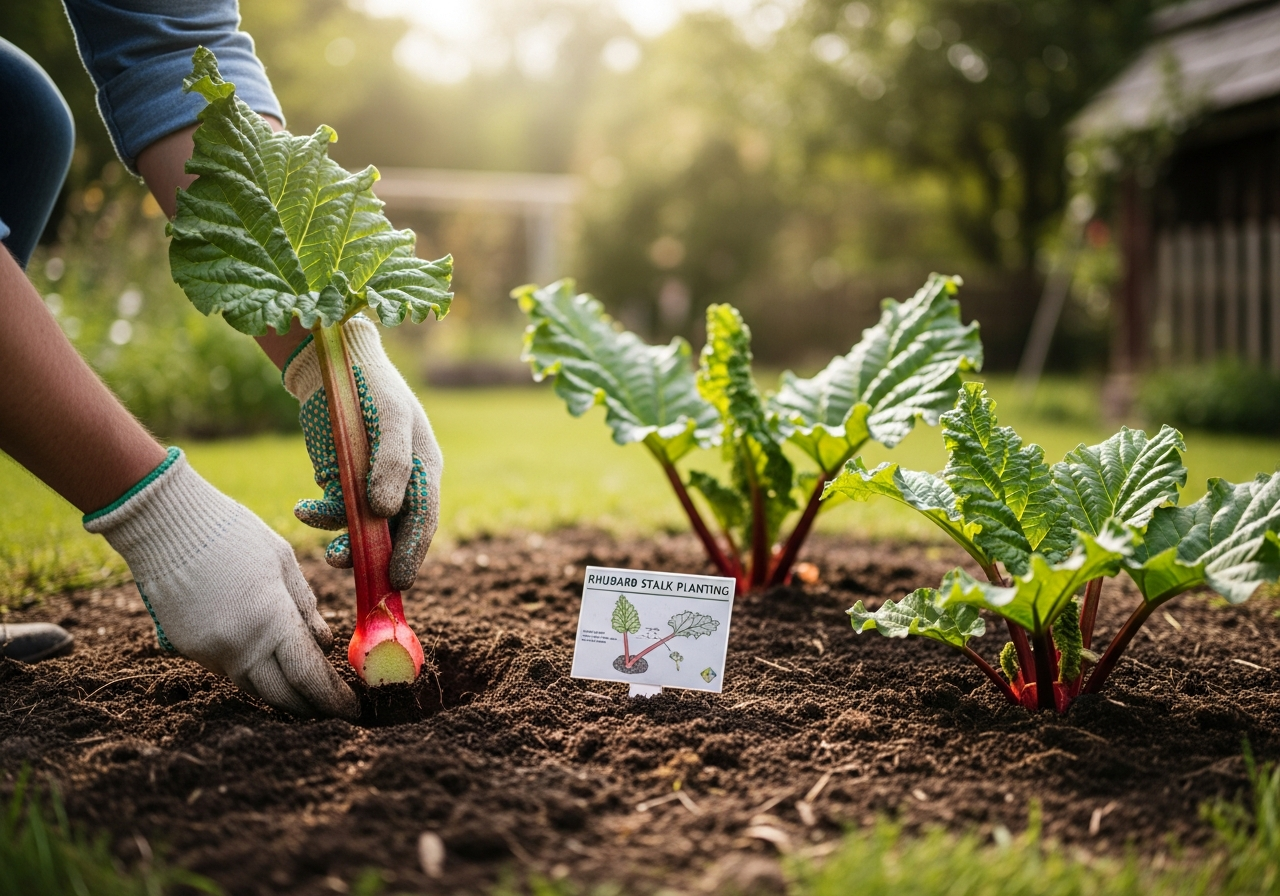
4. Plant the stalk base slightly below the soil surface
Bury only the rhizome piece and bud not the entire stalk.
Correct depth: • ½ to 1 inch of soil over the rhizome • Stalk angled slightly upright
Water lightly to settle the soil.
5. Keep it consistently moist not soggy
Overwatering is the biggest beginner mistake.
What you want: • Soil moist like a wrung‑out sponge • No pooling water • Good airflow around the pot
In my own trials, rhubarb rotted immediately when kept too wet in cool weather.
6. Give the plant cool temperatures and gentle light
Rhubarb roots best at 45–65°F, making spring and early fall ideal.
Place in: • Morning sun • Afternoon shade • Outdoors when temps are mild
Indoors: use bright indirect light.
7. Watch for new growth (takes 2–6 weeks)
Successful rooting signs:
• A red or green bud swelling • A tiny leaf unfurling • New stalk nubs forming at the base
Don’t tug on the plant it damages new roots.
8. Transplant once root growth is established
When new leaves are 4–6 inches tall, transplant into:
• A deep raised bed • An in‑ground garden bed • A large container (minimum 5 gallons)
Rhubarb is a long-lived perennial, so choose a permanent spot.
Pro Tips & Best Practices
• Rhubarb hates heat rooting often fails in hot climates unless done indoors. • Avoid planting in soggy clay soil rhubarb crowns rot easily. • Mulch lightly, but keep mulch off the crown itself. • First‑year plants should not be harvested; let roots build strength. • If your climate is warm, choose a spot with afternoon shade.
Real‑world warning: If the stalk was supermarket‑trimmed (clean, flat cut), it is almost always missing the crown piece and will not grow. You need the bud.
FAQ
Can I grow rhubarb from a store-bought stalk?
Only if the stalk still has a crown bud attached most do not.
Why is my rhubarb stalk turning mushy after planting?
That’s rot. The soil is staying too wet or the stalk didn’t have a viable crown.
How long does it take rhubarb to grow from a stalk?
Expect the first signs of growth in 2–6 weeks, depending on temperature and bud health.
Can I plant rhubarb in summer?
You can, but success drops sharply in hot weather. Plant in cool seasons.
How big should the crown piece be?
Even a ½-inch rhizome chunk can work if it includes a bud.
Can I harvest rhubarb the first year?
No wait until year two so the plant can build a strong root system.
When NOT to Grow Rhubarb From a Stalk
Avoid this method if:
• Your stalk has no bud or rhizome piece • Your climate stays warm year-round (rhubarb needs winter chill) • Your soil stays wet or heavy crown rot is likely • You need fast results (crown divisions are much quicker)
If you’re in USDA zones 9 or warmer, rhubarb often struggles outdoors unless given afternoon shade and consistent cooling.
Alternative Ways to Grow Rhubarb (Often Easier)
1. Grow from crowns (most reliable)
Pros: Fast, consistent, productive Cons: Must buy or source locally
2. Grow from divisions (gardeners’ favorite)
Pros: Free if a friend shares; strong plants Cons: Seasonal availability
3. Grow from seeds
Pros: Cheap Cons: Slow; less predictable variety traits
Growing from a stalk is possible but definitely the slowest and least predictable method.
Conclusion
Growing rhubarb from a stalk is absolutely possible if your stalk includes a living crown bud or rhizome piece. The keys to success are:
• Callus the base • Use loose, compost‑rich soil • Keep moisture even • Provide cool temperatures • Be patient as roots develop
With the right stalk and the right care, you can transform a single rhubarb base into a long‑lived perennial plant that returns year after year. It takes patience, but it’s a satisfying project especially for gardeners who enjoy experimenting and propagating their own food crops.
