Every product is independently reviewed and selected by our editors. If you buy something through our links, we may earn an affiliate commission at no extra cost to you.
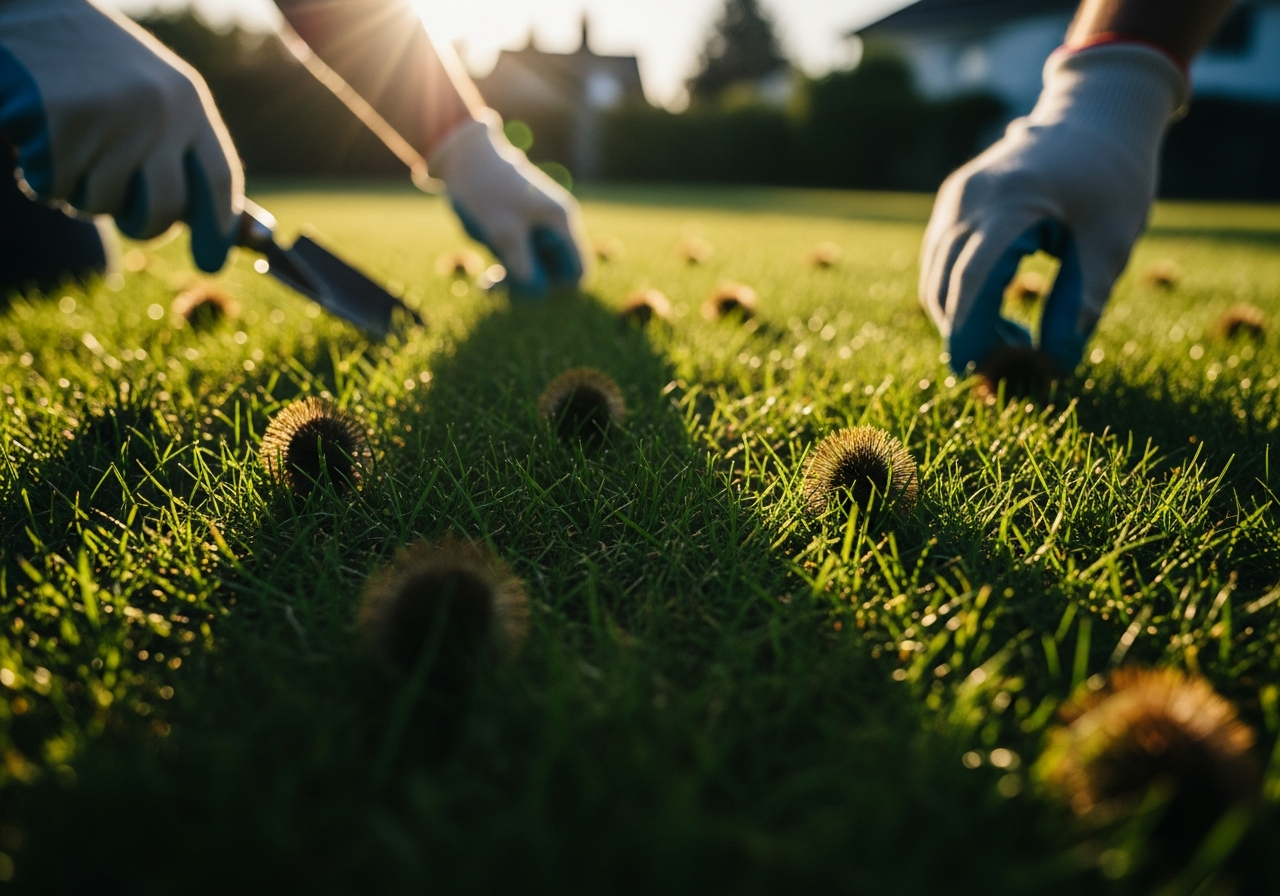
If you’ve ever walked barefoot across your lawn and stepped on those tiny, painful stickers, you already know how frustrating burrs can be. When burrs show up in the grass, they spread quickly clinging to pets, socks, mower wheels, and anything that brushes past. In my own backyard, burrs first appeared in the thin, sun-baked sections of turf, and every year they tried to creep further unless I addressed them early.
The good news: once you understand their growth cycle, it becomes much easier to get rid of burrs in the grass and stop them from returning. The steps below come directly from years of battling sandburs and lawn burrweed in small home lawns.
Why Burrs Take Over Your Grass
Most burr-producing weeds thrive in the same conditions stressed grass does: • Bare or thinning patches • Hard, compacted soil • Hot, sunny areas • Drought-stressed lawns • Poor fertility or neglected mowing
What beginners often miss: burr plants are easiest to control before they form the prickly seed pods, because the burrs themselves help the plant spread.
These methods work because they: • Remove existing burrs without spreading seeds • Stop new burr plants from sprouting • Strengthen the turf so burrs can’t get established again
What You’ll Need
• Lawn mower with bagger • Thick gloves (leather recommended) • Metal rake • Hand weeder or stand-up weed puller • Pre-emergent herbicide (organic: corn gluten; synthetic: prodiamine or pendimethalin) • Selective post-emergent herbicide safe for your grass type (optional but helpful) • Grass seed or plugs for patch repair • Compost or lawn soil for topdressing
Eco-friendly options: • Corn gluten as a natural pre-emergent • Manual removal + lawn thickening (slower, but works)
Step-by-Step: How to Get Rid of Burrs in the Grass
1. Mow low and bag every clipping
Timing: Dry day, late morning after dew dries.
Set the mower one notch lower than usual. Bagging is crucial mulching spreads the burrs deeper into the lawn.
What you should see: • Fewer brown clusters of burrs after mowing • Grass slightly shorter but not scalped
2. Rake the area aggressively
Use a metal rake, not a plastic one.
Raking: • Pulls up loose burrs • Lifts burr weeds sitting low in the turf • Exposes weed crowns for easier pulling
In my own lawn, raking removed at least 40% of burr clusters before I even started hand-pulling.
3. Hand-pull or dig out the burr plants
Wear gloves burrs will poke through fabric.
Pull slowly from the base. If the soil is hard, water that patch lightly and wait 20–30 minutes. This loosens deep roots.
Signs you did it correctly: • You feel the whole taproot release • No stem snapping at the soil line
If roots stay behind, burr weeds regrow fast.
4. Bag and trash the debris
Do not compost burrs. They survive and spread.
Tip from painful experience: double-bag so burrs don’t poke through and scatter.
5. Apply pre-emergent herbicide (the step that breaks the cycle)
Most people skip this and that’s why burrs return every spring.
Apply a pre-emergent: • In early spring (before soil hits ~55–60°F) • In fall if you live in warm climates (sandburs germinate twice yearly)
Organic option: corn gluten meal (needs heavy application and perfect timing) Synthetic option: prodiamine or pendimethalin (more reliable for beginners)
This step prevents burr seeds from sprouting.
6. Spot-treat any surviving burr weeds
If mature plants reappear:
• Use a selective post-emergent safe for your grass type • Follow label temperature limits (most work best below 85°F) • Treat only the weed patches don’t blanket-spray unnecessarily
Warm-season lawns (Bermuda, Zoysia, St. Augustine) tolerate different herbicides than cool-season lawns (fescue, rye, bluegrass), so check the label carefully.
7. Repair bare spots in the lawn
Bare soil = burr hotspot.
Patch the area with: • Grass seed (cool-season lawns) • Plugs or sprigs (warm-season lawns) • A thin layer of compost or lawn soil topdressing to improve texture
Every time I’ve skipped patch repair, burrs returned to that exact spot the next season.
8. Reduce future burr outbreaks by boosting lawn health
Once your grass thickens, burrs simply run out of space. Focus on:
• Mowing at the recommended height • Deep, infrequent watering • Seasonal aeration if soil is compacted • Annual compost topdressing • Proper fertilizing for your grass type
A dense lawn is your long-term burr defense.
Pro Tips from Real Yard Experience
• Never mow over mature burrs without a bag you’ll shoot seeds everywhere. • Burr weeds love stressed grass fix the soil and you fix the problem. • In sandy soil, burr weeds come out far easier after watering. • Goathead (puncturevine) spreads extremely fast remove entire vines before burrs harden. • For pet owners: burrs can embed in paws; treat burr patches early.
FAQ: Common Questions About Burrs in Grass
Why do burrs keep showing up even after I pull them?
Because seeds remain in the soil for years. Pre-emergent herbicide is the key to breaking the cycle.
Can I get rid of burrs naturally?
Yes—hand-pulling, raking, corn gluten pre-emergent, and thick lawn growth all work. But you must stay consistent.
Will vinegar kill burr weeds in the grass?
It might—but it kills grass too. Not recommended for lawns.
How long before my yard becomes burr-free?
With the full approach above, most people see major improvement in one season and near-elimination by year two.
Should I dethatch if I have burrs?
Only if your thatch layer is over 0.5 inch. Light dethatching helps expose burr weeds, but overdoing it creates bare patches that burrs love.
When NOT to Use Certain Methods
• Don’t use herbicides on newly seeded areas wait until the grass is fully established. • Don’t hand-pull mature plants loaded with dry burrs they shed everywhere. Mow and bag first. • Avoid vinegar, boiling water, or salt treatments on lawns for that reason they damage turf far worse than burrs. • Avoid pre-emergent if you plan to seed soon and it blocks grass seed too.
If unsure, stick to mowing + bagging + raking until conditions are right.
Alternative Approaches
Organic Method
• Hand-pull • Rake • Corn gluten meal • Overseed to thicken turf Pros: Safe for pets/kids, environmentally friendly Cons: Slower, requires consistency
Synthetic Herbicide Method
• Pre-emergent in spring • Post-emergent on survivors Pros: Fastest and most reliable Cons: Must follow label instructions closely
Lawn Renovation
For yards with severe burr infestation and thin grass. Pros: Resets lawn completely Cons: Labor-intensive; expensive
Conclusion
Getting rid of burrs in the grass isn’t about one big treatment it’s about interrupting the burr weed’s life cycle and strengthening the lawn so burrs can’t reclaim space. The winning formula is:
• Remove existing burrs safely • Apply pre-emergent at the right time • Fix bare patches • Maintain a thicker, healthier lawn
With a single season of consistent effort, most home gardeners see the yard transform from sticker-covered to soft, healthy, and burr-free.
Stick with the steps above, stay patient, and your grass will repay you barefoot walks included.
